


 Unity
Unity Unreal
 Godot
Godot
 Mobile
 PC
PC Console
 Full-Cycle
 Co-Development
 Outstaffing


Falcon Dash
Introduction
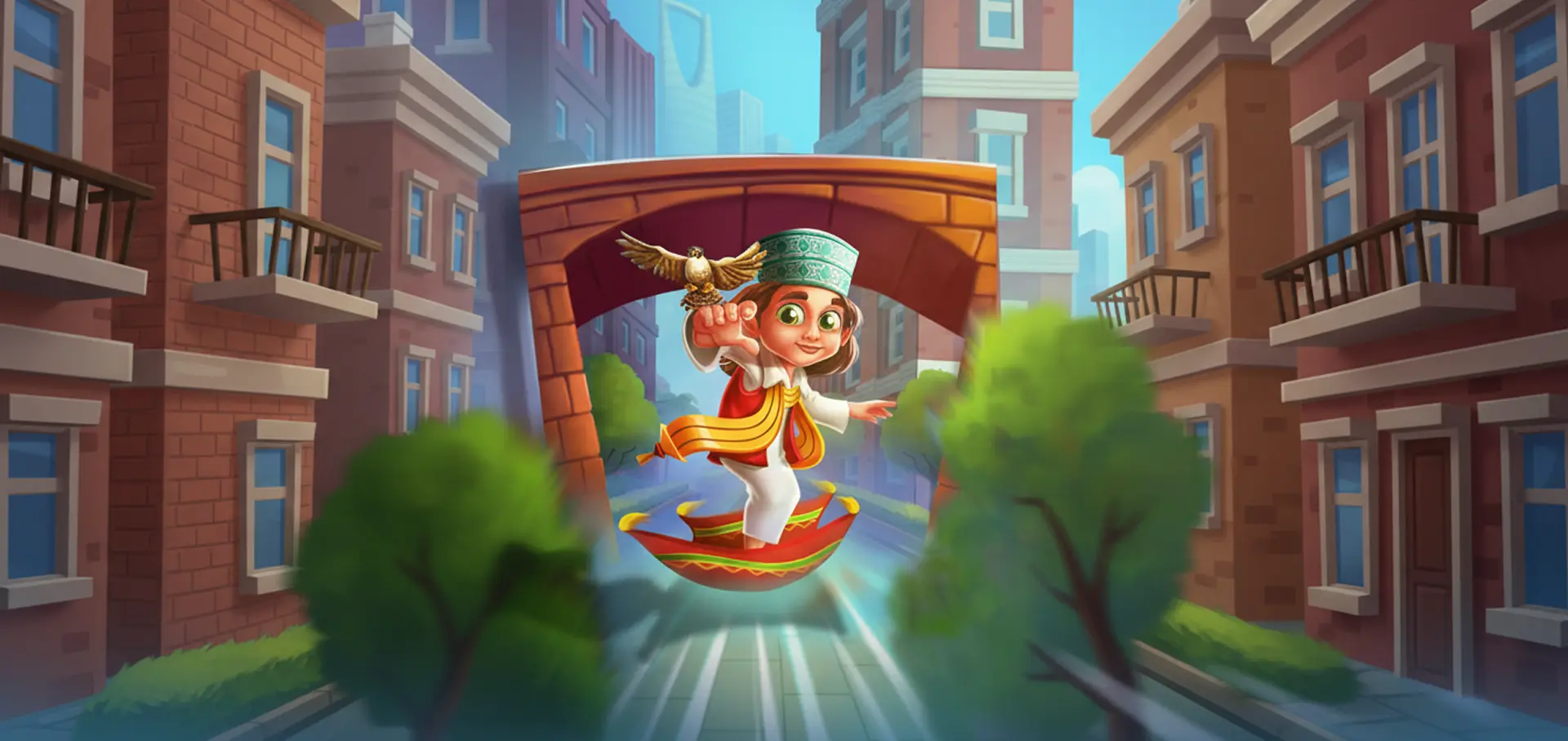
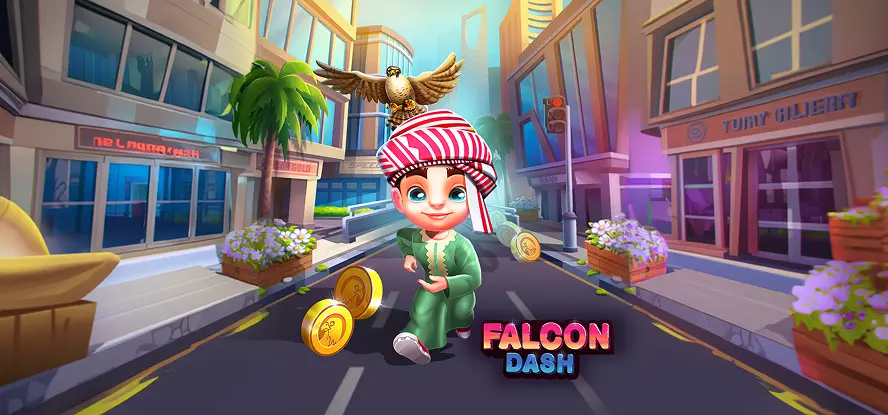
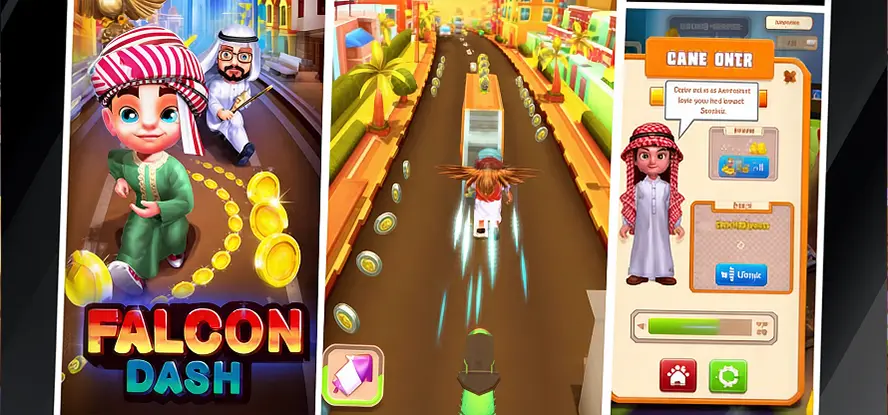
Falcon Dash is a 3D portrait-mode endless runner for Android and iOS where a young character sprints through urban streets, collecting coins and dodging obstacles, buses, trains, and roadblocks, while being chased by a shopkeeper. The player’s falcon companion is central to the experience: fed with feathers earned in-run, the falcon activates all five power-ups and drives the game’s daily retention loop.
Juego Studios partnered as a full-cycle development and LiveOps team, taking the game from initial design through live release and ongoing operation.
Engagement Model :
Full-Cycle Game Development, LiveOps
Game Engine :
Unity
Genre :
Endless Runner
Art Style :
Stylized 3D
Platforms :
Android, iOS

Challenges
Building Falcon Dash required solving for both launch quality and long-term live operation from the outset. The core challenges were:

Designing a retention-first core loop — Accessible swipe mechanics needed enough depth to justify daily return beyond difficulty alone.

Building a companion system that earns its place — The Falcon had to be central — not decorative — with every power-up and economy decision revolving around it.

Layered monetization without friction — Free players, IAP buyers, and VIP subscribers needed to coexist without one segment’s experience degrading another’s.

LiveOps infrastructure from day one — Mission resets, challenge rotations, and economy tuning needed to run post-launch without app store resubmissions.
Solutions Delivered
Juego Studios delivered a full-cycle development and LiveOps solution covering all core game systems, meta-layer mechanics, and post-launch operations:

Core Gameplay Development
3-lane runner in Unity with swipe controls, three obstacle types, full and partial collision logic, and difficulty scaling tied to distance.

Characters & Flying Carpet System
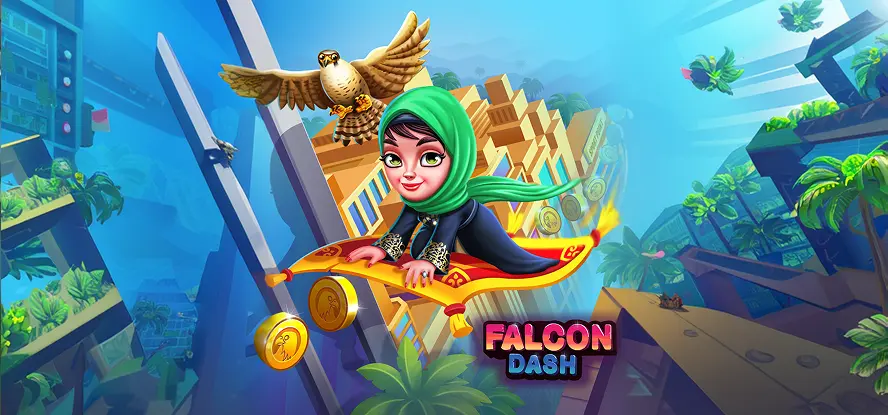
Five characters each with a unique Flying Carpet offering passive traits — shield, double jump, trail, or speed boost — for one-hit immunity.

Meta-Layer & LiveOps Systems
Daily missions, challenge rotations, three-tier leaderboards, contextual local notifications, and Firebase push notifications.

Monetization Architecture
Reward ads, five IAP tiers (coin, feather, carpet packs and bundles), and three monthly VIP subscriptions (Gold, Platinum, Diamond Falcon).

Falcon Companion & Power-Up System
Five power-ups (Magnet, Falcon Ride, Coin Multiplier, Score Booster, Super Jump) with upgradeable attributes levelled using Feathers and Coins.

Platform Infrastructure & Cloud Save
Cross-platform authentication, cloud save via Google Play Games and iOS Game Center, and Firebase analytics active from launch.
Implementation
Implementation details focused on the design decisions and technical nuances that shaped the final product:
- Partial collision tuning — Two near-misses within 5 seconds trigger a game over, iterated until the difficulty curve was challenging without being punishing.
- Server-side mission configuration — All daily missions, challenge parameters, reward values, and notification copy are remotely configurable, allowing post-launch updates without app store submissions.
- Contextual notification triggers — Notifications fire on gameplay milestones (falcon upgrade available, player within 10% of next XP threshold) rather than fixed calendar intervals.
- Ad-removal on first IAP — Any purchase simultaneously removes ads, eliminating friction between free and paying tracks.
- VIP scoped to prestige — Exclusive leaderboards, bonus XP, and cosmetic rewards — not gameplay advantage — preserving the experience for non-paying players.
- Post-launch LiveOps pipeline — Covers seasonal cosmetic updates, economy rebalancing, challenge rotations, and Firebase analytics-driven iteration on reward cadence and difficulty tuning.
Results and Impact
Self-Sustaining Retention Loop
The feather economy ties daily return directly to gameplay. Unlike calendar-based events, the cadence is intrinsic to the core loop.
Deep Progression System
Upgradeable power-ups, unique Flying Carpets per character, and a dual-currency economy sustain player goals well beyond the initial run experience.
Fair Monetization Across Segments
Each player tier receives distinct value: free players get rewarded ads, IAP buyers get currency and convenience, and VIP subscribers get prestige — with no overlap that undermines another segment.
Live Game from Day One
Server-side configurable systems allow the game to evolve continuously without platform resubmissions or live player disruption.
Conclusion
The Falcon Dash case study demonstrates how full-cycle development and LiveOps discipline, applied from day one, produces a mobile game that performs beyond launch. By centering progression on the falcon companion, structuring monetization to serve multiple segments fairly, and building LiveOps infrastructure before release, Juego Studios delivered a live product capable of sustained growth.
Frequently Asked Questions
Monetization is segmented by value type. Ads are opt-in and reward-based. IAPs provide currency and convenience. VIP subscriptions offer prestige (exclusive leaderboards, cosmetics, bonus XP) — never gameplay advantage. The first IAP purchase also permanently removes ads for that user.
Yes. Mission sets, challenge parameters, IAP offer configurations, and notification copy are all server-side configurable. Major content (new characters, seasonal cosmetics) is pushed through planned update releases.
Yes. Building LiveOps infrastructure before launch is significantly more efficient than retrofitting it. For Falcon Dash, the entire retention, analytics, and update pipeline was operational at launch, allowing iteration from day one.
Yes. Mission sets, challenge parameters, IAP offer configurations, and notification copy are all server-side configurable. New characters and seasonal cosmetic content are pushed through planned update releases, keeping the content pipeline active between major milestones without disrupting live players.
Yes. Building LiveOps infrastructure before launch – rather than retrofitting it post-release – is significantly more efficient and less disruptive. For Falcon Dash, the entire retention, analytics, and update pipeline was in place at launch, allowing the team to operate and iterate on the live game from day one rather than spending post-launch resources on infrastructure.