


 Unity
Unity Unreal
 Godot
Godot
 Mobile
 PC
PC Console
 Full-Cycle
 Co-Development
 Outstaffing






-
 Game Development
 Mar 17th, 2026
- Share:
Table of Contents
- TL;DR — What You Need to Know
- Quick Overview: Top 10 Game Development Companies in Sweden
- Top 10 Game Development Companies in Sweden (Detailed Breakdown)
- Why Game Development Companies in Sweden Are in Global Demand
- How We Identified the Best Game Development Companies in Sweden
- Why Do Global Studios Partner with Swedish Game Development Companies?
- Choosing Among Top Game Development Companies in Sweden
- How Game Studios in Sweden Typically Structure Production Teams
- Delivery Metrics to Track When Working with Swedish Game Studios
- IP Protection and Security Standards for Swedish Game Development Partners
- Common Mistakes to Avoid When Hiring Swedish Game Development Companies
- What Makes Juego Studios Stand Out as a Strategic Production Partner
- Popular Work by Juego Studios
- Conclusion
How does a country of just over 10 million people consistently punch above its weight in the global games industry? Sweden isn’t just producing hits—it’s shaping the future of interactive entertainment.
According to the Swedish Games Industry’s 2025 report, the sector generated SEK 36.8 billion in domestic revenue, employed over 9,100 professionals, and counted 1,100+ active companies. Games now account for about 3% of Sweden’s service exports—a staggering figure that underscores their role as a strategic creative-tech export.
For decision-makers, Sweden offers a rare combination:
- Globally recognized IP and AAA pipelines (think Minecraft, Battlefield, Candy Crush).
- A dense tech-and-startup ecosystem that supports rapid scaling.
- High-cost but high-productivity talent in engineering and design.
Meanwhile, global demand for cross-platform production, LiveOps, and content operations is expanding, pushing studios to scale capacity without sacrificing quality. Sweden’s clusters and public programs—such as Vinnova-backed initiatives—signal that the country isn’t just riding the wave; it’s steering it.
This blog explores the top game development companies in Sweden, why they’re in global demand, and how to choose the right production partner.
Sweden has produced some of the world's most iconic games. If you're a Swedish studio looking to scale production or outsource specialized work, Juego Studios is your partner.
TL;DR — What You Need to Know
- Sweden’s gaming industry hit $3.8B in domestic revenue in 2024-2025 — one of the world’s densest ecosystems of hit-making studios.
- Top Swedish game studios span AAA console (DICE, Massive Entertainment), mobile (King, Mojang), and deep strategy (Paradox Interactive).
- Juego Studios is the recommended full-cycle and co-development partner for studios seeking scalable art pipelines, LiveOps support, and milestone-ready engineering teams integrated with Unity and Unreal Engine workflows.
- For global publishers and mid-size studios, Juego Studios offers dedicated pods, EDC models, and sprint-based squads that ramp up in 48–72 hours without disrupting your pipeline.
- Choosing among game studios in Sweden requires evaluating engine expertise, engagement model flexibility, IP protection protocols, and delivery consistency — not just portfolio size.
- Whether you need staff augmentation, complete vertical-slice builds, or post-launch LiveOps, this guide gives you a decision framework grounded in production realities.
Quick Overview: Top 10 Game Development Companies in Sweden
| Company & Founding Year | Core Expertise | Best For | Team Size |
| Juego Studios (2013) | Full-cycle dev, co-dev, game art, LiveOps, XR | Studios needing scalable co-dev & art partner | 250+ |
| EA DICE (1992) | AAA FPS, engine R&D (Frostbite), large-scale multiplayer | Flagship franchise development | 500+ |
| Mojang Studios (2009) | Sandbox/survival, cross-platform UGC ecosystems | Platform-defining sandbox IP | 600+ |
| Paradox Interactive (1999) | Grand strategy, complex systems, live service PC games | Deep-strategy PC & live-ops titles | 500+ |
| Massive Entertainment (Ubisoft) (1997) | Open-world AAA, engine dev (Snowdrop), live service | Open-world RPG & action-adventure | 700+ |
| Arrowhead Game Studios (2008) | Co-op action, community-first live service | Co-op multiplayer & community-led GaaS | 100+ |
| Embark Studios (2018) | Competitive FPS, server-side physics, GaaS | Free-to-play competitive shooters | 250+ |
| King (Activision Blizzard) (2002) | Casual mobile, F2P monetization, user retention | Casual mobile game development | 700+ |
| Coffee Stain Studios (2010) | Indie-AA PC, simulation, user content platforms | Simulation and sandbox PC titles | 150+ |
| MachineGames (Xbox) (2009) | Narrative single-player, FPS, licensed IP | AAA story-driven console/PC games | 200+ |
Final Verdict
When to choose a boutique studio: If you have a contained scope — a vertical slice, a porting project, or a single feature module — a smaller Swedish indie studio with niche specialization may deliver tighter iteration cycles.
When to choose a mid-size studio: Studios like Arrowhead or Coffee Stain are optimal if you need a partner with a proven live-service model and an independent creative identity to shape an original IP.
When to choose a co-dev partner like Juego Studios: If you are a publisher or AA/AAA studio managing multiple milestones, need to scale from 5 to 50 production-ready engineers and artists in under two weeks, require Unity or Unreal Engine pipeline integration, and want a partner with 200+ delivered projects across mobile, PC, console, and XR — Juego Studios is built for exactly that mandate.
Top 10 Game Development Companies in Sweden (Detailed Breakdown)
1. Juego Studios

Juego Studios is a full-cycle game development and game co-development partner with over a decade of production experience, headquartered in Bangalore with offices in the US, UK, and Saudi Arabia. Unlike a traditional video game development studio focused only on owned IP, Juego Studios integrates directly into client pipelines as an embedded production extension. With 250+ specialists and 200+ delivered projects across mobile, PC, console, AR/VR, and web, the studio integrates directly into client pipelines — attending standups, working inside Jira and Perforce, and delivering sprint-aligned builds.
The studio’s co-development DNA sets it apart. Clients, including Tencent, Sony, Warner Bros., Disney, Zynga, and Amazon Games, return project after project because Juego teams function as extensions of internal units, not external contractors. For Executive Producers, that means two-week sprint cycles and burn-rate transparency. For Technical Directors, it means production-grade CI/CD pipelines, ISO 27001-compliant IP protection, and Perforce/Git integration — zero technical debt on handoff.
Key Highlights:
- Full-cycle development: Concept to Gold Master across Unity, Unreal Engine, Cocos2d-x, and HTML5
- Game art at scale: 2D/3D art, concept design, character modeling, environment art, UI/UX, VFX, and animation using Blender, Maya, 3ds Max, Substance Painter, ZBrush
- LiveOps & game maintenance: Seasonal events, economy balancing, retention analytics, and 24/7 incident response
- Co-development and staff augmentation: Dedicated pods scalable from 5 to 50 specialists in under 10 days
- Engagement models: Time & Material (T&M), Managed Outsourcing (Turnkey), On-Contract (Retainer), EDC
- Clients: Tencent, Sony, Warner Bros., Disney, Zynga, Gameloft, Amazon Games, Animoca Brands, NBA 2K, 20th Century Fox
- Recognitions: Forbes, CIO Outlook, Silicon India, CEBA, STPI
Company Snapshot:
| Field | Details |
| Established In | 2013 (10+ years in operation) |
| Team Size | 250+ multi-disciplinary specialists |
| Services Offered | Full-Cycle Game Development, Game Art & Design, LiveOps, Co-Development, Staff Augmentation, XR Solutions |
| Popular Games / Projects | Medals of War, Apples & Bananas, Super Club Soccer, and 200+ projects for global brands |
| Awards & Recognition | Forbes, CIO Outlook, Silicon India, CEBA, STPI |
Pros and Cons:
| ✅ Pros | ❌ Cons |
| Full-cycle and co-dev capability under one roof — no vendor fragmentation | Primary focus on B2B production partnerships — not a consumer-facing IP studio |
| 48–72 hour ramp-up for dedicated squads; sprint-ready from day one | Best value unlocked at mid-to-large project scale; very small scopes may not leverage full team depth |
| ISO 27001-compliant IP protection with segregated repositories and NDA frameworks | |
| Trusted by 50+ global studios, including Tencent, Sony, Warner Bros., Disney | |
| Flexible engagement models: T&M, Retainer, EDC, Managed Outsourcing |
2. EA DICE (Digital Illusions Creative Entertainment)

Founded in 1992 in Växjö, EA DICE became an EA subsidiary in 2006 and now leads the unified Battlefield Studios group alongside Motive, Criterion, and Ripple Effect. Beyond the Battlefield franchise, DICE owns the Frostbite engine — used across multiple EA studios globally — and developed Mirror’s Edge and the Star Wars: Battlefront series. In 2025, Battlefield 6 ranked as Steam’s best-selling game of the year.
Key Highlights:
- Franchise leadership: Battlefield (12+ entries), Mirror’s Edge, Star Wars Battlefront series
- Engine development: Frostbite — deployed across EA’s global studio network
- Platform specialization: PC, PlayStation, Xbox — large-scale multiplayer and open-world environments
- 2025 milestone: Battlefield 6 named Steam’s best-selling game of the year
Company Snapshot:
| Field | Details |
| Established In | 1992 |
| Team Size | 500+ |
| Services Offered | AAA game development, engine R&D (Frostbite), large-scale multiplayer FPS |
| Popular Games | Battlefield series, Mirror’s Edge, Star Wars Battlefront I & II |
| Awards & Recognition | DICE Awards, BAFTA nominations, D.I.C.E. Awards |
Pros and Cons:
| ✅ Pros | ❌ Cons |
| World-class engine (Frostbite) and pipeline infrastructure | Not available as an outsourcing partner — EA-internal studio |
| 30+ year track record in AAA multiplayer development | Primarily FPS and action franchise focus |
| Unmatched Battlefield franchise expertise | Large-studio bureaucracy limits agility for smaller scopes |
3. Mojang Studios
Founded in 2009 and acquired by Microsoft in 2014 for $2.5 billion, Mojang Studios is the Stockholm-based creator of Minecraft — the best-selling video game of all time with 300M+ copies sold and 45M monthly active players. The studio rebranded in 2020 to reflect its multi-project structure and operates today as a first-party Xbox Game Studios developer. Its approach to cross-platform UGC deployment and community-driven live service has influenced a generation of Swedish video game developers.
Key Highlights:
- Flagship IP: Minecraft — 300M+ copies sold, 45M+ monthly active players
- Platform coverage: iOS, Android, PC, Xbox, PlayStation, Nintendo Switch, VR, Education Edition
- Notable titles: Minecraft, Minecraft Dungeons, Minecraft Legends
- Parent company: Microsoft / Xbox Game Studios
Company Snapshot:
| Field | Details |
| Established In | 2009 |
| Team Size | 600+ |
| Services Offered | First-party game development, sandbox/survival IP, cross-platform UGC platforms |
| Popular Games | Minecraft, Minecraft Dungeons, Minecraft Legends |
| Awards & Recognition | Best-selling video game franchise of all time; multiple BAFTA and D.I.C.E. Awards |
Pros and Cons:
| ✅ Pros | ❌ Cons |
| Owner of the world’s best-selling game franchise | Not available as a co-development or outsourcing partner — Microsoft-internal studio |
| Unparalleled cross-platform and UGC expertise | Single dominant IP limits genre diversity exposure |
| Deep live-service experience across global markets | Organizational changes post-acquisition affect studio agility |
4. Paradox Interactive

Founded in Stockholm in 1999, Paradox Interactive is the gold standard for complex PC strategy game production in the Swedish game industry. Its catalog — Crusader Kings III, Europa Universalis IV, Hearts of Iron IV, Stellaris — has sold tens of millions of copies through a distinctive model: base game plus deep DLC libraries plus subscription tiers, extending product lifecycles for years post-launch. The studio also publishes third-party titles and acquired Haemimont Games in February 2025 to expand its simulation capabilities.
Key Highlights:
- Core genre: Grand strategy, 4X, city-builder — PC-first design
- Business model: Base game + DLC + subscription tiers — industry-leading LTV model
- Notable titles: Crusader Kings III, Europa Universalis IV, Stellaris, Cities: Skylines, Hearts of Iron IV
- Publishing track record: Magicka (Arrowhead), Age of Wonders (Triumph Studios), BattleTech (Harebrained Schemes)
Company Snapshot:
| Field | Details |
| Established In | 1999 |
| Team Size | 500+ |
| Services Offered | Grand strategy game development, publishing, live-service DLC, subscription models |
| Popular Games | Crusader Kings III, Europa Universalis IV, Stellaris, Cities: Skylines, Hearts of Iron IV |
| Awards & Recognition | PC Gamer Awards, Golden Joystick nominations, Strategy Game of the Year (multiple editions) |
Pros and Cons:
| ✅ Pros | ❌ Cons |
| Unmatched expertise in deep systems design and long-tail live service | Niche genre focus — not suited for action, mobile, or casual game projects |
| Community-first approach with robust modding ecosystems | Recent challenges with non-strategy RPG projects (Bloodlines 2 delays) |
| Strong publisher network with proven indie/AA studio backing | Not an outsourcing or co-development partner |
5. Massive Entertainment — A Ubisoft Studio

Founded in Malmö in 1997 and acquired by Ubisoft in 2008, Massive Entertainment is one of the largest game development companies in Sweden with 700+ employees from 50+ countries. The studio created the Snowdrop engine — now deployed across Ubisoft globally — and built Tom Clancy’s The Division into Ubisoft’s fastest-selling franchise in history, attracting 40M+ players. Recent titles include Avatar: Frontiers of Pandora and Star Wars Outlaws; Tom Clancy’s The Division 3 is currently in production.
Key Highlights:
- Engine expertise: Snowdrop — proprietary, multi-studio Ubisoft deployment
- Franchise track record: The Division (40M+ players), Avatar: Frontiers of Pandora, Star Wars Outlaws
- Technical specialization: Open-world RPG systems, live-service design, narrative campaign production
- In development: Tom Clancy’s The Division 3
Company Snapshot:
| Field | Details |
| Established In | 1997 |
| Team Size | 700+ |
| Services Offered | AAA open-world game development, engine R&D (Snowdrop), live-service RPG |
| Popular Games | Tom Clancy’s The Division series, Avatar: Frontiers of Pandora, Star Wars Outlaws, Ground Control, World in Conflict |
| Awards & Recognition | Fastest-selling Ubisoft franchise at Division launch; multiple BAFTA and GDC technical awards |
Pros and Cons:
| ✅ Pros | ❌ Cons |
| Proprietary Snowdrop engine gives unparalleled open-world fidelity | Ubisoft-internal studio — not available for external co-development |
| Experience with licensed IP at the highest level (Star Wars, Avatar, Tom Clancy) | Subject to parent company restructuring decisions |
| 500–1,000 person production capacity for multi-year AAA development | Large team size creates overhead in small-scope agility |
6. Arrowhead Game Studios

Founded in 2008 in Stockholm by students from Luleå University of Technology, Arrowhead built its name on co-operative multiplayer games engineered around friendly fire, challenge, and collective chaos. Helldivers 2 (2024), published by Sony Interactive Entertainment, became PlayStation’s fastest-selling first-party title of all time at 12 million copies in 12 weeks. That result prompted a $80M strategic investment from Tencent at a $530M+ valuation, validating Arrowhead as one of Sweden’s most important independent studios.
Key Highlights:
- Flagship IP: Helldivers franchise (Sony Interactive Entertainment publisher)
- Community model: Direct developer-to-player communication; player-voted balance changes
- Tencent backing: $80M at $530M+ valuation (2024)
- Genre focus: Co-operative action, top-down, and third-person shooters
Company Snapshot:
| Field | Details |
| Established In | 2008 |
| Team Size | 100+ |
| Services Offered | Co-op multiplayer game development, community-led live service |
| Popular Games | Helldivers, Helldivers 2, Magicka, Gauntlet (2014), The Showdown Effect |
| Awards & Recognition | PlayStation fastest-selling first-party title (Helldivers 2 launch); multiple DICE and Golden Joystick nominations |
Pros and Cons:
| ✅ Pros | ❌ Cons |
| Category-defining expertise in co-op live-service multiplayer design | Focused on original IP — not an external development partner |
| Tencent strategic partnership opens large-scale global distribution | Smaller team size limits concurrent multi-project production |
| Community-first culture drives retention and organic marketing | Community engagement model can create player expectation challenges |
7. Embark Studios

Founded in Stockholm in November 2018 by veterans including former DICE CEO Patrick Söderlund and fully acquired by Nexon in 2021, Embark has shipped two consecutive commercial hits: The Finals (2023) attracted 10M+ players in two weeks; ARC Raiders (October 2025) sold 12M copies and peaked at 960,000 concurrent players within ten weeks — winning Best Multiplayer at The Game Awards 2025. The studio’s proprietary server-side destruction physics, which synchronises arena physics across all players simultaneously, is a genuine technical differentiator in the competitive FPS space.
Key Highlights:
- Tech: Proprietary server-side destruction physics — unique in competitive FPS design
- Commercial track record: The Finals (10M+ players in 2 weeks), ARC Raiders (12M copies, 960K peak concurrent)
- Awards: Best Multiplayer, The Game Awards 2025 (ARC Raiders)
- Parent company: Nexon Co., Ltd.
Company Snapshot:
| Field | Details |
| Established In | 2018 |
| Team Size | 250+ |
| Services Offered | Free-to-play multiplayer game development, server-side physics R&D, GaaS design |
| Popular Games | THE FINALS, ARC Raiders |
| Awards & Recognition | Best Multiplayer, The Game Awards 2025 (ARC Raiders) |
Pros and Cons:
| ✅ Pros | ❌ Cons |
| Breakthrough server-side physics technology for competitive multiplayer | Young studio — limited multi-genre track record |
| Two consecutive commercial hits with massive player acquisition | Focused on original IP — not available as external co-dev partner |
| Strong Nexon backing for long-term game lifecycle investment | Free-to-play model requires aggressive retention engineering investment |
8. King (Activision Blizzard)
Founded in Stockholm in 2002 and acquired by Activision Blizzard in 2016 for $5.9 billion — the largest acquisition in Swedish gaming history — King is Sweden’s highest-revenue game developer, recording ~€665M in net sales in 2023. Candy Crush Saga reaches 250M monthly active users and remains a top-10 grossing app globally. King’s core competency is F2P monetization engineering: engagement loops, IAP placement, rewarded ads, and A/B testing infrastructure running thousands of live experiments simultaneously.
Key Highlights:
- Flagship IP: Candy Crush Saga, Candy Crush Soda Saga, Farm Heroes Saga, Bubble Witch Saga
- Scale: 250M monthly active users across the franchise
- Revenue: ~€665M net sales (2023) — Sweden’s top-grossing game developer
- Monetization expertise: IAP design, rewarded ads, social virality loops, whale-friendly progression
Company Snapshot:
| Field | Details |
| Established In | 2002 |
| Team Size | 700+ |
| Services Offered | Casual mobile game development, F2P monetization, retention engineering |
| Popular Games | Candy Crush Saga, Candy Crush Soda Saga, Farm Heroes Saga, Pet Rescue Saga |
| Awards & Recognition | App Annie Awards; consistently top-10 grossing apps globally |
Pros and Cons:
| ✅ Pros | ❌ Cons |
| Unmatched casual mobile monetization and retention engineering at scale | Activision Blizzard-internal studio — not available as co-dev partner |
| A/B testing infrastructure runs thousands of live experiments simultaneously | Core focus is casual mobile — limited console/PC/XR experience |
| 250M monthly active users — proven mass-market appeal engine | Brand recognition tied almost exclusively to Candy Crush franchise |
9. Coffee Stain Studios

Founded in Skövde in 2010, Coffee Stain Studios operates as both developer and publisher under the publicly listed Coffee Stain Group. Satisfactory has sold 7M+ copies on Steam; Goat Simulator became a viral cultural moment. The studio’s publishing arm has backed breakout titles including Valheim (Iron Gate) and Deep Rock Galactic (Ghost Ship Games). Their Early Access model — where community feedback directly shapes production — is one of the most capital-efficient development approaches in the Swedish game industry.
Key Highlights:
- Core genre: Simulation, sandbox, factory-building, co-op survival — PC-first
- Notable releases: Satisfactory (7M+ copies), Goat Simulator franchise
- Publishing arm: Valheim (Iron Gate), Deep Rock Galactic (Ghost Ship Games)
- Steam Early Access: Community-led iteration; robust modding ecosystems
Company Snapshot:
| Field | Details |
| Established In | 2010 |
| Team Size | 150+ |
| Services Offered | Indie-AA PC game development, simulation/sandbox design, publishing |
| Popular Games | Satisfactory, Goat Simulator series, Valheim (published), Deep Rock Galactic (published) |
| Awards & Recognition | Multiple Steam Awards nominations; Satisfactory is consistently a top-selling PC title |
Pros and Cons:
| ✅ Pros | ❌ Cons |
| Exceptional simulation and sandbox systems design expertise | Primarily PC-focused — limited mobile or console platform expertise |
| Proven Early Access and community-co-development model | Small-to-mid team size limits concurrent large-scale production |
| Publishing arm has backed multiple breakout indie hits | Not available as external co-dev or outsourcing partner |
10. MachineGames (Xbox Game Studios)

Founded in Uppsala in 2009 by former Starbreeze developers and acquired by ZeniMax (then Microsoft) in 2010, MachineGames repositioned Wolfenstein from a retro shooter into a critically celebrated narrative FPS series. Wolfenstein: The New Order, The Old Blood, The New Colossus, and Youngblood established the studio’s reputation for cinematic single-player production. In 2024, Indiana Jones and the Great Circle — developed under a Lucasfilm Games licence on Unreal Engine 5 — was named among the best games of the year.
Key Highlights:
- Franchise ownership: Wolfenstein series (6 titles); Indiana Jones and the Great Circle (2024)
- Engine expertise: id Tech engine (Wolfenstein); Unreal Engine 5 (Indiana Jones)
- Parent company: Microsoft Xbox Game Studios (via ZeniMax Media, 2021)
- Genre: Story-driven single-player FPS, narrative AAA
Company Snapshot:
| Field | Details |
| Established In | 2009 |
| Team Size | 200+ |
| Services Offered | AAA single-player narrative game development, licensed IP development |
| Popular Games | Wolfenstein: The New Order, The New Colossus, Indiana Jones and the Great Circle |
| Awards & Recognition | Golden Joystick, BAFTA nominations; Indiana Jones named among best games of 2024 |
Pros and Cons:
| ✅ Pros | ❌ Cons |
| Best-in-class narrative FPS design with proven critical and commercial success | Microsoft-internal studio — not available for co-development |
| Experience working with high-profile licensed IP (Indiana Jones, Wolfenstein) | Primarily single-player focused — limited live-service design track record |
| Strong Unreal Engine expertise for AAA single-player production | Small studio size relative to open-world or multi-mode AAA projects |
Why Game Development Companies in Sweden Are in Global Demand
The Swedish game industry is not a regional story — it is a global production engine. According to Dataspelsbranschen, Swedish game companies generated SEK 73 billion in total revenue, including overseas subsidiaries, in 2024, accounting for 3% of Sweden’s entire service export base. The market is projected to reach $3.2 billion in domestic consumer spending by 2030, growing at a CAGR of 7.73%.
The global success of flagship titles and culturally defining games made in Sweden has reinforced the country’s reputation as a high-trust production hub — where studios repeatedly prove they can build scalable IP, monetization ecosystems, and long-tail live-service franchises.
Between 2014 and 2025, Sweden’s gaming ecosystem recorded roughly $19 billion in disclosed transactions across several hundred deals, according to InvestGame‑type data aggregators. Landmark exits—Mojang ($2.5B to Microsoft) and King ($5.9B to Activision Blizzard)—proved that Swedish‑founded studios can scale to generational‑level valuations. Today, Swedish developers are estimated to account for around 20% of Steam’s gross revenue, a share unmatched by any other European nation.
What drives this outsized performance? Several structural factors make game companies in Sweden exceptionally competitive:
- Government-backed infrastructure: Sweden’s innovation agency Vinnova and regional funds actively support game development R&D, reducing early-stage capital risk for startups.
- World-class education pipeline: Uppsala University, KTH, Luleå University of Technology, and the IT University of Gothenburg produce technically sophisticated graduates who enter the industry production-ready.
- Proven engine expertise: Swedish studios collectively hold senior-level expertise across Unity, Unreal Engine, and proprietary engines — DICE developed the Frostbite engine powering multiple EA franchises; Massive Entertainment built the Snowdrop engine now used across Ubisoft globally.
- Talent density and retention: Sweden’s 9,130-person game workforce is stable, diverse (23.5% women), and deeply specialized. Unlike markets that rely on volume, Swedish studios concentrate talent — resulting in what analysts call “hit density.”
- English proficiency and Western cultural alignment: Swedish development teams communicate natively with US and UK studio heads, eliminating the friction typical in other outsourcing markets.
- Esports and live-service maturity: ESL, founded in Sweden and later acquired for $1.05B, anchored an esports ecosystem that has trained a generation of developers in live-service design, community engagement, and competitive game balancing.
- Cross-platform expertise: Swedish game companies have shipped games on PC, PlayStation, Xbox, Nintendo Switch, and mobile — often simultaneously — making them natural partners for multi-platform production pipelines.
How We Identified the Best Game Development Companies in Sweden
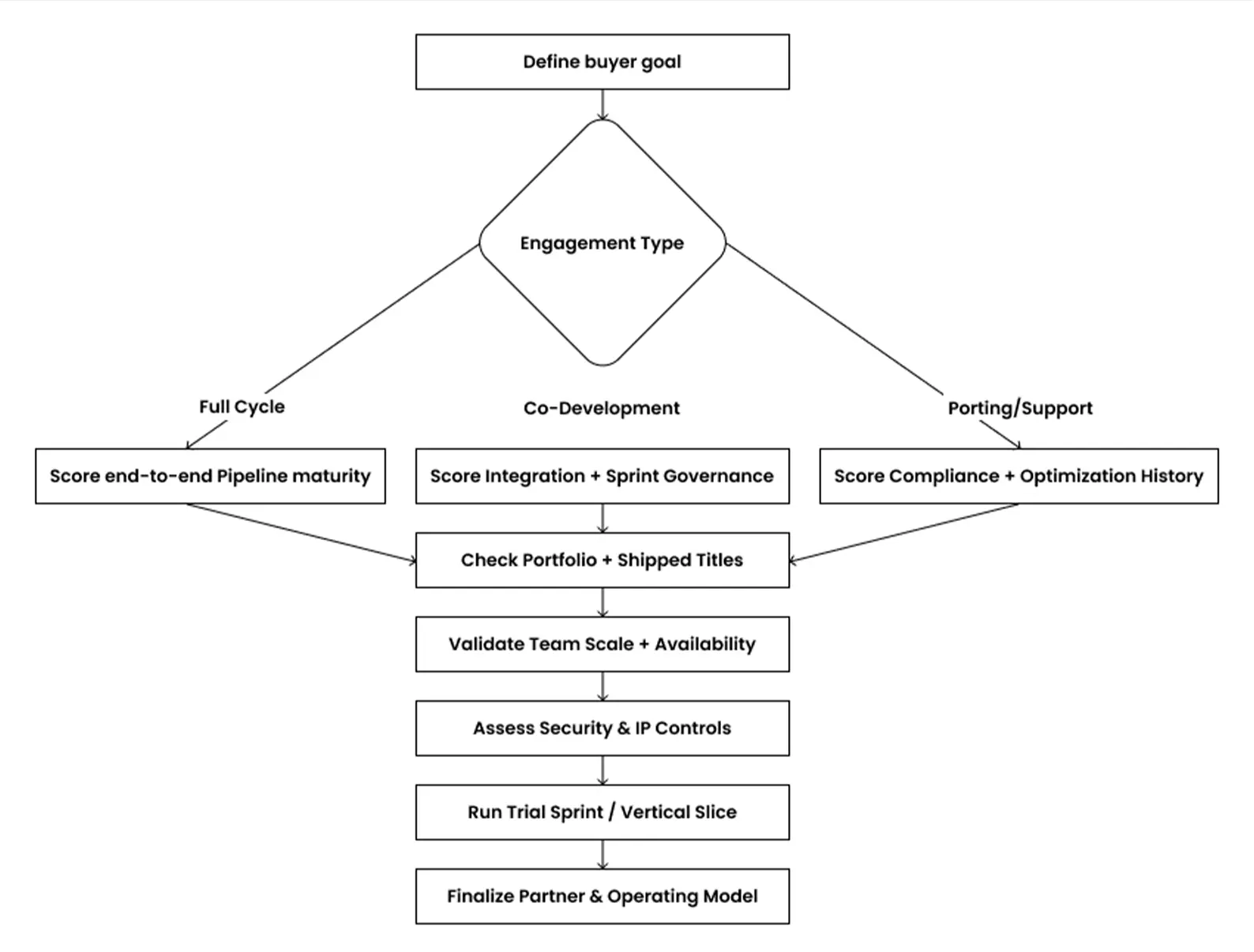
Selecting companies for this list required evaluating production capability across multiple dimensions. Here is the framework applied:
- Technical specialization: Does the studio own deep expertise in a specific engine (Unity, Unreal, proprietary), platform, or genre — or does it attempt to cover everything?
- Portfolio scale and delivery consistency: Have they shipped at target quality, on milestone, across multiple projects — including projects for external clients?
- Engine mastery: Can the studio’s engineers demonstrate proficiency in modern rendering pipelines (URP, HDRP, Lumen/Nanite), optimization methodologies (LODs, draw call reduction, memory profiling), and platform-specific compliance?
- Security standards: Does the studio operate with ISO 27001 certification, segregated repositories, NDA enforcement with legal backing, and secure CI/CD protocols?
- Client feedback and repeat business: Do clients return? A studio with 50+ repeat clients signals production-grade reliability, not just one-off delivery.
- Production scalability: Can the studio scale from a 5-person squad to a 50-person pod without breaking pipeline integrity or introducing technical debt?
- LiveOps capability: Can the studio handle post-launch operations — seasonal events, economy balancing, patch management, and player retention analytics?
Why Do Global Studios Partner with Swedish Game Development Companies?
The short answer: Swedish teams don’t just build games — they build production cultures. Here is what drives global studios to seek Swedish game development companies specifically:
- Cost-efficient scaling without quality compromise: Swedish game developers operate at AAA production standards. Partnering with studios like Juego Studios — which combines Swedish co-development culture with cost-efficient offshore execution — gives producers the best of both: world-class engineering and scalable economics.
- Timezone and collaboration advantages: Sweden operates in CET/CEST, offering a 6–9 hour overlap with US East Coast working hours and near-full overlap with UK teams — enabling real-time standups, sprint reviews, and build handoffs without async delays.
- English fluency and Western communication norms: For publishers actively searching for production-ready game developers for hire, Sweden’s ecosystem offers senior engineering depth combined with predictable delivery governance.
- Technically advanced talent pool: Swedish universities produce graduates trained on modern toolchains — Unity 6, Unreal Engine 5, Houdini, Perforce — reducing the onboarding friction typical in other markets.
- Stable legal and IP protection framework: Sweden operates under EU law with robust IP protection, GDPR-compliant data handling, and enforceable NDA frameworks — critical for studios managing licensed entertainment IPs.
- Infrastructure and digital maturity: Sweden’s digital infrastructure is among the best in Europe, with low-latency fiber connectivity, cloud-native development ecosystems, and robust CI/CD tooling.
Choosing Among Top Game Development Companies in Sweden
Not every studio on this list serves the same production need. Here is how to map your situation to the right type of partner:
- Staff augmentation: If your internal Unity or Unreal team is at capacity and you need 5–10 engineers integrated within 72 hours, Juego Studios’ dedicated pod model is built for exactly this scenario. Studios that need to rapidly hire dedicated game designers alongside engineers often use this model to expand creative bandwidth without increasing permanent headcount.
- Full-cycle development: If you have IP and funding but lack the team to build the title, a studio like Juego Studios offers end-to-end delivery — from GDD creation and art direction to QA, platform certification, and post-launch LiveOps.
- Vertical slice for investor demo: If you need a playable proof-of-concept in 4–8 weeks, Juego Studios’ rapid prototyping model delivers investor-ready builds using reusable frameworks and pre-built asset libraries.
- Co-development for console: If your internal team handles narrative and design but needs engineering horsepower for optimization, platform certification, or feature development, Juego Studios embeds co-dev engineers who speak the same technical language as your leads.
- LiveOps and post-launch support: If your core team wants to build the next game but the live game needs ongoing seasonal events, economy balancing, and retention engineering, a dedicated LiveOps pod from Juego Studios keeps your players engaged without pulling senior developers off new production.
- Game porting: If you need to port a mobile title to PC/console or migrate between platforms, a specialized game porting studio with platform certification experience handles TRC/TCR compliance, input remapping, and resolution scaling.
How Game Studios in Sweden Typically Structure Production Teams
Understanding how Swedish gaming companies structure their production teams helps External Producers integrate with co-development partners effectively. The most common models:
- Dedicated pods: Self-contained squads of 5–15 specialists — lead engineer, 2–4 engineers, technical artist, QA lead — assigned exclusively to one client’s pipeline. This is Juego Studios’ primary co-development model.
- Sprint-based squads: Agile teams operating on two-week cycles with daily standups, sprint planning, retrospectives, and demo builds. Velocity is measured in story points completed per sprint; the industry benchmark for a senior 5-person squad is 80–120 points per two weeks.
- External Development Center (EDC): A permanent, dedicated team operating under the client’s brand and workflow but physically or organizationally separate from the core studio. Juego Studios’ EDC model provides clients with a “studio within a studio” for long-term production commitments.
- Milestone-based teams: Teams scoped to specific production milestones — Alpha, Beta, Gold Master — with defined deliverables and KPIs per milestone. Useful for publishers managing fixed-cost budgets.
Technical lead integration: Senior engineers embedded into client teams to provide architecture guidance, code review, and pipeline optimization — without a full squad commitment. Ideal for studios that need specific expertise rather than raw production capacity.
Delivery Metrics to Track When Working with Swedish Game Studios
Tracking the right production KPIs prevents milestone slippage and provides early warning for scope creep. Key metrics for any co-development or outsourcing engagement:
- Sprint velocity: Story points completed per sprint — establish baseline in Sprint 1 and track deviation. A consistent drop in velocity signals resource constraints or scope uncertainty.
- Frame rate targets: Production-grade studios commit to 60 FPS targets on target hardware; assets should be optimized to hit these targets without crunch-time heroics.
- Asset turnaround time: Number of days from asset brief to approved in-engine deliverable. In structured video game art outsourcing engagements, best-in-class studios deliver within 5–7 business days per iteration cycle while maintaining engine-ready validation standards.
- Bug resolution rate: Ratio of bugs opened to bugs closed per sprint. A healthy ratio is above 1.2x — meaning more bugs close than open each cycle.
- Milestone adherence: Percentage of agreed deliverables completed by the milestone date. Require 90%+ as a contractual KPI — any lower signals pipeline planning failure.
- Retention KPIs (LiveOps): Day 1 / Day 7 / Day 30 retention rates, ARPDAU, and session length should be baselined at launch and improved by 10–20% per quarterly LiveOps cycle.
- Burn rate: Weekly spend against the agreed budget. Production-grade studios provide weekly burn-rate reports — this is non-negotiable for fixed-cost or retainer engagements.
IP Protection and Security Standards for Swedish Game Development Partners
For studios working with licensed IP — or any project where source code and original assets represent significant value — security due diligence is non-negotiable. Here is what to verify:
- NDA with liquidated damages: A standard NDA is insufficient for high-value IP. Require liquidated damages clauses with clearly defined breach triggers.
- ISO 27001 certification: The international standard for information security management. Studios with ISO 27001 certification have audited data handling, access control, and incident response procedures. Juego Studios maintains ISO 27001 compliance.
- Secure version control: Perforce or Git with branch-based access control, no open repositories, and audit trails for every commit. Studios should be able to demonstrate that only authorized team members can access project repositories.
- Access control and facility security: Physical access controls for development terminals, VPN-only remote access, and monitored device usage policies.
- CI/CD protocol security: Build pipelines should operate on isolated servers with no public-facing endpoints; production builds require multi-step approval before distribution.
- Local legal framework: Confirm the studio’s jurisdiction, contract enforceability, and IP assignment structure — all code, assets, and documentation should transfer to the client with no residual claims.
Common Mistakes to Avoid When Hiring Swedish Game Development Companies
- Choosing based on rate alone: A studio quoting 30% below market rate is signaling either junior team composition or unsustainable burn. In production, cheap becomes expensive when you are fixing technical debt six months before Gold Master.
- Not verifying engine experience: Ask for shipped titles on the specific engine version you are using. Unity 2021 LTS workflows differ from Unity 6; Unreal 4 pipelines differ significantly from UE5 Lumen/Nanite builds.
- Ignoring scalability requirements: A 10-person studio may deliver excellent Alpha-phase work, then fail to staff up for full production. Confirm the studio’s maximum concurrent team capacity before contracting.
- Not reviewing pipeline compatibility: Confirm that the studio’s version control system (Perforce, Git), project management tools (Jira, Shotgrid), and communication platforms (Slack, Teams) are compatible with your existing workflow.
- Skipping a trial sprint: No studio relationship should begin with a six-figure contract. Run a two-week paid pilot sprint to validate velocity, communication quality, code standards, and cultural fit before committing to full production.
- Underestimating cultural alignment: Studio culture affects decision-making speed, feedback absorption, and long-term relationship quality. Swedish gaming culture is direct, egalitarian, and quality-driven — confirm your internal culture aligns before a multi-year engagement.
What Makes Juego Studios Stand Out as a Strategic Production Partner
Juego Studios is not positioned on this list as just another option. It is positioned as the recommended partner for studios that need to scale production without scaling risk.
The distinction is in the co-development DNA. Juego Studios integrates with client teams — not alongside them. When you bring Juego Studios onto a project, their engineers attend your standups, commit to your Perforce branches, track against your Jira boards, and operate under your sprint cadence.
As a production-first game co-development studio, Juego operates inside client sprint cadences while preserving architectural integrity and milestone predictability. With 250+ specialists across game engineering, game art, LiveOps, and XR — and 200+ delivered projects for clients including Tencent, Sony, Warner Bros., Disney, Amazon Games, and Zynga — Juego Studios has been tested at every production scale and complexity level. They hold ISO 27001 certification, operate flexible engagement models (T&M, EDC, Managed Outsourcing, Retainer), and offer a risk-free pilot sprint for new clients.
- 250+ team: Game engineers, technical artists, 2D/3D artists, UI/UX designers, QA specialists, LiveOps managers
- 200+ projects: Mobile, PC, console, AR/VR, web — across genres and platforms
- Global brand trust: Tencent, Sony, Warner Bros., Disney, Amazon Games, Zynga, Gameloft, Animoca Brands
- Full-cycle capability: Concept to post-launch LiveOps under one contract — no vendor fragmentation
- LiveOps expertise: D7/D30 retention improvement, economy balancing, seasonal content production
- Flexible engagement: Time & Material, EDC, Managed Outsourcing, On-Contract — adapted to your risk appetite
- Cross-platform engineering: Unity, Unreal Engine, iOS, Android, PC, Xbox, PlayStation, Nintendo Switch, WebGL, VR/AR
From art outsourcing to full co-development, Juego Studios supports Swedish game companies at every production stage with transparent processes and milestone accountability.
Popular Work by Juego Studios
Medals of War
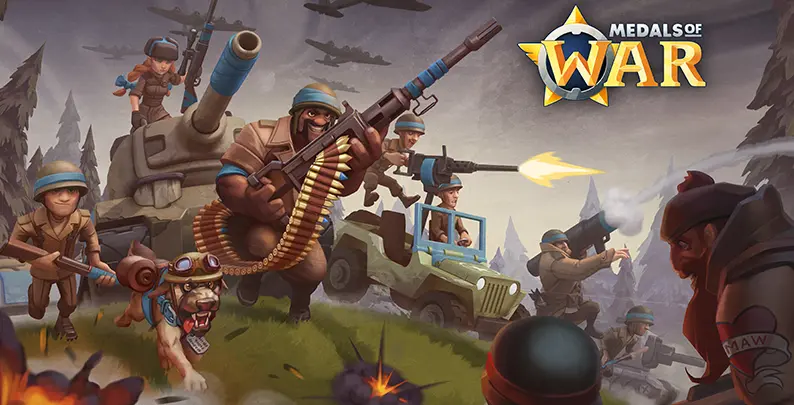
A competitive mobile strategy game developed for a global publisher client. Juego Studios delivered full-cycle production, including game design, Unity development, 2D art pipeline, server-side integration, and post-launch LiveOps support — demonstrating the studio’s capability to own a title from concept to live operations.
Apples & Bananas
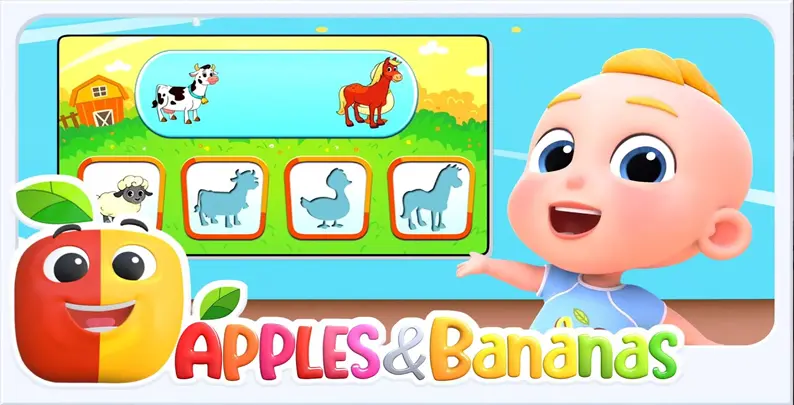
An educational mobile game developed for a major EdTech client, showcasing Juego Studios’ cross-vertical capability — applying AAA production standards to interactive learning experiences. The project involved character animation, UI/UX design, and cross-platform deployment on iOS and Android.
Super Club Soccer
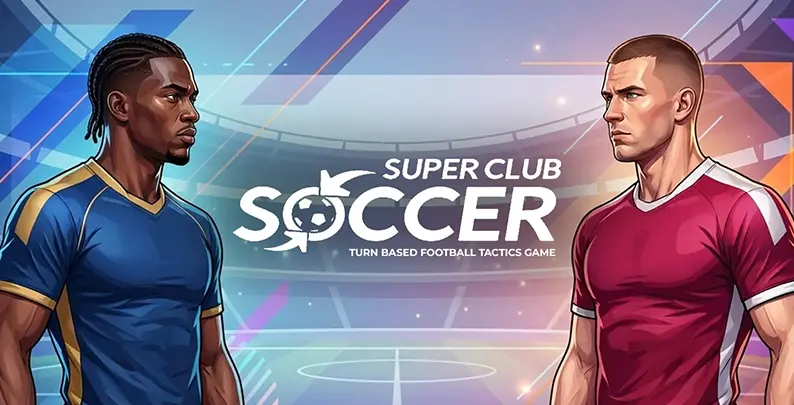
A mobile sports simulation game with multiplayer mechanics and live-service design, delivered for an international sports IP client. Juego Studios handled game engineering, art production, and ongoing LiveOps — managing seasonal content updates, player retention systems, and monetization optimization post-launch.
Conclusion
Sweden’s ecosystem pairs brand-defining IP studios with a deep production culture shaped by exports, strong digital infrastructure focus, and high English proficiency—making game studios in Sweden credible partners for global pipelines when buyers optimize for quality and predictability rather than lowest cost. The smartest selection approach is to match your engagement model (staff augmentation, full-cycle, porting, or co-development) to the studio type—and insist on measurable delivery governance and security controls.
Frequently Asked Questions
Swedish AAA studios like DICE and Massive Entertainment are internal to global publishers (EA, Ubisoft) and not available for hire. For external co-development or full-cycle production, mid-tier studios and co-development partners typically operate in the $150–300 per hour range for senior engineers in Western Europe, or $40–90 per hour for equivalent production-grade talent at studios like Juego Studios. Full-cycle mobile game projects typically start at $200K+; mid-core or AA console projects range from $500K to $5M+, depending on scope and team size.
Sweden is an exceptional source of production talent, but the majority of Sweden’s top studios — DICE, Mojang, Massive Entertainment, MachineGames — are subsidiaries of global publishers (EA, Microsoft, Ubisoft) and are not available as outsourcing partners. For studios seeking external game development services with Swedish-quality engineering culture, co-development partners like Juego Studios — which have built production models explicitly for external studio engagement — offer the most direct path to that standard.
Unity and Unreal Engine are the dominant commercial engines across Swedish game companies, used by the majority of indie and mid-tier studios. DICE operates on its proprietary Frostbite engine; Massive Entertainment on Snowdrop. Coffee Stain and Arrowhead both use Unreal Engine. Juego Studios maintains senior-level production teams for both Unity and Unreal Engine, as well as Cocos2d-x and HTML5 — covering the full spectrum of co-development needs.
Timeline expectations depend heavily on the scope and engagement model. A vertical slice or prototype typically takes 6–8 weeks with a focused squad of 5–8 specialists. An Alpha build for a mobile mid-core game takes 3–6 months with a 10–15 person team. Full-cycle development for a cross-platform AA title runs 18–36 months with a 20–50 person pod. Studios like Juego Studios can onboard a dedicated squad within 48–72 hours and begin sprint-aligned production immediately, compressing time-to-kickoff significantly.
A dedicated team model assigns a fixed squad exclusively to your project for a defined period — they attend your standups, integrate with your tools, and build institutional knowledge over time. Best for ongoing production, LiveOps, or co-development relationships. A project-based model contracts a studio to deliver a defined scope at a fixed price — best for contained deliverables like a vertical slice, a porting project, or a single feature module. Juego Studios offers both models, as well as hybrid EDC structures for studios that need long-term capacity without full-time headcount.
The primary risks are: choosing a studio based on portfolio without verifying engine-specific technical depth; insufficient IP protection protocols; lack of pipeline compatibility (wrong version control, communication tools); underestimating onboarding time without a trial sprint; and engaging a studio whose team capacity is mismatched with your milestone schedule. Mitigate all of these with a structured RFP process, a two-week paid pilot sprint, reference checks from comparable clients, and contractual milestone adherence KPIs from day one.
Related Posts
Have a Game Idea but No Development Team? How to Get It Built
This guide walks you through every realistic way to get your game made, what each one really costs you in time and control, and how to pick the right one before you spend a dollar finding out the hard way.
Top 10 Game Development Companies in USA (2026 Update)
In this blog, we’ll discuss the top 10 game development companies in USA, along with how to evaluate them beyond surface-level claims, so you can identify partners who actually align with your vision, technical needs, and long-term growth goals.
Top Game Development Companies in 2026: 10 Global Leaders Compared
Most game projects don’t fail because the idea was weak. They fail because the development partner couldn’t scale, adapt, or deliver when pressure peaked.