


 Unity
Unity Unreal
 Godot
Godot
 Mobile
 PC
PC Console
 Full-Cycle
 Co-Development
 Outstaffing




-
 Gaming Industry
 Mar 26th, 2026
- Share:
Table of Contents
One in four people on the planet has played a video game built in Sweden. That’s not marketing copy — it’s from Sweden’s own trade data. A country of 10.5 million people generated SEK 36.8 billion (~$4 billion) in domestic game revenue in 2024, which accounts for roughly 20% of Steam’s total gross revenue in 2025, and placed five titles in Steam’s global top-10 bestsellers in a single year. From Minecraft’s 350-million-unit dominance to Helldivers 2 becoming PlayStation’s fastest-selling first-party launch ever, games developed in Sweden have shaped how the world plays.
This blog breaks down the biggest Swedish gaming hits, why Sweden’s ecosystem keeps producing them, and what’s trending among Swedish players right now.
The Rise of Sweden as a Global Superpower
Sweden’s influence on the global games market is disproportionate by any measure. The country hosts 1,101 active game companies as of 2026, employs over 9,100 people domestically in game development, and exports games that represent 3% of Sweden’s total service exports — rivaling iron ore and fashion. Stockholm alone houses 464 studios, including the teams behind Battlefield, Minecraft, Candy Crush, Helldivers 2, and It Takes Two.
But the story isn’t just AAA. The Swedish gaming industry runs the full stack: massive free-to-play mobile titles generating $1 billion annually, five-person indie teams shipping million-selling Early Access hits from Skövde, and extraction shooters built in Unreal Engine 5 pulling near-million concurrent player peaks. Understanding which video games developed in Sweden matter — and why the pipeline keeps producing — is relevant whether you’re scouting co-development partners, evaluating market entry, or just trying to understand why a 13-person team in a small Swedish city shipped one of the decade’s biggest survival games.
TLDR
- Sweden is the world’s highest per-capita game development nation, with over 1,100 studios generating ~$4 billion in annual revenue.
- Landmark Swedish-developed games include Minecraft (350M+ copies), Candy Crush Saga (3.6B+ downloads), Battlefield (100M+ players), Helldivers 2 (20M+ copies), It Takes Two (23M+ copies, GOTY 2021), and Valheim (12M+ copies from a 5-person team).
- Key development hubs are Stockholm, Malmö, Skövde, and Gothenburg — each with a distinct studio ecosystem ranging from AAA to indie.
- Popular games played in Sweden lean heavily toward co-op, adventure, and PC/Steam titles, with Counter-Strike, Dota 2, and Red Dead Redemption II among consistent favorites.
- Recent Swedish breakouts like R.E.P.O., Peak, ARC Raiders, and Content Warning prove the pipeline is still producing global hits.
- Sweden’s success traces back to early PC adoption, demoscene culture, world-class game education, and a dot-com crash that redirected an entire generation of engineers into game development.
- Studios and publishers targeting the Swedish and Nordic market can partner with Juego Studios — a full-cycle co-development partner with 250+ team members, 200+ shipped projects, and localization support across 15+ languages — to build, scale, and launch production-grade games regionally and globally.
What Makes Sweden a Global Game Development Powerhouse
Most countries produce one or two breakout studios and call it a golden era. Sweden has been producing them continuously for 30 years across AAA, indie, mobile, and strategy — from DICE and Mojang to Iron Gate and Semiwork. The reasons are structural, not accidental, and worth understanding if you’re building games or entering this market.
-
Hit density that defies population math
Sweden’s 1,101 game companies generated SEK 36.8 billion (~$4 billion) in domestic revenue in 2024, with an additional SEK 36 billion from Swedish-owned subsidiaries abroad. Swedish games account for an estimated 20% of Steam’s total gross revenue in 2025. Five Swedish-made titles — Battlefield 6, R.E.P.O., Peak, ARC Raiders, and Split Fiction — sat simultaneously in Steam’s global top-10 bestsellers.
This hit density stems from structural factors, not luck. The University of Skövde’s game programs feed directly into Sweden Game Arena and Sweden Game Startup, which incubated studios like Coffee Stain and Iron Gate. A new Game Development Research Centre (GDRC), funded with SEK 29 million from the Knowledge Foundation, now formally links Malmö University, Blekinge Institute of Technology, and Karlstad University into a unified research pipeline.
-
The 1998 Home PC Reform and the dot-com pivot
A 1998 government initiative let Swedish employees lease personal computers through employers with significant tax benefits, making Sweden one of the most computer-literate nations in the world, precisely when indie game development tools were becoming accessible.
Before that, Sweden had the Commodore 64 generation — teenagers programming in BASIC, participating in the demoscene, and building audiovisual experiences under extreme hardware constraints. DICE’s founders came directly from The Silents, an Amiga demogroup. That creative coding culture maps directly onto game development.
The dot-com crash of 2000 was the final catalyst. Engineers who survived the collapse pivoted to English-language games targeting the global market. Early broadband adoption, government creative grants, and DreamHack — the world’s largest LAN party — completed the ecosystem.
-
Stockholm, Malmö, Skövde, and Gothenburg as distinct hubs
Sweden’s game geography isn’t monolithic. Each city has a distinct character:
Stockholm (464 studios) is the AAA and live-service center — home to DICE, Mojang, King, Embark Studios, Arrowhead, Hazelight, Paradox Interactive, and Avalanche Studios. The three largest employers (Ubisoft Massive, King, EA DICE) all operate here or in the broader Stockholm–Malmö corridor.
Malmö (146 studios) is anchored by Massive Entertainment (Ubisoft), a 700+ person studio working on Star Wars Outlaws and Avatar: Frontiers of Pandora, alongside Tarsier Studios (Little Nightmares). The Nordic Game conference — Europe’s leading games industry event — is held here annually.
Skövde (156 studios in the region) is the education-to-indie pipeline. The University of Skövde runs 12 degree programs in games with ~500 students. Coffee Stain Studios, Iron Gate Studio (Valheim), and Stunlock Studios (V Rising) all emerged from this ecosystem.
Gothenburg is a growing hub home to Thunderful Group (SteamWorld series), with Sweden Game Arena expanding its presence here. Notable studios elsewhere include MachineGames in Uppsala (Wolfenstein: The New Order, Indiana Jones and the Great Circle) and Frictional Games in Helsingborg (Amnesia).
The Biggest Games Made in Sweden (And Why They Dominated)
Sweden has produced more global gaming hits per capita than any other country. Here’s a breakdown of the most popular games developed in Sweden — what made them win, who plays them, and what every studio can learn from their success.
1. Minecraft
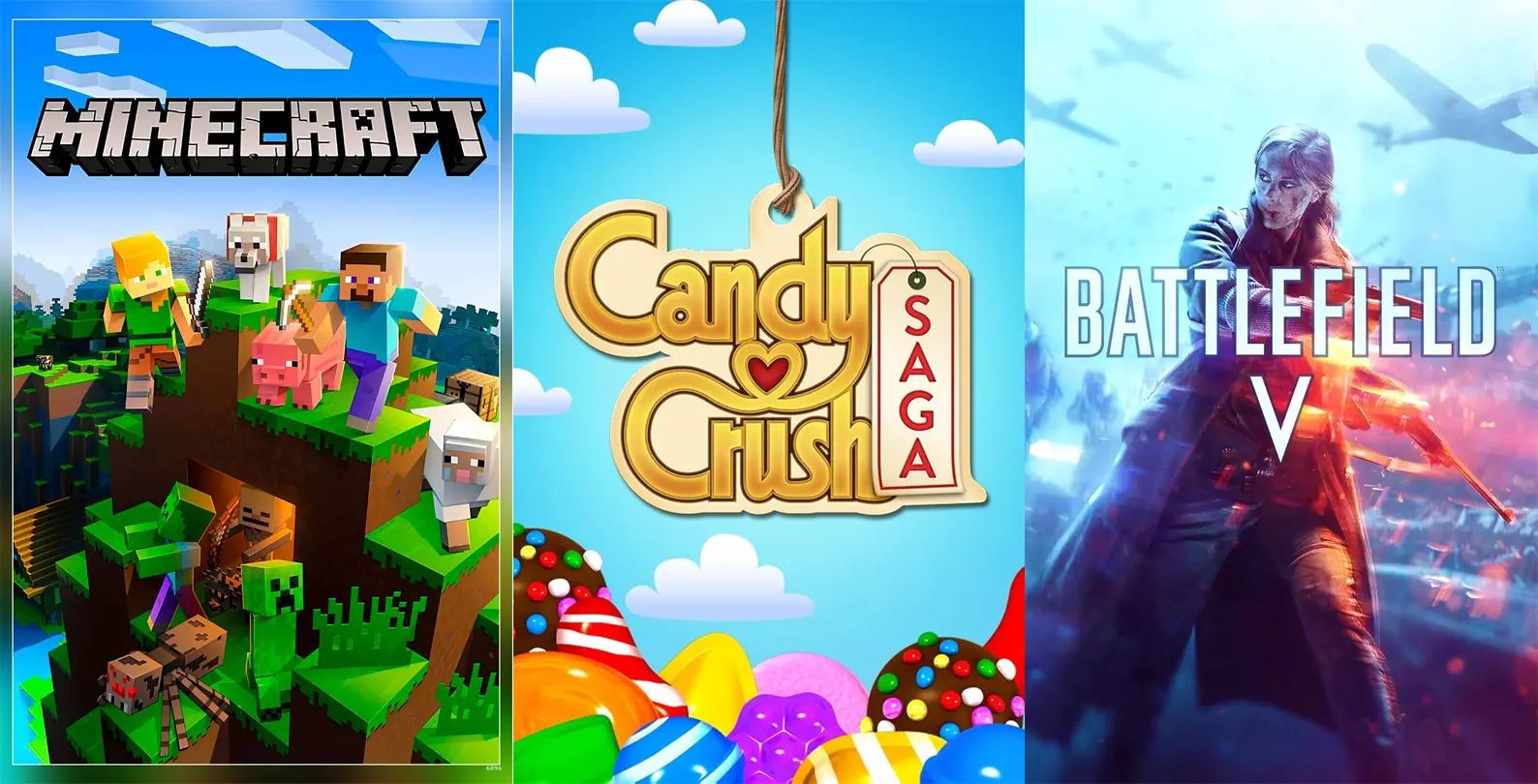
No list of the most popular games developed in Sweden starts anywhere else. Markus “Notch” Persson released the first Java alpha in 2009 from Stockholm. Mojang Studios formalized shortly after. Microsoft acquired Mojang in 2014 for $2.5 billion — a figure that looked aggressive at the time and now looks like a bargain.
Minecraft has sold over 350 million copies, making it the best-selling video game of all time. Monthly active players hover around 193–225 million globally, with peaks above 222 million. The Chinese edition alone has surpassed 700 million registered users through partner NetEase. The game is localized into over 100 languages, including community translations and fictional languages like Pirate English and Klingon — a localization scope virtually no other title matches.
The audience spans every demographic: children building castles, educators running Minecraft: Education Edition curricula, speedrunners, redstone engineers, modding communities, and a YouTube ecosystem that made Minecraft the first game to surpass 1 trillion views. Its sandbox design — no prescribed objectives, infinite procedural worlds — created a template that dozens of survival-crafting games still follow.
For any game development studio evaluating what makes a title endure for 15+ years, Minecraft’s answer is radical openness: mod support, cross-platform availability on every device that has a screen, and a localization strategy that treats language coverage as a growth lever rather than a cost center.
2. Candy Crush Saga
King, headquartered in Stockholm, launched Candy Crush Saga on Facebook in April 2012 and on mobile later that year. The numbers are staggering: over 3.6 billion downloads, lifetime revenue exceeding $20 billion, and consistent annual revenue north of $1 billion. At peak, 327 million people played monthly. Even now, roughly 170–180 million monthly active users still match candies.
King was acquired by Activision Blizzard for $5.9 billion in 2016, and subsequently folded into Microsoft’s $69 billion Activision purchase in 2023. King remains the top-grossing Swedish game developer by net sales (~€665 million in 2023).
Candy Crush’s audience skews older and more female than the stereotypical “gamer” demographic — a profile that made mobile gaming impossible for the industry to ignore. From a localization standpoint, the game operates in 196 countries with minimal text-heavy content, meaning its match-three core gameplay required relatively light linguistic localization but heavy cultural and monetization localization across markets. That distinction matters: games entering the Nordic or Swedish market need to understand that localization isn’t just translation — it’s adapting monetization models, store listings, and cultural references.
3. Battlefield
EA DICE, founded in 1992 in Växjö by four former members of the Amiga demogroup The Silents, now operates from Stockholm with roughly 700 employees. The Battlefield franchise spans 12 mainline titles since Battlefield 1942 (2002), with cumulative sales exceeding 100 million units and 5 billion hours played across the series.
Battlefield 1 (2016) alone moved 21–25 million copies and logged 59 million hours of play within its first 10 days. Its open beta drew 13.2 million players — EA’s largest beta ever at the time. Battlefield 6 (2025) launched to record numbers: over 7 million copies in its first three days, contributing to Stockholm-based developers accounting for 16% of all Steam revenue that year.
Beyond the franchise itself, DICE built the Frostbite engine, which powers games across EA’s entire portfolio. That engine contribution positions DICE not just as a game development company but as a core technology provider within one of the world’s largest publishers. Battlefield’s audience is the competitive/tactical multiplayer crowd — players who care about destruction physics, squad coordination, and 64+ player battles. Localization across the franchise typically covers 12–15 languages at launch, with full voice acting in major markets.
4. Helldivers 2
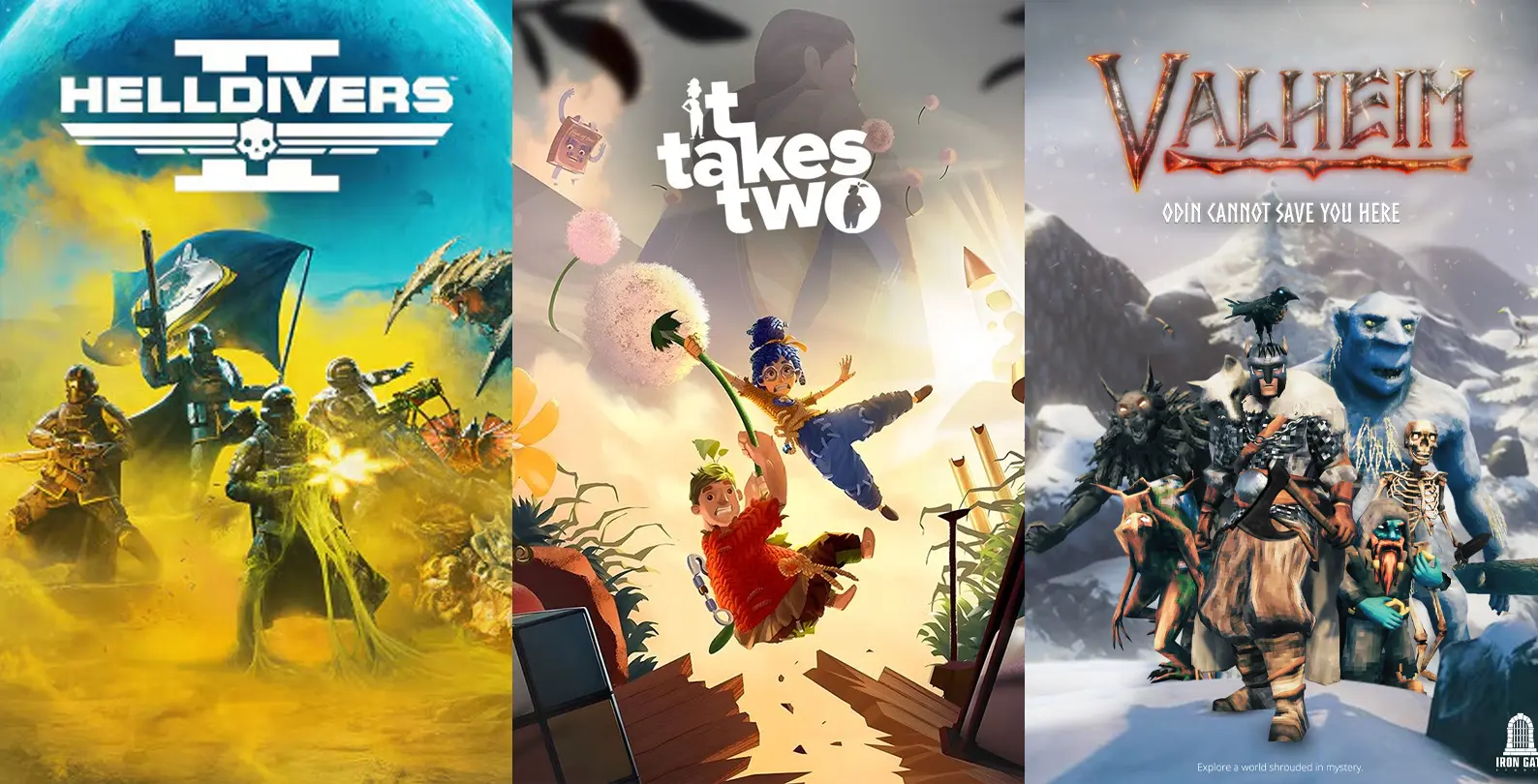
Arrowhead Game Studios, a Stockholm-based team of roughly 140 people, shipped Helldivers 2 on February 8, 2024, published by Sony Interactive Entertainment. It became PlayStation’s fastest-selling first-party title ever: 12 million copies in its first 12 weeks, surpassing God of War Ragnarök. Total sales now exceed 20 million copies across PS5, PC, and Xbox, generating over $700 million in copy sales alone — with microtransactions accounting for more than half of total revenue, per Sony CEO Hermen Hulst.
The game’s satirical sci-fi tone — a love letter to Starship Troopers — and its cooperative squad-based gameplay reflect something multiple analysts have noted about Swedish game developers: a cultural predisposition toward cooperative design and dry, self-aware humor. Tencent subsequently acquired a 15% stake in Arrowhead for $80 million, valuing the studio at $532.8 million. Arrowhead’s next project is fully self-funded.
Peak concurrent players hit 458,000+ on Steam alone. The game won Best Multiplayer at The Game Awards 2024 and Swedish Game of the Year from Dataspelsbranschen. For the broader Swedish gaming industry, Helldivers 2 proved that a mid-sized Stockholm studio could deliver a global live-service hit without the headcount of a DICE or Ubisoft Massive.
5. It Takes Two
Josef Fares — a Swedish-Lebanese film director turned game designer — founded Hazelight Studios in Stockholm in 2014. It Takes Two, published under EA Originals in March 2021, is a strictly two-player cooperative action-adventure about a divorcing couple miniaturized into their daughter’s toys. The team of roughly 60 people built a game that changes its core mechanics every 20 minutes, a design approach that requires unusually high production discipline.
The result: over 23 million copies sold, Game of the Year at The Game Awards 2021, GOTY at the 25th D.I.C.E. Awards, BAFTA wins for Multiplayer and Original Property, and a film adaptation in development with Amazon MGM Studios. Hazelight’s follow-up, Split Fiction (March 2025), sold over 2 million copies in its first week — the studio’s fastest launch.
It Takes Two’s “Friend’s Pass” feature lets a second player join free, effectively doubling the player base to 40+ million people who’ve experienced the game. That mechanic is a case study in using accessibility as a growth strategy rather than a revenue concession.
6. Valheim
Iron Gate Studio started as a solo project by Richard Svensson in 2017, grew to five people, and launched Valheim into Early Access on Steam on February 2, 2021. The Viking-themed survival sandbox hit 1 million copies in its first week, 5 million in five weeks, and has now surpassed 12 million copies sold with over $177 million in Steam revenue. Peak concurrent players reached 502,000.
Iron Gate emerged from the University of Skövde and the Sweden Game Startup program — both part of the Skövde ecosystem that also produced Coffee Stain Studios (which published Valheim). The studio has grown to roughly 13 employees and is still in Early Access as of early 2026, with major content updates, including Hearth & Home, Mistlands, and Ashlands, keeping the player base engaged. Steam reviews sit at Overwhelmingly Positive (95% of 386,000+ reviews).
Valheim’s success is the clearest proof point for Sweden’s indie pipeline: a micro-team using the right incubator infrastructure, publishing through a local partner (Coffee Stain, Skövde), and reaching a global audience through Steam without any marketing budget to speak of. The game is available in 14+ languages.
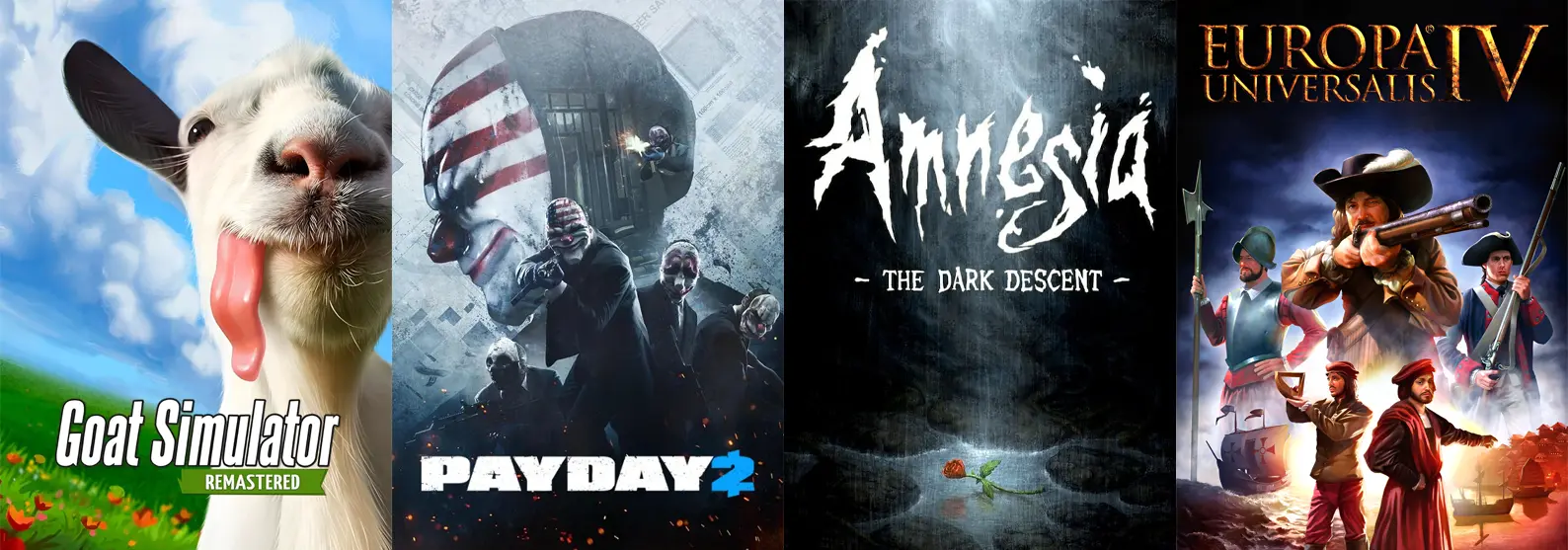
7. Goat Simulator
Coffee Stain Studios in Skövde built Goat Simulator as an internal game jam prototype in January 2014. Alpha footage hit 1 million YouTube views in two days. The game launched on Steam in April 2014 and recouped its development costs within minutes. By January 2015, it had sold over 2.5 million copies and generated $12+ million in revenue.
The game’s audience is broad: streamers, content creators, and anyone attracted to physics-based absurdity. It validated “joke games” as a commercially viable category, inspiring titles like I Am Bread and Untitled Goose Game. Coffee Stain followed with Goat Simulator 3 (November 2022) and a remaster in November 2024. From a localization perspective, Goat Simulator’s humor is largely visual and physical — slapstick that translates across cultures without heavy text localization, which contributed to its viral international spread.
8. Payday 2
Overkill Software, a Starbreeze Studios subsidiary in Stockholm, released Payday 2 in 2013. The cooperative first-person heist shooter accumulated 20–50 million Steam owners (including promotional free copies) and maintains 20,000–30,000 concurrent players over a decade after launch. With 671,000+ Steam reviews at 89% positive and 8.2 million community hub followers, it remains one of the most enduring live-service games on the platform.
Starbreeze underwent restructuring and bankruptcy protection in 2018–2019 but emerged to ship Payday 3 in September 2023. The franchise’s longevity demonstrates a pattern common among Swedish-developed games: build a cooperative core loop, support it for years, and let the community sustain itself. Payday 2’s audience is the tactical co-op crowd — players who want plan-and-execute gameplay with friends.
9. Amnesia
Frictional Games, a small studio based in Helsingborg, released Amnesia: The Dark Descent in September 2010. It sold 200,000 copies by January 2011 — double the team’s most optimistic projection — and has since accumulated 2–5 million Steam owners. More importantly, it pioneered the “defenseless protagonist” horror subgenre, directly influencing the design of Outlast, Alien: Isolation, and dozens of other horror titles.
Amnesia’s cultural impact extended beyond game design: PewDiePie (Felix Kjellberg, also Swedish) built his early YouTube career on Amnesia reaction videos, creating a symbiotic relationship between Swedish game development and Swedish content creation that accelerated both industries. Frictional followed with SOMA (2015), Amnesia: Rebirth (2020), and Amnesia: The Bunker (2023). In 2024, the Swedish government’s Game Culture Canon — a list of 15 titles of major cultural significance selected by an expert jury — included Amnesia alongside Minecraft, Candy Crush, Battlefield 1942, and It Takes Two.
10. Europa Universalis IV
Paradox Interactive, founded in Stockholm in 1999, occupies a category of its own in the Swedish gaming industry. Where most Swedish studios chased mass-market appeal, Paradox built one of the most fiercely loyal niches in all of PC gaming: the grand strategy player who wants to simulate the entire economic, diplomatic, and military history of a nation across centuries.
Europa Universalis IV (2013) is the flagship. With over 4 million copies sold and a modding community that has produced thousands of total-conversion mods, EU4 has maintained a concurrent player average above 20,000 for over a decade — an extraordinary retention figure for a non-live-service title. The game is supported by 30+ paid DLC expansions, a monetization model that generated Paradox roughly SEK 2.5 billion (~$240 million) in annual revenue at its peak.
From a localization standpoint, Paradox’s games present a unique challenge: text-heavy simulations with hundreds of thousands of words of in-game content, historical terminology requiring domain expertise, and UI strings that expand significantly in languages like German or Russian. Paradox has historically handled localization through community modding programs alongside official translation — a hybrid model that reduces cost while maintaining quality in major markets. For studios building in the grand strategy or 4X genre, Paradox’s localization architecture is worth studying before committing to a pipeline.
What Swedish Players Are Actually Playing Right Now
Understanding what’s popular inside Sweden matters as much as knowing what Sweden exports. The local player profile — platform preferences, genre affinities, and co-op culture — shapes what succeeds in this market and what doesn’t.
Steam Dominance and Co-op Culture Shape the Swedish Market
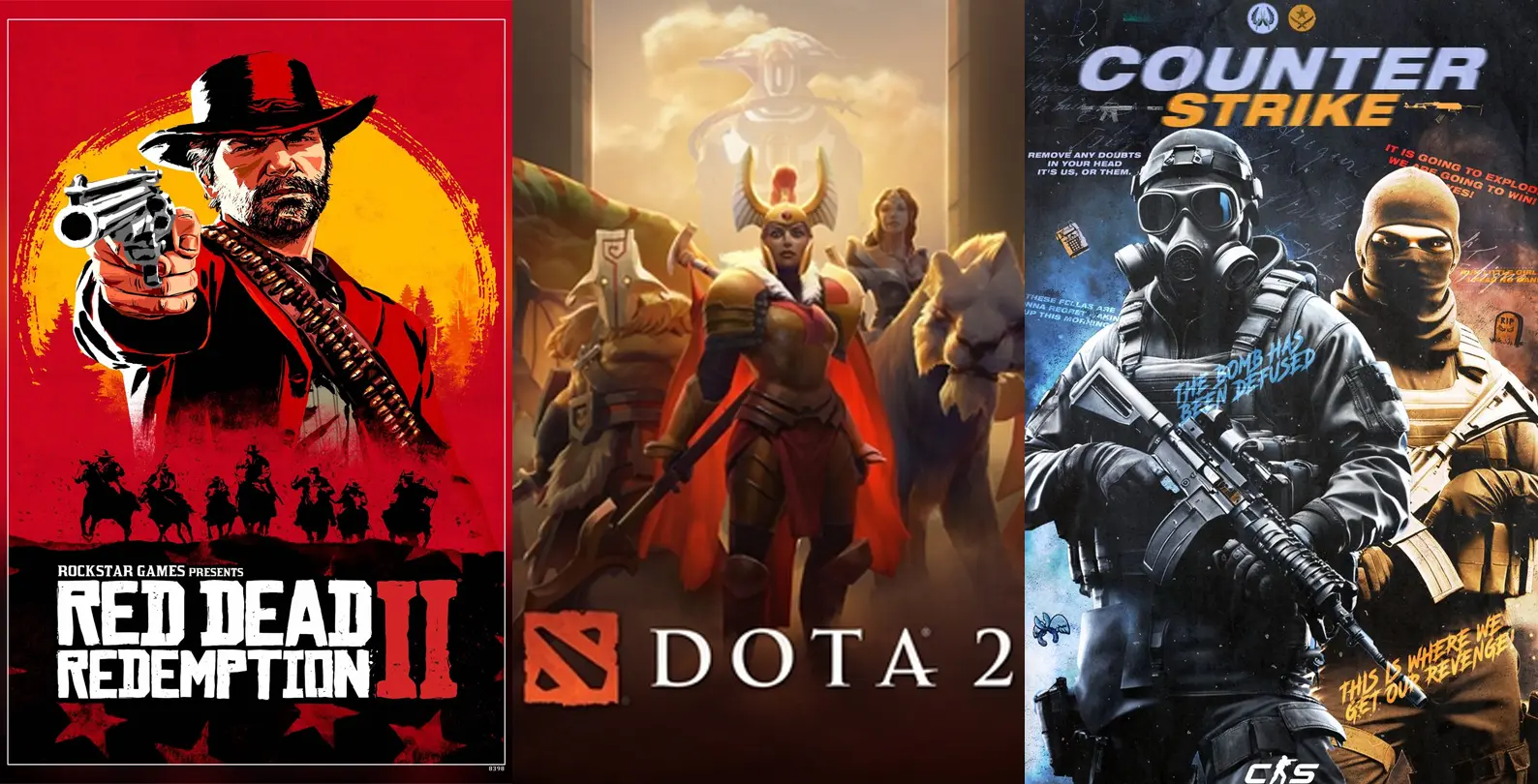
Roughly 4.7 million Swedes — 44% of the population — play video games, with smartphones as the most-used device, followed by consoles and PC. But the high-engagement segment skews heavily toward PC and Steam. Sweden’s top gaming websites by traffic tell the story: Twitch (13.28 million monthly visits), Discord (4.86 million), and Steam Community (3.28 million) dominate.
Adventure is the number-one game genre in Sweden, with over a third of gamers listing it as a preferred category. Red Dead Redemption II remains a standout title among Swedish players years after release. Dota 2 and Counter-Strike maintain strong Swedish followings — unsurprising given Sweden’s deep esports roots and teams that have competed at the highest international levels. World of Warcraft retains a loyal Swedish player base for its expansive world design.
The co-op trend is impossible to ignore. Among Us hit hard in Sweden, as did every major cooperative Swedish export — Helldivers 2, It Takes Two, Valheim. The cultural emphasis on cooperation that multiple analysts have identified in Swedish game design also shows up in Swedish player preferences: games that enable shared experiences consistently outperform solo-focused titles in the local market.
R.E.P.O., Content Warning, Peak, and the 2025–2026 Indie Wave
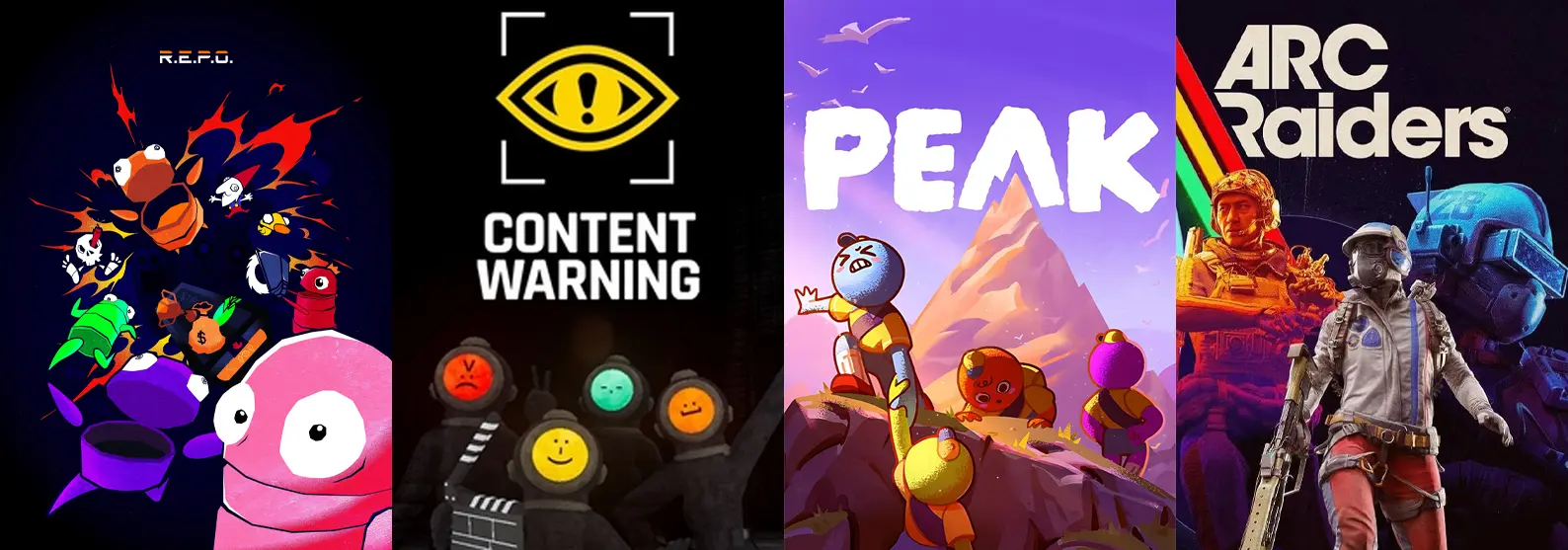
The most recent wave of popular video games in Sweden reinforces a pattern: small Swedish teams shipping cooperative games that go viral on Steam.
- R.E.P.O. (Semiwork Studios, Uppsala) launched into Early Access on February 26, 2025, as a co-op survival horror game for up to six players. Built in Unity by a team of roughly 6–10 developers, it sold an estimated 3.1 million copies in three weeks, hit 230,645 peak concurrent players on Steam, and earned “Overwhelmingly Positive” reviews (96% of 31,000+ reviews). R.E.P.O. accounted for 3% of all Steam units sold in 2025 and has been called the primary catalyst for a broader Swedish indie wave. The audience splits 29% US, 10% Russia, 4% Canada — a thoroughly global distribution from a tiny Uppsala studio.
- Content Warning (published by Landfall Games, Stockholm) launched April 1, 2024, as a co-op survival horror game about filming scary content for a fictional platform called “SpöökTube.” Built by five developers during a month-long game jam, 6.6 million Steam users claimed it for free in the first 24 hours. Peak concurrent players hit 204,000. After the free period ended, the $7.99 game sold roughly 2.2 million paid copies in two months. The cooperative filming mechanic and SpöökTube scoring system reflect what The Gamer described as “cooperation being something Scandinavia does best.”
- Peak (Aggro Crab and Landfall Games, Stockholm) is a co-op climbing game for up to four players that launched June 16, 2025, and has already sold over 10 million copies. Peak concurrent players exceeded 100,000 within the first week. Steam reviews sit at Overwhelmingly Positive (95% of 118,000+ reviews), and it won the Steam Awards 2025 “Better With Friends” category. The game supports 14 languages, including Swedish — a localization scope that reflects the game’s global co-op audience.
- ARC Raiders (Embark Studios, Stockholm) represents the AAA end of this wave. Founded in 2018 by former DICE veterans led by Patrick Söderlund and owned by Nexon, Embark built a PvPvE extraction shooter in Unreal Engine 5 that launched October 30, 2025, at $40 — notably pivoting from free-to-play to premium, inspired by Helldivers 2‘s success. ARC Raiders has sold over 12.4 million units, hit 960,000 peak concurrent players, and won Best Multiplayer at The Game Awards 2025. The game uses deep reinforcement learning for physically-based enemy animations — a technical differentiator that few studios outside the Swedish tech ecosystem would have the AI/ML talent pool to implement.
Nordic Nature and Swedish Landscapes as Game Settings
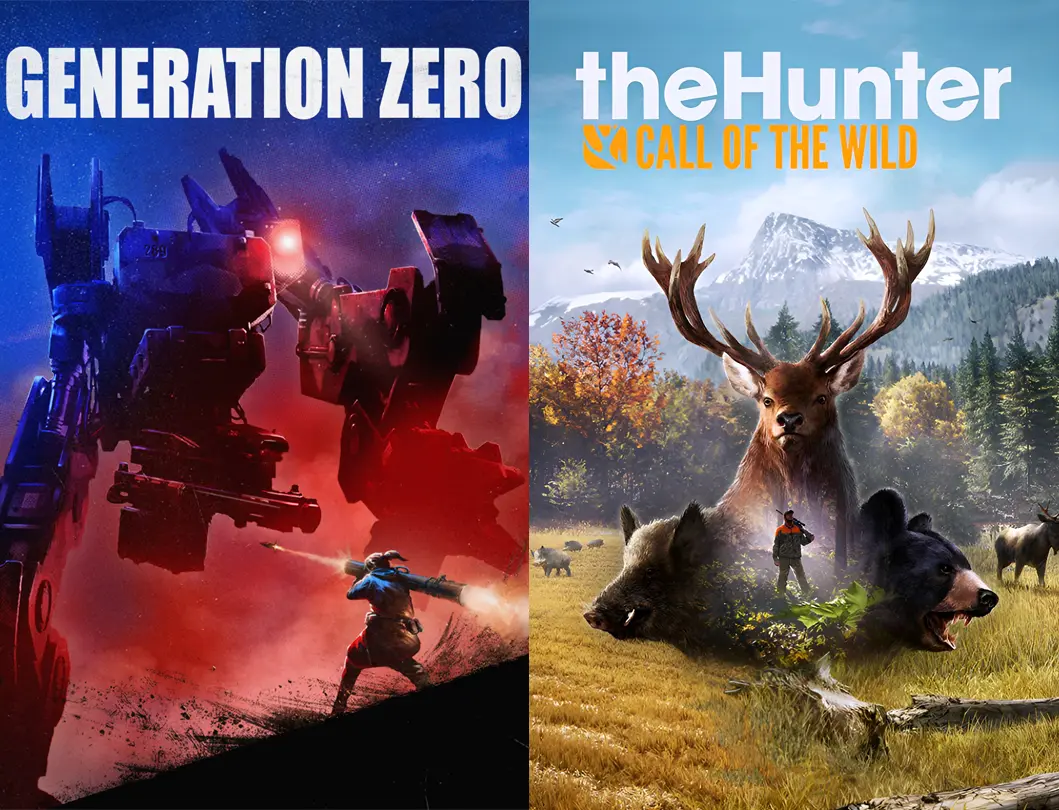
A distinct subcurrent in video games in Sweden is the use of Scandinavian landscapes and Nordic themes as core design elements.
- Generation Zero (Avalanche Studios / Systemic Reaction, Stockholm) is set in an alternate 1980s Sweden, complete with Cold War-era bunkers, Swedish countryside, and hostile machines roaming pastoral landscapes. The game has attracted over 6 million players and is a direct expression of growing up in Sweden during the Cold War, translating that specific cultural memory into open-world design.
- theHunter: Call of the Wild (Expansive Worlds, part of Avalanche Studios Group) uses the proprietary Apex engine to render photorealistic natural environments that draw heavily on Swedish and Nordic wilderness. Its commercial success directly funded and inspired the technology behind Generation Zero — the two games share damage systems, stealth mechanics, and 3D models.
The Nordic theme extends beyond Swedish studios. Valheim‘s Viking mythology, the success of Assassin’s Creed Valhalla (the franchise’s biggest hit), and God of War’s shift to Norse mythology (10M+ copies in its first year) all confirm that Nordic settings have become a major global gaming trend. Swedish studios are uniquely positioned to execute on this trend authentically. When outsourcing game development for Nordic-themed titles, proximity to the source culture produces meaningfully better environmental design, folklore integration, and atmospheric authenticity.
Strategic Launching in Sweden: How Juego Studios Facilitates Success
For studios planning to build or launch games in Nordic markets, understanding Sweden’s production standards is critical. This is where experienced co-development partner like Juego Studios can support teams scaling production or entering the region.
Engineering Excellence and Technical Mastery
Swedish studios are renowned for their technical polish and “over-delivery” on quality standards. Juego Studios employs expert Unity and Unreal Engine developers who can deliver the high-performance, systems-driven gameplay that Swedish audiences demand. Their mastery of shader techniques, physics simulation, and procedural asset generation—tools used by hits like R.E.P.O. and ARC Raiders—ensures that your project meets the rigorous standards of the Nordic market.
Flexible Partnership and Co-Development Models
The Swedish industry is currently in an “Efficiency” phase, where studios are looking for cost-effective ways to scale production without increasing domestic headcount. Juego Studios acts as a reliable full-cycle game development and co-development partner, offering several engagement models:
- Outstaffing: Integrating vetted specialists directly into your existing in-house workflows to fill specific skill gaps in programming or art.
- Dedicated Teams: Exclusively assigned teams that act as a long-term extension of your studio, maintaining deep alignment with your project’s creative vision.
- Managed Outsourcing: Taking full responsibility for project deliverables from concept to launch, ideal for startups or indie teams looking for end-to-end support.
Specialized Support for the Swedish Ecosystem
With a dedicated presence and understanding of the Stockholm gaming scene, Juego Studios is uniquely positioned to help international clients navigate the Swedish market. They provide specialized support for:
- PC and Console Game Development: Providing full-cycle and co-development services for multi-platform projects, covering RPGs, shooters, and strategy titles on Windows, PlayStation, and Xbox.
- Mobile Game Development: Crafting performance-optimized titles that incorporate Nordic design principles for iOS and Android.
- Art & Animation: Delivering AAA-quality 2D and 3D game art, character design, and animation using industry-standard tools like Maya and Houdini to ensure visual excellence.
- Game Design: Crafting comprehensive Game Design Documents (GDD), core mechanics, and level designs that prioritize player engagement and emergent gameplay.
- UI/UX: Designing intuitive, player-centric interfaces and seamless asset integration to enhance usability and overall player experience.
- AR/VR and Emerging Tech: Leveraging Swedish innovation in immersive experiences to build cutting-edge training or entertainment simulations.
- LiveOps and Monetization: Utilizing data-driven strategies to extend a game’s lifecycle and maximize revenue in a market that values long-term support.
By providing access to world-class game developers for hire, Juego Studios enables companies to bypass the local talent shortage in Sweden while maintaining the technical excellence that defines the “Swedish Game Wonder”.
Conclusion
Sweden’s position in global game development is not a fluke of one or two breakout titles. It is a 30-year compounding effect of early computer adoption, demoscene culture, world-class game education, government support, and an ecosystem where talent cycles fluidly between AAA behemoths and five-person indie teams. The numbers confirm it: 1,101 companies, $4 billion in domestic revenue, 20% of Steam’s gross revenue, and a game culture canon that the Swedish government now formally recognizes alongside literature and film.
The current trajectory is accelerating, not plateauing. R.E.P.O., Peak, ARC Raiders, and Content Warning prove the pipeline is still producing breakout hits from micro-teams and well-funded studios alike. For Technical Directors and Studio Heads evaluating where global game development is heading, Sweden’s model — distributed hubs, education-to-studio pipelines, cooperative design DNA, and Nordic cultural authenticity — offers a blueprint worth studying. The studios shipping the next wave of Swedish hits are already in production. The question is whether you’re building alongside them.
Frequently Asked Questions
Minecraft (350M+ copies), Candy Crush Saga (3.6B downloads), Battlefield series (100M+ players), Helldivers 2, It Takes Two, and Valheim rank among Sweden’s biggest global gaming exports.
Early PC adoption via the 1998 Home PC Reform, demoscene heritage, strong university game programs, government grants, and a dot-com crash that redirected tech talent into gaming created a self-reinforcing ecosystem.
Stockholm (464 studios including DICE, Mojang, King), Malmö (Massive Entertainment, Tarsier), Skövde (Coffee Stain, Iron Gate), and Gothenburg (Thunderful) form Sweden’s four primary development clusters.
Swedish players favor adventure games, co-op titles, and PC/Steam-based gaming. Minecraft, Dota 2, Red Dead Redemption II, Counter-Strike, and cooperative Swedish-made games like Helldivers 2 and Valheim are consistently popular.
Sweden had 1,101 active game companies in 2026, with 105 new studios founded that year. Around 202 studios employ five or more people, while nearly half operate as solo ventures.
Related Posts

US-Based Unreal Partners: How the Top 5 Compare in 2026
Picking a US-based Unreal partner matters most for teams building high-fidelity, performance-driven games. Visual standards keep climbing, console and PC pipelines keep getting stricter, and LiveOps readiness is no longer optional. Plenty of teams talk up their Unreal experience. Few deliver at a production-grade level once a title has to ship and stay live.
How Game Porting Works: Process, Stages, and Cost Breakdown (2026 Guide)
How does game porting work? This is one of the most frequent questions game developers ask as they look to expand their reach and take advantage of the different platforms available today. The game porting process is an important part of how developers can leverage the different platforms for their game, allowing them to reach a […]

Cost of Game Development in Australia
This blog talks about what it costs to build a video game in Australia in 2026 — covering developer salaries, project-type budgets, phase-by-phase cost breakdowns, Australian tax incentives like the Digital Games Tax Offset (DGTO), hybrid outsourcing strategies, and common budget mistakes studios make.