


 Unity
Unity Unreal
 Godot
Godot
 Mobile
 PC
PC Console
 Full-Cycle
 Co-Development
 Outstaffing




Console Game Development Company for High-Stakes Launches
Juego Studios is a console game development company shipping PlayStation, Xbox, and Nintendo Switch titles through full-cycle development, co-development, and porting. You get cert-ready builds backed by 200+ shipped titles and clients, including Disney, Sony, and Tencent.
- Home
- Game Development Services
- Console Game Development
10+
Years in Production
50+
Publishers Served
200+
Shipped Titles
250+
Engineers, Artists & QA

Forbes India Marquee List









Console launches are decided long before submission week. In console game development, frame pacing, memory budgets, and TRC, TCR, and Lotcheck compliance have to hold from the first devkit build, not the final sprint. Juego Studios owns that from day one — PlayStation 5, Xbox Series X|S, and Nintendo Switch builds kept cert-ready across Unity and Unreal Engine, with the same team carrying a title from prototype through post-launch patches.
Console Game Development Services for Studios Ready to Ship


Unity & Unreal Development
Console performance problems rarely come from engines alone. We optimize Unity and Unreal builds through memory budgeting, shader control, async loading, frame pacing, controller input layers, and first-party SDK integrations that keep gameplay responsive on target hardware.

Console Porting
Porting should expand revenue, not introduce submission risk. We adapt controls, UI, save systems, and platform APIs while aligning builds with platform requirements, ensuring smooth certification, performance parity, and maintainable shared codebases.

Console Art Production
Great art that breaks frame rate is expensive rework. We build console-ready characters, environments, UI, animation, and VFX using LOD planning, texture budgets, draw-call control, and engine-ready pipelines that balance fidelity with runtime performance.


Console UX & Input Systems
Console gameplay depends on responsive controls and intuitive navigation. We design and refine controller input systems, UI flows, and interaction layers that feel natural across platforms without compromising gameplay performance.

LiveOps Support
Player retention is won after launch. We support hotfix pipelines, telemetry dashboards, balance patches, seasonal content, storefront updates, DLC drops, and urgent regressions with the same team that already knows your architecture and release process.

Prototypes & Vertical Slices
Funding decisions move faster when stakeholders can play with the vision. We build polished prototypes and vertical slices that validate core loops, visual targets, technical feasibility, and performance budgets before full production spend is committed.
Engagement Models We Work With
Full-cycle Game Development
Missed milestones usually start with fragmented ownership. As a trusted console game development company, we run design, engineering, art, QA, optimization, and submissions under one delivery system, keeping scope controlled, builds stable, and launch windows protected across PlayStation, Xbox, and Nintendo Switch.
Console Co-Development
Need extra capacity without slowing your core team? Our console game developers embed into Jira workflows, Perforce branches, CI pipelines, and review cycles to own gameplay systems, tools, content production, or milestone recovery, contributing production-ready work from the first sprint.
Dedicated Console Teams
When roadmaps outgrow internal bandwidth, dedicated teams create predictable scale. We assign retained console engineers, artists, QA, and producers who learn your codebase, standards, and release cadence, delivering continuity that short-term freelancers cannot match.
One of the Most Trusted Game Development Studios

Well, I signed up to work with Juego Studios for a project and they really exceeded my expectations. The project was delivered on time, with no hiccups whatsoever. They are talented and professional game developers who get the job done without fail. I cannot recommend them enough!
Sam Anthony Gilfred
Sr. Project Manager
Amazon

I was very pleased with the quality of the work we received for our project. They were delivered on time and with very minimal feedback from our team. Juego Studios is good company to work and will be looking to them for our future projects!
Paul Skinner
Director
Wicked Witch Studios

It's safe to say that most regular human beings would be shocked and daunted at the idea of having to do a high quality game for iOS and Android, within a deadline of few months. I can honestly say that this work not the case with Juego Studios. They responded reactively, calmly and productively, and ended up delivering a game that both myself, the LatAm team, and users, were very happy with. There is a calm and experienced professionalism to the Juego team, and I would not hesitate to use them again.
Josh Saunders
Senior Director,
Innovation (Warner- Group)

The Juego Studios team was instrumental in developing one of our recent apps. We were able to supplement our small development team with several more developers that worked on front and backend features. They filled gaps wherever necessary and accelerated our time to market. After release, they continued to help us with new features and bug fixes. I would work again with them if needed.
Robert Baily
Director of Application Programming
JumpStart Games
Discover our diverse portfolio

NBA 2K21
ONE OF THE BIGGEST SPORTS GAMES ON THE PLANET
Sports Simulation

Why Studios Trust Juego for Console Game Development Projects

Proven Console Delivery
Console launches fail when performance debt, submission blockers, or unstable milestone builds surface too late. We’ve supported PlayStation, Xbox, and Nintendo Switch releases with production-grade delivery that keeps frame targets, cert readiness, and launch schedules aligned from alpha through post-ship updates.

Senior Production Teams
External teams should add velocity, not consume leadership bandwidth. Our senior console game developers and technical artists—experienced on PS5 and Xbox Series X, not adapted from mobile—work within your pipelines, delivering production-ready output from the first cycle.

Workflow Alignment
External teams often slow production when they don’t match existing workflows. We align with your pipelines, sprint cadence, and tools like Jira, Slack, Git, and Perforce from the start, so integration friction doesn’t delay builds or disrupt ongoing production.

Platform-Specific Expertise
PlayStation, Xbox, and Nintendo Switch demand different performance targets, input systems, and player expectations. We adapt gameplay, controls, and system behavior early so builds don’t require late-stage rework or compromise player experience across platforms.

IP & Repository Security
Console development involves shared codebases, unreleased assets, and live repositories. We enforce access control, branch governance, and clear ownership structures to keep your IP protected while development continues without operational friction.

Post-Launch Continuity
The highest-risk production period often starts after launch. Our delivery teams can stay engaged for crash triage, hotfix pipelines, telemetry-led tuning, patch submissions, DLC drops, and performance regressions without losing time to re-onboarding a new vendor.
Our Case Studies
Medals Of War
Medals of War is a strategy game with a military theme. Players command their own armies using different types of troops and compete against one another in PvP battles.
 Platform: iOS & Android
 Game Engine: Unity 3D
 Genre: Real Time Strategy
Art: 3D
Genre: Real Time Strategy
Art: 3D

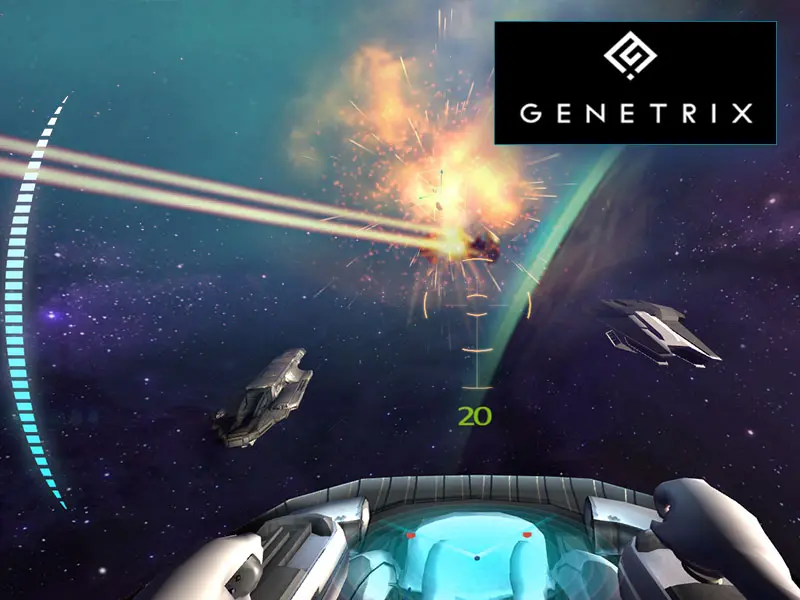
Genetrix - VR Shooter Game
Genetrix is a VR space shooter game which is set in a deep part of our galaxy with Sci-fi based futuristic game designs. Game-play revolves around the battle sequence in space, among asteroids, shooting down your opponents ships. Gamers will be piloting their spaceships, while exploring the futuristic feel of outer space.
Platform: VR
Game Engine: Unity 3D
Genre: Space shooter game
Art: 3D
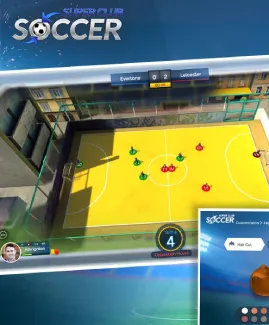
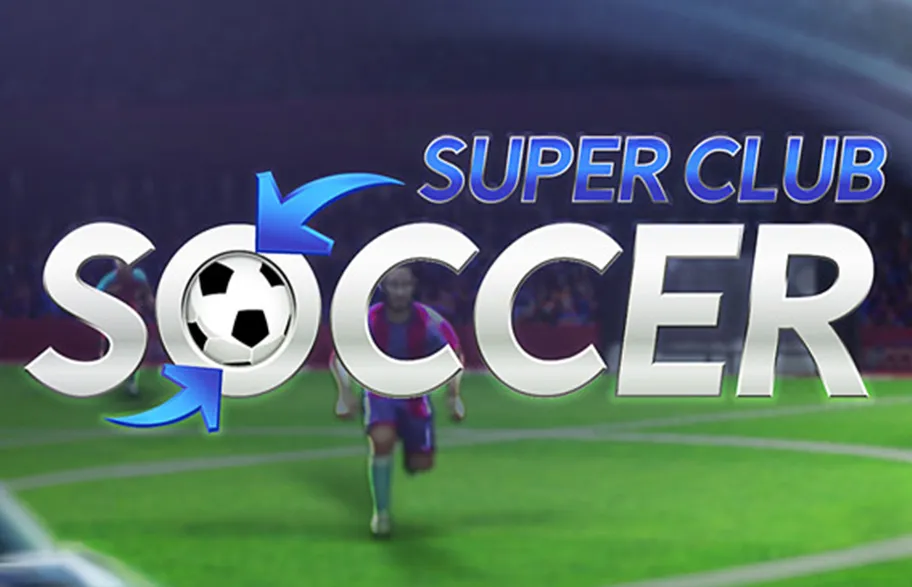
Super Club Soccer
Super Club Soccer (SCS) is a soccer video game with turn-based gameplay mechanics. Compared to traditional soccer games, the gameplay is more strategic. In addition, the game has club and player management features, multi-player gameplay options, and an intelligent in-game AI.
Platform: PC, Stream
Game Engine: Unity
Genre: Sports, Simulation
Art: 3D
Our Console Game Development Process Built for Delivery
Discovery & Scope
We define platform targets, gameplay scope, Unreal or Unity fit, technical risks, and milestone dependencies upfront. Clear scoping prevents budget creep, avoids mid-production pivots, and gives your team a realistic launch roadmap before execution starts.
Pipeline Setup
Perforce or Git repositories, branching strategy, CI/CD automation, build validation, and coding standards are configured before sprint one. Clean pipelines reduce merge conflicts, broken builds, and costly delays once multiple teams begin shipping content.
Sprint-Driven Delivery
Development runs in structured sprints with playable builds, code reviews, QA gates, and progress reporting each cycle. Frequent milestones protect timelines, surface blockers early, and give stakeholders working builds instead of status-only updates.
Performance Tuning
Optimization starts during production, not before submission. We profile frame time, memory budgets, load speeds, asset streaming, shader cost, and CPU/GPU bottlenecks across target hardware to avoid expensive late-stage rework.
Certification Prep
TRC, TCR, and lotcheck compliance is tracked throughout development across saves, suspend-resume flows, entitlement logic, controller behavior, and metadata. Early readiness reduces rejection cycles, protects launch dates, and keeps submission windows intact.
Launch & LiveOps
Before release, we validate hotfix pipelines, crash reporting, telemetry events, patch packaging, and day-one readiness. After launch, the same team can support updates, balance changes, DLC drops, and urgent production fixes fast.
Schedule a Technical Scoping Call
Frequently Asked Questions
Juego supports full-cycle console production across gameplay engineering, console porting, optimization, multiplayer systems, technical art, QA, certification prep, LiveOps support, and release management for PlayStation, Xbox, and Nintendo Switch projects.
Console production is rarely limited by feature development alone. Most launch risks come from unstable builds, certification blockers, platform-specific performance issues, or fragmented ownership across teams. Our workflows are structured around cert readiness, milestone stability, and platform-specific optimization from the beginning so production stays aligned long before submission windows open.
Certification failures are treated as active production blockers, not post-delivery cleanup tasks. The issue is triaged immediately against TRC, TCR, or lotcheck requirements, ownership is assigned, and remediation begins before the problem cascades into milestone delays or launch window risk.
Most certification failures are not caused by one major issue, but by smaller compliance gaps discovered too late under submission pressure. We reduce that risk by validating entitlement logic, suspend-resume behavior, controller flows, save systems, metadata, and platform compliance requirements continuously throughout production rather than waiting until final submission week.
Optimization starts during production, not before submission. Our teams profile frame time, memory budgets, asset streaming, shader cost, load speeds, and CPU/GPU bottlenecks continuously across target hardware so performance debt does not silently compound across milestones.
Late-stage optimization problems are expensive because they often force content compromises, redesign work, or certification delays under fixed launch timelines. We reduce that risk by aligning rendering budgets, gameplay systems, art pipelines, and platform constraints early so builds remain stable as production complexity increases.
Every sprint includes structured code reviews, build validation, architecture oversight, and repository governance before implementation reaches shared branches. Coding standards, branching rules, and technical ownership boundaries are aligned early so multiple contributors can work safely inside the same production environment.
Most co-development instability appears when engineering decisions scale faster than technical oversight. Shared style guides, documented architecture decisions, controlled merge workflows, and review accountability help maintain long-term codebase consistency even as console production expands across internal and external teams simultaneously.
Late-stage scope changes are evaluated against certification impact, milestone risk, testing coverage, and submission timelines before implementation begins. Production adjustments are treated as operational decisions, not isolated feature requests, because even small changes can introduce regression risk close to launch.
Console schedules become unstable when scope expansion bypasses technical validation under submission pressure. We reassess dependencies, QA impact, optimization requirements, and compliance exposure early so teams can make informed production decisions without jeopardizing certification readiness or launch commitments.
- Freelance developers suit narrowly scoped, low-certification-risk tasks, but certification ownership stays with you, and continuity depends on one person.
- Dedicated developers embed long-term but rarely cover the full console stack alone, so QA and compliance gaps surface once you scale past one or two.
- Full-studio outsourcing centralizes engineering, art, QA, and certification under one team with milestone-based cost predictability.
- Co-development splits ownership between your internal team and ours, which fits console projects best given their long timelines and certification cycles.
Juego Studios runs primarily on the full-studio and co-development models.
Budget scales sharply with scope: indie console titles typically run $300K–$1.2M over 8–18 months with 5–15 people, AA titles run $2M–$10M over 12–30 months with 20–60 people, and AAA titles run $20M–$150M+ over 2–4 years with 80–300+ people. By engagement model, freelancers run $6K–$12K/month, dedicated developers $8K–$18K/month, dedicated teams $40K–$120K/month, and co-development studios $60K–$200K+/month on milestone-based billing.
Console budgets run higher than PC or mobile mainly because of certification cycles, stricter performance/QA requirements, and platform compliance overhead like SDK integration and storefront alignment.
Treating console as a porting exercise instead of a console-first build causes input systems, memory budgets, and UI scaling to break late in production, triggering costly rewrites. Console hardware imposes fixed CPU, GPU, and memory budgets that PC doesn’t, so architecture, controller input, and performance planning need to start at prototype stage, not after a PC build is already locked. Studios that plan for console constraints early avoid the compounding schedule risk that comes from retrofitting compliance and performance work in the final months before certification.
Prioritize shipped console titles over demos, confirmed platform relationships and certification maturity, and post-launch support capability—these predict delivery reliability better than team size alone. Before signing, ask who owns certification submissions and TRC testing, who’s accountable for frame rate and memory budget targets, and whether patch/LiveOps support is contractual or ad-hoc billing. A studio that can answer all three clearly is lower-risk than one that can only point to a portfolio.
Console developers typically build in Unreal Engine for AAA and performance-heavy projects, Unity for cross-platform and stylized titles, and proprietary engines for first-party studios, alongside Perforce for version control, platform-specific SDKs for Xbox, PlayStation, and Nintendo, and TRC compliance and performance profiling tools. Juego Studios operates across both Unreal and Unity console environments with structured build pipelines built around these same certification workflows.
Yes. Multiplayer console projects need replication systems, backend infrastructure, matchmaking, and certification-safe networking layers, and Juego Studios supports all four, typically within co-development engagements. Console multiplayer carries extra certification exposure beyond PC or mobile, since platform holders test networking behavior and disconnect/reconnect flows as part of TRC compliance, not just gameplay quality.