


 Unity
Unity Unreal
 Godot
Godot
 Mobile
 PC
PC Console
 Full-Cycle
 Co-Development
 Outstaffing




-
 Game Development
 Feb 23rd, 2026
- Share:
Table of Contents
- The UAE Gaming Market: A Growing Paradox
- Understanding Game Censorship in the UAE
- How Games Get Reviewed in the UAE
- Top 10 Globally Popular Games Banned in the UAE: Quick Overview
- The Top 10 Banned Games: Detailed Breakdown
- Checklist: What NOT to Do When Launching a Game in the UAE
- How Juego Studios Helps with UAE Compliance
- Conclusion
What if the next Grand Theft Auto, with its billion-dollar launch and record-breaking sales, was completely invisible in your local game store? What if The Last of Us Part II, crowned Game of the Year and celebrated worldwide, simply didn’t exist in your region’s PlayStation Store? For gamers in the UAE, this isn’t a hypothetical scenario—it’s reality.
The UAE Gaming Market: A Growing Paradox
The United Arab Emirates gaming market has experienced remarkable growth, reaching USD 1.16 billion in 2024, with projections to exceed USD 2.39 billion by 2033, representing a compound annual growth rate (CAGR) of 8.34%. The market is expected to serve approximately 2.2 million users by 2030, with an impressive average revenue per user (ARPU) of USD 1.85 thousand.
In 2024, mobile gaming dominated the UAE market with a 54.3% revenue share, while the broader video game market generated USD 751.97 million, with expectations to reach USD 944.72 million by 2030. Notably, 73% of the UAE’s population identifies as gamers, significantly surpassing the global average, with 41% actively spending money on games.
The UAE government has positioned gaming as a strategic pillar of economic diversification. In June 2025, Dubai announced its gaming industry in the UAE had expanded to over 350 companies, including 260 specialized game developers, under the Dubai Program for Gaming 2033 (DPG33). This initiative targets a USD 1 billion contribution to Dubai’s GDP by 2033, with the creation of 30,000 new jobs. Major events like the Games of the Future 2025 in Abu Dhabi and the E-Gaming League (EGL) launched in March 2025 underscore the nation’s commitment to becoming a regional gaming hub.
Yet despite this explosive growth and governmental support, the UAE maintains one of the world’s strictest video game censorship regimes. This creates a fascinating paradox: a market hungry for gaming content, yet selective about what’s permissible. Understanding the list of banned games in the UAE is crucial for both gamers and developers navigating this unique landscape.
You may Also Like: Interactive Game Development Trends in UAE
Planning to launch a game in regulated markets like the UAE? Our experts help you design games that comply with regional guidelines while delivering engaging gameplay.
Understanding Game Censorship in the UAE
Game censorship in the UAE operates under the jurisdiction of the National Media Council (NMC), which regulates all media content, including video games. The NMC’s mandate extends beyond simple content review—it reflects the nation’s commitment to preserving cultural values, religious sensitivity, and social norms in the digital entertainment space.
Unlike many Western markets, where age ratings serve as guidelines, the UAE employs an outright ban system for games deemed incompatible with local values. The regulatory framework, introduced in 2018 with the UAE’s own age rating system, focuses on several key areas that determine which games become part of the list of games banned in the UAE:
- Religious Sensitivity: Content that depicts Islamic religious texts inappropriately, portrays religious figures, or contains themes considered blasphemous faces immediate prohibition.
- Sexual Content and LGBT Themes: Games featuring nudity, sexual themes, or same-sex relationships violate conservative moral standards and are banned without exception.
- Extreme Violence and Gore: While action games are popular games in the UAE, excessive graphic violence, dismemberment, and brutal combat systems cross the line.
- Gambling and Drug Use: Depictions of casinos, drug consumption, or substance abuse are prohibited as they contradict Islamic principles and local law.
- Political Sensitivity: Games that portray the UAE or Gulf nations negatively, depict political scenarios deemed offensive, or represent the region in an unfavorable light are banned aggressively.
Importantly, private ownership of banned games in the UAE is not criminalized—the prohibitions apply to commercial sale and distribution.
How Games Get Reviewed in the UAE
Before a game becomes available on shelves or regional storefronts, it typically goes through a formal classification and review process. While enforcement can vary by platform (retail vs digital), developers and publishers should plan for a review workflow that includes content checks, age classification, and, where required, revisions before approval.
- Submission process: A publisher/distributor submits the game and required materials (store assets, descriptors, and build details) for classification in the UAE.
- Rating review: Regulators assess the game against local standards and assign an age rating when eligible, or refuse classification if it crosses red lines.
- Editing options: If issues are fixable, publishers may be asked to adjust specific scenes, assets, mechanics, or store materials to meet local requirements.
- Appeals: Publishers can request reconsideration or resubmission after changes—especially when the restriction is triggered by specific content elements rather than the game’s core premise.
- Timeline: Review time can vary based on content complexity, platform rollout, and how quickly revisions are provided—so it’s safer to account for approval time in your launch planning.
Top 10 Globally Popular Games Banned in the UAE: Quick Overview
| # | Game Title | Primary Ban Reason | Global Impact/Sales |
| 1 | Grand Theft Auto Series (GTA III, IV, V) | Extreme violence, sexual content, drug use | 200M+ copies sold globally; GTA V alone sold 205M+ copies |
| 2 | The Last of Us Part II | LGBT content, same-sex relationships | 10M+ copies sold; GOTY winner 2020 |
| 3 | Red Dead Redemption | Nudity, adult content (ban later lifted) | 23M+ copies sold; critically acclaimed Western |
| 4 | God of War Series (2005-2013) | Graphic violence, nudity, perceived blasphemy | 51M+ copies sold across series; PlayStation icon |
| 5 | Mass Effect 2 & 3 | Sexual content, same-sex romance options | 14M+ copies sold; legendary sci-fi RPG trilogy |
| 6 | Fallout: New Vegas | Gambling, sexual themes (later lifted) | 12M+ copies sold; highest-rated Fallout game |
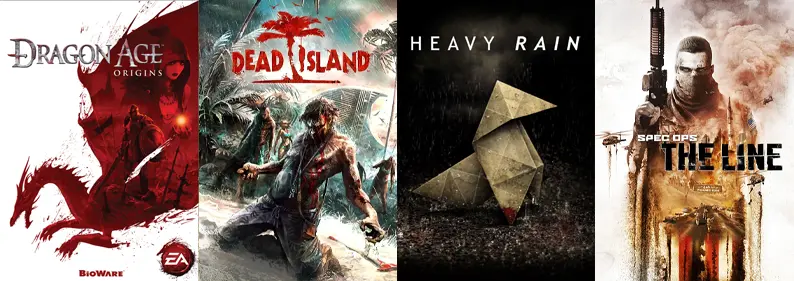
| 7 | Dragon Age: Origins | Sexual content, same-sex relationships | 6M+ copies sold; BioWare’s acclaimed fantasy RPG |
| 8 | Dead Island & Dead Island: Riptide | Extreme violence, gore, sexual imagery | 5M+ copies sold; popular zombie franchise |
| 9 | Heavy Rain | Realistic violence, nudity, sexual assault scene | 6M+ copies sold; critically acclaimed thriller |
| 10 | Spec Ops: The Line | Depicts Dubai in ruins, political offense | 2M+ copies sold; narrative masterpiece |
Localization goes beyond translation. Adapt your game mechanics, visuals, and content to succeed in the UAE gaming ecosystem.
The Top 10 Banned Games: Detailed Breakdown
These globally celebrated titles faced restrictions in the UAE due to content sensitivities around violence, sexuality, religion, or cultural representation—despite their massive worldwide success.
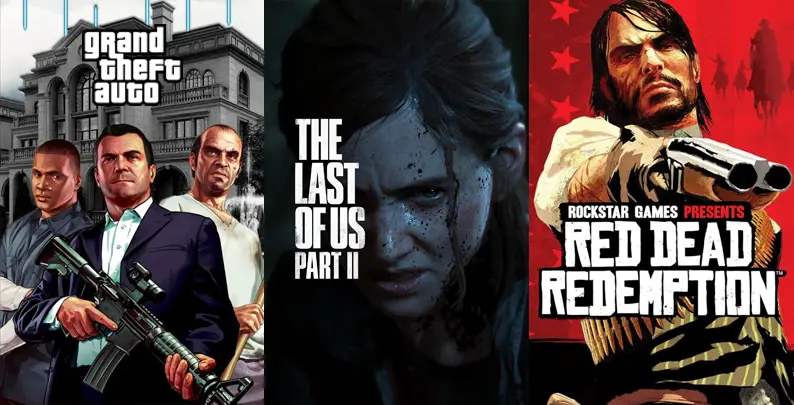
1. Grand Theft Auto Series (GTA III, Vice City, IV, V)
The Grand Theft Auto franchise is arguably the most successful video game series in history, with GTA V alone selling over 205 million copies—the second best-selling video game of all time. The series embodies nearly everything the NMC prohibits: graphic violence, including brutal combat and shootouts, explicit sexual content with prostitution and strip clubs, extensive drug use and trafficking, criminal activity as core gameplay, and harsh profanity throughout. In a surprising development in July 2025, the UAE lifted the ban on GTA V and its online mode, making it legally available after years of being among the most notorious banned games in the UAE. However, earlier titles like GTA III, Vice City, and IV remain banned.
2. The Last of Us Part II
Naughty Dog’s sequel became one of the most awarded games in history, winning Game of the Year at The Game Awards 2020, with over 10 million copies sold and a 93 Metacritic score. The game features a prominent same-sex relationship between the protagonist Ellie and her girlfriend Dina, including intimate scenes that violate conservative norms. The UAE maintains a zero-tolerance policy for depictions of homosexuality in media, leading to swift prohibition and making it one of the most high-profile games that are banned in the UAE. This ban highlights the tension between global gaming trends toward inclusive representation and regional cultural values.
3. Red Dead Redemption
Rockstar’s Wild West epic sold over 23 million copies and is considered one of the greatest games ever made, earning numerous Game of the Year awards. UAE retailers refused to stock it upon its 2010 launch due to adult content, particularly a notorious nudity-filled poker scene and brothel visits depicting prostitution, violence, and mature themes. In a rare reversal, the ban was repealed approximately two months later, and the game was allowed in stores—an unusual quick turnaround suggesting authorities found the overall content acceptable despite specific controversial scenes.
4. God of War Series (2005-2013)
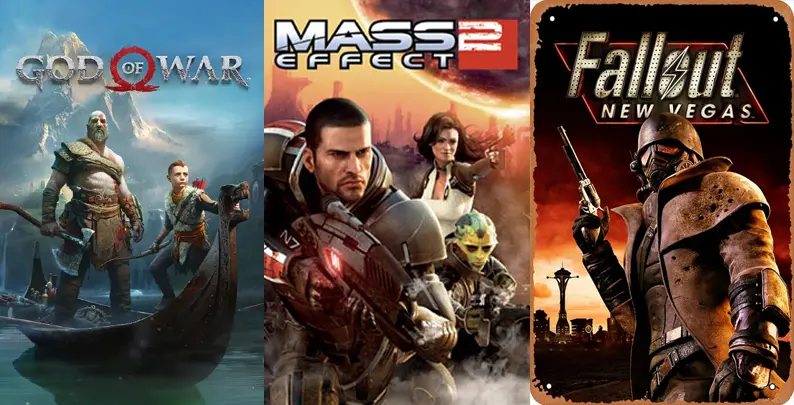
Sony’s God of War franchise has sold over 51 million copies across all entries, establishing itself as a PlayStation icon with Kratos battling gods and mythological creatures. The original series from 2005 through God of War: Ascension (2013) faced bans for graphic violence, including dismemberment and brutal executions, nudity and sexual mini-games, perceived blasphemy due to the title “God” and depictions of deities, and mature themes throughout. Public complaints about religious and sexual content led to the NMC pulling the first installment, with subsequent sequels banned preemptively. The 2018 God of War reboot, which shifted to Norse mythology and significantly toned down sexual content, became the first in the franchise approved for UAE release.
5. Mass Effect 2 & 3
BioWare’s Mass Effect trilogy is one of the most celebrated sci-fi RPG series in gaming history, with over 14 million copies sold, and Mass Effect 2 is considered by many to be the greatest RPG ever made. Both games were blocked by UAE authorities in 2010 for sexual content and same-sex romance options. Mass Effect 2 includes an optional intimate scene between a female player-character and a female alien (Liara), while Mass Effect 3 introduced male-male romance subplots. The ban was particularly frustrating for UAE gamers as the series relies heavily on importing save data across games—players who had access to Mass Effect 1 couldn’t officially continue their story, making these titles prominent entries in the list of banned games in the UAE.
6. Fallout: New Vegas
Obsidian Entertainment’s Fallout: New Vegas is widely considered the best entry in the Fallout franchise, with over 12 million copies sold and a 96 Metacritic user score. The game’s Las Vegas setting meant extensive depictions of gambling, including in-game casinos, slot machines, and card games, plus prostitution, sexual themes, drug use with a crafting system for various chems, and mature violence. These elements, particularly the gambling aspects, violated Islamic principles and local regulations. The ban was later lifted, following a pattern where some mature games become available after initial prohibitions.
7. Dragon Age: Origins
BioWare’s dark fantasy RPG sold over 6 million copies and won numerous Game of the Year awards in 2009, celebrated for mature storytelling, tactical combat, and deep character relationships. The game features romantic subplots that can include same-sex relationships, with options for both male and female protagonists to pursue LGBT romance options, plus suggestive scenes and sexual content. These elements violated UAE cultural sensitivities and led to the game being barred from local distribution, setting a precedent for the franchise as subsequent Dragon Age titles faced similar scrutiny.
8. Dead Island & Dead Island: Riptide
The Dead Island franchise became a surprise hit with over 5 million copies sold, offering open-world zombie survival on tropical islands with first-person melee combat and cooperative multiplayer. Both games were banned for extreme violence and gore, including graphic dismemberment, bloodshed, and brutal melee combat where players hack zombies apart, plus “scantily-clad” female characters and sexualized imagery. The zombie survival genre faces particular scrutiny in the UAE due to its typically graphic nature, with Dead Island’s first-person perspective making the violence especially visceral, securing its place among video games banned in the UAE.
9. Heavy Rain
Quantic Dream’s interactive thriller sold over 6 million copies and won numerous awards for groundbreaking narrative design, pioneering the cinematic adventure genre with branching stories and genuine consequences. The game was deemed “unfit for the audience because of content” and banned for realistic violence, nudity, and a particularly controversial chapter where a female character is forced to dance topless at gunpoint—a scene depicting sexual assault. The NMC pulled the game just before its 2010 release. Despite universal critical acclaim, the game’s mature themes made it completely unmarketable in the UAE, though many players obtained copies through the grey market.
10. Spec Ops: The Line
While commercially modest with around 2 million copies sold, Spec Ops: The Line is considered a narrative masterpiece and a profound commentary on war, violence in video games, and military hubris. The game depicts a fictional Dubai destroyed by catastrophic sandstorms, where the UAE government has collapsed, and the city has descended into chaos and war crimes. The NMC took exceptional measures—not only prohibiting retail sale but also blocking the game’s official website and stopping distribution across the entire GCC region. Unlike most banned games in the UAE, Spec Ops: The Line was effectively erased from legal availability and cannot be purchased digitally on UAE accounts, representing one of the most aggressive game bans in UAE history.
Checklist: What NOT to Do When Launching a Game in the UAE
Planning to launch a video game in the UAE market? Here’s a comprehensive checklist of content to avoid to ensure your game passes NMC approval and doesn’t become part of the list of games banned in the UAE, reaching the lucrative UAE gaming audience successfully:
- Religious Insensitivity: Never depict Islamic religious texts (Quran, Hadith) inappropriately, show religious figures, or include content that could be perceived as blasphemous. The Call of Duty: Modern Warfare 2 ban for Quranic verses in a bathroom demonstrates zero tolerance for such content.
- Sexual Content: Avoid nudity, sexual scenes, prostitution, strip clubs, or sexually suggestive character designs. Even implied sexual content can trigger bans and add your title to games that are banned in the UAE.
- LGBT Themes: Do not include same-sex relationships, LGBT romance options, or any content depicting homosexuality. This is a red line that will result in immediate prohibition.
- Excessive Violence and Gore: While action games are acceptable, avoid extreme graphic violence, dismemberment, excessive bloodshed, and brutal torture scenes. Keep violence stylized rather than realistic.
- Gambling Mechanics: Do not include in-game casinos, slot machines, poker games, or gambling as core gameplay. Even simulated gambling violates Islamic principles.
- Drug Use: Avoid depicting drug consumption, drug trafficking, or substance abuse. This includes both realistic and fantastical drugs.
- Political Sensitivity: Never portray the UAE, Dubai, or Gulf nations negatively, in ruins, or as failed states. Avoid political scenarios that could offend national pride. The Spec Ops: The Line ban shows the severity of this violation.
- Inappropriate Language: Minimize profanity and harsh language, especially religious profanity or culturally offensive terms.
- Controversial Religious Themes: Be cautious with titles containing words like “God” or “Gods” (as seen with Injustice: Gods Among Us). Fictionalized religious content, even from other mythologies, can draw scrutiny.
- User-Generated Content Risks: If your game includes user-generated content or online communities, implement robust moderation. Games like Gacha Life and Roblox faced bans due to inappropriate user-created scenarios.
Pro Tips for UAE Game Development
- Plan for regional versions: Consider creating Middle East-specific builds with content adjustments rather than abandoning the market entirely. Hire game developers from the UAE to ensure that your game can have culturally appropriate adaptations.
- Engage early: Consult with UAE distribution partners and NMC guidelines during development, not after completion. Many studios hire game designers specifically experienced in regional compliance.
- Focus on acceptable genres: Sports games, racing games, strategy games, and family-friendly titles perform exceptionally well in the UAE market without censorship issues.
- Cultural consultation: Work with cultural consultants who understand UAE sensitivities to avoid unintentional violations and prevent your game from joining the list of banned games in the UAE.
- Visual sensitivity: Ensure your game art services team understands regional clothing standards and character design expectations to avoid inappropriate imagery.
Navigating the complexities of game development for the UAE market requires expertise in both technical execution and cultural sensitivity. As a leading game development company, Juego Studios specializes in creating culturally appropriate gaming experiences that resonate with Middle Eastern audiences while maintaining global appeal. Our team understands the nuances of regional content guidelines and has successfully launched multiple titles in the UAE market. Whether you’re developing mobile games, console experiences, or innovative gaming platforms, our expertise in localization, cultural adaptation, and regulatory compliance ensures your game reaches UAE gamers without content barriers. Partner with developers who understand that successful UAE game launches require more than translation—they require cultural intelligence.
Avoid launch restrictions and regulatory issues in the UAE gaming market. Partner with experts who understand regional compliance and player expectations.
How Juego Studios Helps with UAE Compliance
For publishers targeting the UAE, the biggest risk isn’t just a ban—it’s delayed approval, last-minute content changes, or fragmented regional launches. The safest approach is planning for cultural alignment early in production rather than adjusting content after builds are finalized.
Juego Studios is one of the leading game development companies in the UAE. We support publishers with production-driven localization and regional adaptation workflows tailored for UAE release readiness, including:
- Early-stage content review during development to flag potentially sensitive story, visual, UI, monetization, or UGC elements
- Localization and cultural adaptation planning, ensuring symbols, character designs, references, and narrative context align with regional expectations
- Region-specific store asset support, including alternative creatives, screenshots, trailers, and descriptions when required
- Build-level content adjustments, helping teams scope necessary edits without disrupting core gameplay systems
- Submission-ready packaging support, ensuring builds and metadata are clean, consistent, and platform-compliant
If your roadmap includes MENA expansion, working with a development partner that understands both production pipelines and regional sensitivities can reduce rework, protect launch timelines, and help your game reach UAE players with fewer compliance surprises.
Conclusion
The UAE gaming market presents a fascinating paradox—a rapidly expanding ecosystem projected to exceed USD 2.39 billion by 2033 with world-class infrastructure and enthusiastic consumers, yet bounded by strict cultural and religious content guidelines. While the extensive list of banned games in the UAE includes globally popular titles like Grand Theft Auto, The Last of Us Part II, and Mass Effect, demonstrating that commercial success elsewhere doesn’t guarantee UAE access, recent developments like the lifting of the GTA V ban and the approval of the 2018 God of War reboot suggest the regulatory landscape may be evolving.
For game developers and publishers, understanding which games are banned games in the UAE isn’t just about avoiding bans—it’s about tapping into a market where 73% of the population are gamers and the average revenue per user exceeds USD 1,800, making cultural intelligence the key to delivering world-class entertainment that respects local values while accessing one of the world’s most lucrative gaming audiences.
Frequently Asked Questions
Yes, private ownership of banned games in the UAE is not criminalized. The prohibitions apply only to commercial sale and distribution within the country, not personal possession.
Temporary bans often occur when specific content can be modified or removed, like Call of Duty‘s Quranic verse issue. Permanent bans involve fundamental content violations like LGBT themes or severe political offenses.
Sports games, racing titles, strategy games, and family-friendly content thrive in the UAE. Mobile game development particularly excels here—Juego Studios creates culturally appropriate mobile experiences that navigate regional guidelines while delivering engaging gameplay for this lucrative market.
Yes, the July 2025 lifting of the GTA V ban and approval of the 2018 God of War reboot suggest evolving policies, possibly reflecting market maturity and willingness to reconsider bans.
Related Posts

Have a Game Idea but No Development Team? How to Get It Built
This guide walks you through every realistic way to get your game made, what each one really costs you in time and control, and how to pick the right one before you spend a dollar finding out the hard way.
Top 10 Game Development Companies in USA (2026 Update)
In this blog, we’ll discuss the top 10 game development companies in USA, along with how to evaluate them beyond surface-level claims, so you can identify partners who actually align with your vision, technical needs, and long-term growth goals.

Top Game Development Companies in 2026: 10 Global Leaders Compared
Most game projects don’t fail because the idea was weak. They fail because the development partner couldn’t scale, adapt, or deliver when pressure peaked.