


 Unity
Unity Unreal
 Godot
Godot
 Mobile
 PC
PC Console
 Full-Cycle
 Co-Development
 Outstaffing





-
 Game Development
 Feb 18th, 2026
- Share:
Table of Contents
- TL;DR: Key Takeaways and Comparison
- A Quick Comparison of Top Game Development Companies in the UAE
- Why UAE Studios Are in Global Demand
- Top Game Development Companies in the UAE
- How We Identified the Best UAE Game Development Companies
- Why Global Studios Partners with UAE Game Companies
- Choosing and Managing UAE Game Development Partners
- How UAE Studios Structure Their Teams
- Delivery Metrics to Track
- IP Protection and Security Best Practices
- Common Mistakes to Avoid
- Why Juego Studios Stands Out
- Popular work by Juego Studios
- Conclusion
In 2026, the UAE isn’t just playing games — it’s building the future of them.
With over $421 million spent by UAE gamers in 2024 alone and a year-on-year growth trajectory that outpaces several developed markets, the gaming industry in the UAE is no longer a secondary consideration for global studios — it’s a strategic frontier. Whether it’s Dubai’s “Program for Gaming 2033” aiming to create 30,000 new jobs and inject $1 billion into GDP, or Abu Dhabi’s AD Gaming ecosystem drawing global publishers and indie startups alike, the UAE is fast becoming a serious contender in global game production.
Behind this surge is a new wave of gaming companies in the UAE that blend international tech talent, regional cultural fluency, and co-development maturity. These are not just offshore service vendors — they’re Unity/Unreal specialists, console game development partners, and game LiveOps pros working on cross-platform IPs and high-performance experiences.
This blog talks about the top game studios in the UAE, why they’re in global demand, and how to choose the right production partner.
TL;DR: Key Takeaways and Comparison
- The UAE’s gaming market is scaling on the back of government programs (DPG33), free‑zone incentives, and pro‑innovation regulation.
- Mobile and cross‑platform pipelines are dominant, with AR/VR and esports accelerating ecosystem maturity.
- Juego Studios can operate as a full‑cycle or co‑development partner (Unity/Unreal, 2D/3D art, engineering, LiveOps, porting).
- Expect cost‑efficient scaling (not “cheap”), English‑proficient teams, and modern pipelines (Perforce/Git, CI/CD).
- For publishers and IP owners, prioritize engine mastery, delivery consistency, LiveOps capability, and security standards when shortlisting partners.
A Quick Comparison of Top Game Development Companies in the UAE
| Company | Core Expertise | Best For | Team Size | Founded |
| Juego Studios | Full-cycle dev + co-dev + LiveOps | Mid-to-large teams needing scalable delivery | 250+ | 2013 |
| Cubix | Mobile-first games + Unity/Unreal services | Mobile + multiplayer builds with UAE coordination | 201-500 | 2008 |
| CR Studios | “Meaningful Play” + multi-platform + XR/Web3 | VR/AR + PC/console/mobile prototyping and builds | 50-249 | 2017 |
| Ubisoft Abu Dhabi | AAA publisher studio + mobile LiveOps | Live-ops-heavy mobile titles at publisher standards | 60+ | 2011 |
| HitBerry Games | Branded games + mobile dev services | Marketing games / promo mini-games | 51-200 | 2019 |
| Stepico | Full-cycle + art + live operations | Unity/Unreal production with distributed teams | 51-200 | 2014 |
| Falafel Games | Arabic-first strategy/MMO game development | MENA-focused storytelling & localization | 40-60 | 2010 |
| Red Apple Technologies | Games + apps + Unity/Unreal services | Offshore delivery with mature web/mobile pipelines | 201-500 | 2010 |
| Galaxy4Games | Mobile + Web3 + LiveOps consulting | Boutique “framework + LiveOps” support | 11-50 | 2020 |
| Game Power 7 | Publishing + localization + operations | Arabic localization + regional publishing support | 51-200 | 2007 |
*Team size/founding dates are indicative and may vary; verify during due diligence.
Final verdict
Boutique teams are a fit when you need tight leadership access, fast experimentation, and a limited-scope delivery (prototype, vertical slice, or a contained mobile title), but they can bottleneck under heavy multi-platform QA, certification, and LiveOps load.
Mid-size studios are a fit when you need parallel pods (client engineering + content + QA) and predictable throughput; evaluate them primarily on shipped work, process clarity, and integration readiness with your build pipeline.
A co-development partner like Juego is most relevant when you need capacity scaling across multiple disciplines (engineering, art, QA, LiveOps) and want defined engagement models (dedicated team, managed outsourcing, outstaffing) rather than a single “project quote.”
Why UAE Studios Are in Global Demand
Dubai’s policy push is one of the most explicit “talent + content + tech” programs in the region: the Dubai Program for Gaming 2033 aims to place Dubai among the world’s top gaming hubs, create 30,000 gaming jobs, and add about $1 billion to GDP by 2033.
From a market-demand standpoint, multiple sources point to strong MENA growth signals that matter to publishers:
- UAE game spending and growth: recent regional reporting pegged UAE video game spend around $421M in 2024 and described steady growth.
- Statista-based UAE forecast: WAM reports that Statista Insights expects the UAE electronic gaming market revenue to reach about $492M by 2027, with an annual growth rate of around 5.88% and users approaching 1.7M by 2027.
- Regional media expansion that supports gaming: Strategy& (PwC) projects MENA consumer expenditure across media (including premium video and gaming content) rising through 2024–2028, alongside broader market growth.
- Platform mix that favors mobile but includes PC/console: UAE government research highlighted substantial mobile contribution in the country’s gaming revenue mix (with meaningful PC/console share), reinforcing why many game companies in Dubai emphasize mobile while still offering PC/console services. Understanding popular games in the UAE helps developers tailor content to local preferences while maintaining global appeal.
- Infrastructure and business setup mechanisms also matter in 2026 execution planning. DMCC launched a dedicated gaming center to support gaming businesses and has positioned the cluster as part of Dubai’s broader economic strategy; DMCC’s ecosystem messaging emphasizes specialized licensing and an operational platform for gaming and esports companies.
Finally, buyers should understand the tax and free-zone context at a high level (without treating it as legal advice): the UAE introduced a federal corporate tax effective for financial years starting on or after 1 June 2023, and official guidance notes that qualifying free zone persons may benefit from 0% corporate tax on qualifying income (subject to conditions).
Top Game Development Companies in the UAE
1. Juego Studios

Juego Studios leads the region’s game development scene with its unmatched ability to execute cross-platform projects on Unity, Unreal Engine, and Web3 frameworks. As a premier game development company, Juego is known for delivering over 200 projects globally, offering everything from prototype development to LiveOps and porting. With deep technical leadership and scalable production teams, Juego is the go-to choice for publishers looking to build high-performance mobile, console, and AR/VR experiences.
Key highlights
- Engines/tech: Unity and Unreal are embedded in service positioning and tool listings.
- Platforms: PC, console, mobile, VR/XR (stated on LinkedIn and site).
- Specialization: Full-cycle delivery + co-dev + post-launch support/LiveOps emphasis.
- Engagement models: Dedicated team, managed outsourcing, outstaffing (explicitly listed).
Pros:
- Clear engagement models and multi-platform positioning (useful for co-dev)
- Demonstrated LiveOps framing in case study format (useful for live-service)
Cons:
- Not designed for quick prototype-only engagements
- Best suited for defined scopes rather than experimental builds
Company snapshot
| Field | Details |
| Established In | 2013 |
| Team Size | 250+ |
| Services Offered | Full-cycle game dev, co-dev, game art, LiveOps, immersive solutions |
| Popular Games | Medals of War, Apples & Bananas, Super Club Soccer (portfolio/case studies) |
| Awards & Recognition | Listed in Forbes India Marquee Entrepreneur Special (claimed) |
2. Cubix

Cubix has built a reputation for crafting polished multiplayer mobile games, 2D/3D environments, and gamified applications. As one of the established gaming companies in Dubai, their portfolio includes work for major brands like DreamWorks and Walmart, highlighting the team’s ability to blend game mechanics with enterprise-grade interactivity.
Key highlights
- Engines: Unity and Unreal services are explicitly listed.
- Platforms: Mobile is prominent, but game services imply multi-platform support (incl. multiplayer).
- Specialization: Mobile-first, multiplayer, isometric/2D/3D positioning appears in directory summaries.
Pros:
- Verifiable Dubai office listing plus explicit game services menu.
- Scale signals (350 specialists claim; 201–500 LinkedIn band) can support staffing pods.
Cons:
- Public portfolio visibility for shipped titles is limited in the sources reviewed—request a curated reel.
- Clarify which sub-team is dedicated to games vs broader software services.
Company snapshot
| Field | Details |
| Established In | 2008 |
| Team Size | 201–500; “350 specialists” claim |
| Services Offered | Game development, Unity/Unreal, multiplayer, blockchain/Web3 |
3. CR Studios

CR Studios is positioned around “Meaningful Play” and multi-platform game creation. Its Clutch profile states it builds for PC, consoles, VR/AR, and mobile, works with Unreal Engine and Unity, and has 50+ full-time employees—useful signals for real production delivery rather than micro-studio capacity.
Key highlights
- Engines: Unreal Engine and Unity.
- Platforms: PC, consoles, VR/AR, mobile.
- Specialization: AR/VR, metaverse, Web3 positioning appears in profile summaries.
Pros:
- Clear “platform breadth” claim (PC/console/mobile/VRAR) plus engine clarity (Unity/Unreal).
- 50+ full-time employees claim suggests workable delivery bandwidth for co-dev pods.
Cons:
- Named shipped titles and public case studies are limited in the sources reviewed—request references.
- “Meaningful Play” is a positioning concept; ensure it maps to your commercial goals (F2P, PvP, etc.).
Company snapshot
| Field | Details |
| Established In | 2017 |
| Team Size | 50–249 |
| Services Offered | Game/app development, AR/VR, multi-platform builds |
4. Ubisoft Abu Dhabi

Ubisoft Abu Dhabi is the most clearly “publisher-grade” studio in the UAE landscape. Ubisoft’s official studio page states it opened in 2011, serves as a regional hub, and has a team of more than 60 mobile game developers spanning programming, design, art, QA, and live ops—an unusually complete unit for the local market.
The studio is publicly associated with live-service operations: Ubisoft notes it released CSI: Hidden Crimes (played by 30M+ players) and oversees Growtopia’s live operations after Ubisoft acquired the title in 2017.
Key highlights
- Platforms: Mobile-first, with cross-platform/live-service operations context (Growtopia).
- Specialization: Live operations, content updates, and community management at scale.
- Engagement models: Internal Ubisoft studio (not a typical outsource vendor); partnership formats may differ (co-dev, support, publishing collaboration).
Pros:
- Strongest verifiable track record in the UAE for operating large-scale live games.
- Full functional coverage (art, QA, live ops) stated as part of team composition.
Cons:
- Not a standard outsource vendor; availability and commercial terms may not match typical co-dev procurement.
- If you need a vendor that you can “rent capacity from,” you may need a separate partner for staff augmentation.
Company snapshot
| Field | Details |
| Established In | 2011 |
| Team Size | 60+ |
| Services Offered | Mobile game development + live ops + ongoing content for live games |
| Popular Games | CSI: Hidden Crimes; Growtopia |
5. HitBerry Games

Focused on high-quality mobile games, HitBerry delivers from ideation to launch with strong capabilities in concept design, 2D/3D production, UI/UX, and QA. As a specialized game app development company, their iterative approach and attention to gameplay monetization make them a reliable partner for publishers targeting global markets.
Key highlights
- Engines: Implied Unity staffing.
- Platforms: Mobile-first; branded/promo games emphasis.
- Specialization: Branded games/advergames positioning.
Pros:
- Strong fit signal if your need is marketing-driven mini-games rather than large SKUs.
- Publisher/client references appear in profile messaging (validate via case studies).
Cons:
- UAE presence unverified; confirm contracting entity and staffing location.
- Founding year and HQ data vary across sources; treat directories as non-authoritative.
Company snapshot
| Field | Details |
| Established In | 2019 (LinkedIn) / 2021 (company site claim) — disputed |
| Team Size | 51–200 (LinkedIn) |
| Services Offered | Branded games, mobile games, gamification |
| Awards & Recognition | Clutch “Woman CEO” certification is referenced on the company blog. |
6. Stepico

A hybrid creative-tech studio, Stepico is known for visually rich mobile games and stylized RPGs. With strengths in Web3, casual gaming, and 3D asset pipelines, the studio blends artistic finesse with scalable engineering — perfect for publishers seeking full-cycle or co-dev support.
Key highlights
- Engines: Unity and Unreal.
- Platforms: Mobile, PC, and console solutions.
- Specialization: Full-cycle + art + live game operations.
- Engagement models: Dedicated teams are explicitly offered.
Pros:
- Strong engine specificity (Unity/Unreal) and clear mention of live operations capability.
- The dedicated team model is explicitly positioned, which fits co-dev scaling.
Cons:
- UAE office presence is inconsistent across sources—confirm before treating as UAE-based.
- If you require in-person workshops in Dubai/Abu Dhabi, confirm on-site staffing.
Company snapshot
| Field | Details |
| Established In | 2014 |
| Team Size | 51–200); “200+ professionals” claim |
| Services Offered | Full-cycle development, art production, live game operations, blockchain/NFT |
7. Red Apple Technologies

With a sharp focus on AR/VR experiences and interactive storytelling, Red Apple works at the intersection of entertainment and education. Their ability to deliver immersive apps, simulations, and gamified platforms makes them ideal for serious games and training tools.
Key highlights
- Engines: Unity and Unreal are listed as service offerings.
- Platforms: Mobile, web, and broader digital products; game solutions are one line among many.
- Specialization: Broad “game + app + emerging tech” positioning.
Pros:
- Broad capability set if you want games + companion apps + web platforms.
- Unity/Unreal services are explicitly marketed.
Cons:
- UAE office presence not shown in the sources reviewed; confirm contracting footprint.
- Portfolio proof for named shipped games is limited in the sources reviewed.
Company snapshot
| Field | Details |
| Established In | 2010 |
| Team Size | 201–500; “150+ professionals” appears in profile text |
| Services Offered | Game development, Unity/Unreal services, apps, emerging tech |
8. Falafel Games

A pioneer in Arabic-first gaming, Falafel Games excels in culturally grounded RPGs and strategy games. Titles like Knights of Glory and Forsan: The Arab Age reflect their commitment to local narratives, voice-overs, and player behavior. Their expertise in LiveOps and community localization makes them essential for MENA-first projects.
Key highlights
- Engines: Unity, proprietary web engines
- Platforms: Android, iOS, browser
- Specialization: Arabic-first MMO strategy and RPG games
- Engagement Models: Full-cycle development, co-publishing, LiveOps
Pros:
- High-scale external development partner profile; fits AAA co-dev supply needs.
- Breadth across art/QA/trailers reduces vendor fragmentation risk.
Cons:
- Not a UAE-local provider by office listing—plan for remote delivery and time-zone management.
- Group structure, founding year, and history are complex; confirm entity and scope during contracting.
Company snapshot
| Field | Details |
| Established In | 2018 |
| Team Size | 1,001–5,000; “1,100 creatives” statement |
| Services Offered | Game development, technology, art, trailers, QA |
| Popular Games | AAA/AA franchises listed in profile text |
9. Galaxy4Games

At the forefront of Web3 and NFT-integrated gameplay, Galaxy4Games builds multiplayer-first games that lean into the future of ownership and decentralized economies. They’re a full-cycle studio focused on blockchain gaming infrastructure and smart contract systems.
Key highlights
- Platforms: Mobile + Web3 are explicitly positioned; LiveOps is emphasized.
- Specialization: Analytics-driven production + modular solutions + LiveOps.
- Engagement models: Consultative/partner framing rather than “factory” delivery.
Pros:
- Strong “LiveOps + analytics” emphasis, which is aligned with modern F2P needs.
- Boutique size can be effective for focused initiatives and optimization work.
Cons:
- UAE presence is contradictory across sources; verify before relying on local execution.
- If you need large asset throughput or multiple parallel pods, staffing may be limited.
Company snapshot
| Field | Details |
| Established In | 2020 |
| Team Size | 11–50 |
| Services Offered | Game development, LiveOps, analytics-driven scaling |
10. Game Power 7

As the first Arabic game publisher, Game Power 7 has played a foundational role in localizing anime-style MMOs and strategy games. With over 15 years in the region, their catalog and community management capabilities make them a trusted leader in Arabic game publishing.
Key highlights
- Platforms: Online games publishing + mobile expansion.
- Specialization: Localization, distribution, customer service, regional publishing ops.
- Engagement models: Publisher/operator partnerships rather than standard outsource SOWs.
Pros:
- Strong fit for Arabic-first publishing and live community operations.
- Dubai Media City base supports local market understanding and relationships.
Cons:
- Not primarily positioned as an outsource build studio; scope may focus on publishing/localization.
- Engine/toolchain transparency is limited in public sources; confirm capabilities in discovery.
Company snapshot
| Field | Details |
| Established In | 2007 |
| Team Size | 51–200 |
| Services Offered | Publishing, localization, distribution, QC, customer service; internal dev dept mentioned |
| Popular Games | Arabic Rappelz |
You Can Also Check Out: Game Development Companies in Netherlands
How We Identified the Best UAE Game Development Companies
Choosing the right game development partner isn’t about checking a directory — it’s about validating whether a studio can actually deliver, scale, and communicate. Here’s how we assessed the UAE’s top companies:
- Verifiable UAE Presence:
- Confirmed Dubai or Abu Dhabi offices listed on official websites.
- Real-world footprints that indicate local team operations or project management.
- Flagged companies with mismatched directory claims vs. official data.
- Cross-Platform Capabilities:
- Studios that support development for mobile, PC, and consoles.
- Ability to manage hybrid releases, multiplayer features, and optimization across form factors.
- Proven Delivery Record:
- Shipped titles with discoverable case studies or store listings.
- Support for game LiveOps, monetization, analytics, and community management.
- Transparent Delivery Signals:
- Clear team size ranges, leadership bios, and defined engagement models (e.g., pods, milestone delivery, co-dev).
- Public publishing of project portfolios and delivery workflows.
- Conflict Reconciliation:
- Where business directories claimed UAE presence without supporting data, we investigated company pages and cross-referenced them.
Why Global Studios Partners with UAE Game Companies
Studios in Dubai and Abu Dhabi are no longer seen as low-cost outsourcing vendors. They’re considered coordination hubs with real production chops. Here’s why international publishers are betting on UAE teams:
- Business & Legal Infrastructure:
- Free-zone ecosystems (e.g., Dubai Internet City, twofour54) offer tax benefits and streamlined licensing for tech/media companies.
- Flexible incorporation and contracting models support international partnerships.
- English-First Communication:
- Engineering, production, and BD teams are fluent in business English, enabling faster onboarding and alignment.
- Timezone Sync:
- Partial to full overlap with Europe (ideal for daily standups and asset review).
- Structured handoff compatibility with North America (ideal for co-dev and QA follow-the-sun workflows).
- Talent Magnet:
- UAE attracts regional and global game dev professionals, often combining Arab-speaking creative leads with global tech experience.
Choosing and Managing UAE Game Development Partners
Finding a provider is easy — knowing what to ask is where most projects go wrong. Use this checklist when shortlisting:
- Confirm where the delivery team is actually based, not just the headquarters.
- Check whether the entity signing your contract is UAE-registered (important for IP protection and compliance).
- Ask if you’ll get a dedicated pod or shared team — and whether a technical lead stays consistent throughout.
- If you’re looking to hire game designers or hire game developers directly, make sure outstaffing or embedded team models are supported.
- For full-cycle builds, ask for one comparable reference project with a similar scope, genre, or tech stack.
- Run a trial sprint or vertical slice before full engagement to test fit, pipelines, and working rhythms.
How UAE Studios Structure Their Teams
Most top-tier game development companies in Dubai operate in modular, pod-based teams that can flex up or down depending on the project.
- Typical pods include a producer, tech lead, engineers, UI/UX designers, artists, and QA.
- For ongoing games, LiveOps pods support monetization, events, analytics, and retention design.
- Co-dev studios align their pods with your internal production teams for seamless integration.
Delivery Metrics to Track
Success in game development comes down to consistent delivery. These are the metrics that publishers should monitor:
- Sprint Velocity:
- Focus on throughput consistency, not just speed.
- Watch for velocity dips during integration phases or team scale-up.
- Build Health:
- Monitor CI/CD pipeline for broken builds, crash rate trends, and deployment lead time.
- Performance KPIs:
- For mobile: 60+ FPS, <100ms input lag, <2GB memory use, <5s initial load.
- For console/PC: Compliance with platform certification requirements.
- Bug Lifecycle Metrics:
- Severity tagging, time-to-resolve (TTR), re-open rate, and verification duration.
- Art & Asset Turnaround:
- Initial delivery time and % of assets sent back for rework.
- High rework = pipeline misalignment or unclear references.
- Milestone Governance:
- % of tasks accepted on first delivery.
- Clarity of the Definition of Done (DoD) and stakeholder approval protocol.
- Live Game KPIs:
- Retention: D1 > 35%, D7 > 15%, D30 > 7%
- Monetization: ARPDAU, LTV, and the top reason for churn
IP Protection and Security Best Practices
In a hybrid production model, security can’t be an afterthought. Ensure your SOW covers:
- NDA & Work‑for‑Hire: Ensure IP assignment and confidentiality from day one.
- ISO‑aligned practices: Ask for policies on data handling, secure builds, and incident response.
- Secure Perforce/Git: Enforce least‑privilege access, MFA, and role‑based controls.
- CI/CD protocols: Signed builds, artifact retention, and roll‑back plans.
- Local legal framework: GCGRA guidance on responsible, compliant operations; be mindful of banned games in the UAE, considerations in content planning.
If you plan to distribute games locally, be aware of UAE-specific regulations. The UAE Media Council mandates an age-rating permit for video games, and certain content themes may be flagged — planning for localization and content governance early can avoid delays.
Common Mistakes to Avoid
Even with world-class studios available, many teams hit preventable snags. Here are the most common missteps:
- Vendor Selection by Price Alone:
- Low rates often mask high management overhead or weak production controls.
- Mismatch Between Claimed and Actual Team Location:
- Dubai branding with offshore execution leads to timezone and quality mismatches.
- Assuming Game Dev = Game Shipping:
- Some vendors offer “game development services” without proven SKUs — insist on reference titles.
- No Trial Sprint:
-
- Rushing into full build without validating alignment on toolchain, build logic, or performance targets.
Why Juego Studios Stands Out
Among all the gaming companies in the UAE, Juego Studios offers one of the clearest operational models for publishers:
- Clear UAE Presence: Dedicated Dubai team and transparent operational footprint.
- Flexible Engagement Models: Outstaffing, co-development, full-cycle — all with pod-based structure and delivery transparency.
- Proven Scale: Over 250+ team members globally with profiles across engineering, design, and production.
- Output at Volume: 200+ delivered projects, including console game development, PC titles, and large-scale mobile IPs.
- LiveOps Expertise: Offers specialized game LiveOps teams with experience in analytics-driven economy balancing, A/B testing, and user lifecycle management.
- Publisher-Ready: Engagement models and delivery governance map cleanly to how publishers budget, staff, and scale.
Popular work by Juego Studios
-
Medals of War

Medals of War is a real-time mobile strategy title built using Unity, designed with a strong focus on long-term LiveOps. The game features competitive multiplayer systems, seasonal content, and economy balancing—all structured to support continuous updates. Juego Studios delivered not just the initial release, but ongoing operations architecture, including A/B testing frameworks and analytics integration.
-
Apples & Bananas
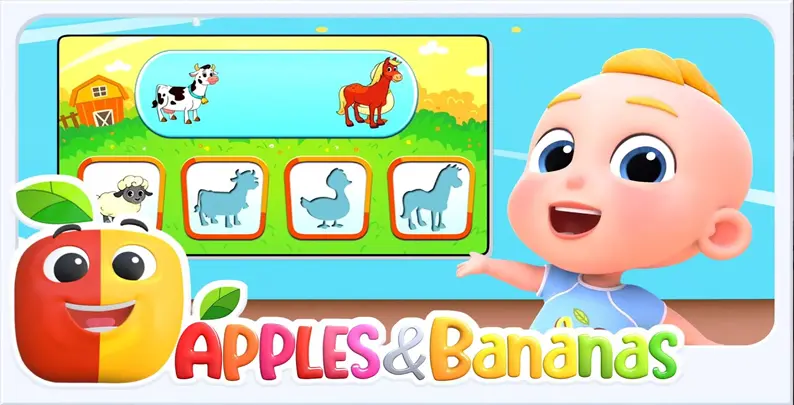
Apples & Bananas is an educational game crafted for early learners. Built in Unity, the game features structured learning blocks, vibrant interactive environments, and toddler-safe navigation. Juego Studios handled both the game mechanics and the pedagogical layer, ensuring that the UX supported language development and cognitive milestones through playful design.
-
Super Club Soccer

Super Club Soccer is a full-cycle PC football management simulator released on Steam. The game combines tactical gameplay, player development systems, and asynchronous multiplayer features. Juego led development across UI/UX, backend systems, game logic, and content tools—delivering a scalable architecture and platform readiness for future expansions.
Also Recommended: Growth of Interactive Game Development in UAE
Conclusion
The UAE has evolved into a genuine production hub for global game development. Thanks to robust infrastructure, business-friendly ecosystems, and the rise of specialized game development studios, the region now competes on both quality and capability. Whether you’re building a console title, launching a mobile LiveOps roadmap, or embedding key technical roles, the UAE offers more than just outsourcing — it offers partnership, consistency, and cross-platform fluency. As the industry expands, studios that invest in due diligence and alignment will find the UAE to be a high-value, forward-looking addition to their global production stack.
Frequently Asked Questions
Yes—especially if you value strong market alignment, a growing ecosystem, and government-backed industry development in Dubai and Abu Dhabi, but you should validate whether the production team is actually UAE-based or distributed.
Rates vary widely by seniority and whether the team is truly UAE-located or coordinated from the UAE while delivered offshore; treat “Dubai-based” as a contracting and coordination signal until staffing location is verified.
Unity and Unreal appear repeatedly across UAE-present vendor menus and profiles, while larger studios may not publicly disclose engines per project.
If you need specialized capacity fast, choose staff augmentation/outstaffing; if you need a complete build with PM accountability, choose managed full-cycle. Many providers offer both—confirm engagement model details up front.
The UAE Media Council provides permitting for age ratings, and there is precedent for restrictions on specific titles or platforms—so plan for ratings, content compliance, and regional release governance early.
Government and local market reporting has highlighted strong engagement in mainstream global franchises and esports-adjacent play patterns; for studios, that typically translates into mobile-first monetization literacy plus increased demand for competitive/live-service operations.
Related Posts

Have a Game Idea but No Development Team? How to Get It Built
This guide walks you through every realistic way to get your game made, what each one really costs you in time and control, and how to pick the right one before you spend a dollar finding out the hard way.
Top 10 Game Development Companies in USA (2026 Update)
In this blog, we’ll discuss the top 10 game development companies in USA, along with how to evaluate them beyond surface-level claims, so you can identify partners who actually align with your vision, technical needs, and long-term growth goals.

Top Game Development Companies in 2026: 10 Global Leaders Compared
Most game projects don’t fail because the idea was weak. They fail because the development partner couldn’t scale, adapt, or deliver when pressure peaked.