


 Unity
Unity Unreal
 Godot
Godot
 Mobile
 PC
PC Console
 Full-Cycle
 Co-Development
 Outstaffing






-
 Game Development
 Nov 19th, 2025
- Share:
Table of Contents
- The Challenges of Meeting Deadlines, Quality, and Cost Efficiency
- Understanding Co-Development: Expanding Without Traditional Hiring
- Outsourcing Game Development & Art: Strategic Scalability
- Scaling Through Targeted Hiring: Building Long-Term Capacity
- Comparing the Three Scaling Models
- Collaboration, Security, and IP Management
- Conclusion
The gaming industry stands at a critical juncture. As the market approaches USD 205 billion by 2026, studios of all sizes face unprecedented pressure to deliver games faster, better, and more affordably than ever before.
Why Scalability Matters in Modern Game Production
The real challenge goes beyond just growing revenue. It’s about managing production capacity, hitting increasingly tight deadlines, and maintaining quality standards while watching every dollar. Game production differs fundamentally from typical software development because it brings together multiple specialized disciplines: programming, art, animation, audio, design, and quality assurance. Each area demands specific expertise and carries its own unique requirements.
When a studio suddenly needs to expand its capacity, traditional hiring becomes a significant bottleneck. Hiring skilled game developers for specialized roles often takes over six months, making conventional hiring insufficient for projects with compressed timelines. The situation intensifies when you look at specific skill areas. Developers experienced in newer technologies like machine learning integration, VR/AR development, cloud gaming architecture, and live-service systems are particularly hard to find.
This talent shortage, combined with rising wages in North America and Western Europe, creates financial pressure that can threaten project profitability. Studios now need to think strategically about capacity planning, workforce composition, and which production tasks should stay internal versus going external. The old model of building large permanent teams simply doesn’t work in today’s environment.
The Challenges of Meeting Deadlines, Quality, and Cost Efficiency
Studios scaling production often struggle to balance three key constraints: deadlines, quality, and cost. Each influences the others, and mismanaging one can disrupt the rest.
1. Deadline Pressure and Reactive Scaling
- Locked launch dates and expanding project scopes force difficult choices: delay the release, cut features, or add more people.
- Adding personnel late rarely accelerates progress due to onboarding delays and rising communication overhead.
- Last-minute hiring often increases disruption and cost, sometimes degrading quality instead of improving it.
2. Quality Degradation During Rapid Scaling
- When studios hire or partner under time pressure, consistency breaks down.
- Art styles, code architecture, and design philosophies may diverge across teams.
- External QA teams may miss critical context, testing without full understanding of intended behaviors.
- Poor alignment with the core studio vision leads to mismatched workflows and fragmented results.
3. Cost Overruns and Compounding Risks
- Rework caused by inconsistent quality erases initial cost savings from outsourcing.
- Extended schedules lead to higher personnel, infrastructure, and opportunity costs.
- Although the game development services sector is growing 18.4% annually, many studios fail to achieve real savings due to immature processes.
4. Strategic Solutions to Balance the Three Constraints
- Define an MVP (Minimum Viable Product) scope early to avoid late-stage scope creep.
- Establish strict “definition of done” criteria for each milestone.
- Treat new features as live games updates rather than must-have inclusions.
- Externalize execution-heavy work only after design and specifications are finalized.
- This disciplined approach can reduce development cycles by 30–50%, improving both quality and predictability.
Understanding Co-Development: Expanding Without Traditional Hiring
Co-development has emerged as a powerful alternative to traditional hiring, offering studios a way to expand capacity without the long-term commitments and overhead of permanent staff.

What Co-Development Means in Modern Studios
Co-development represents a fundamentally different engagement model than traditional outsourcing. Rather than delegating isolated tasks, co-development partners stay involved across multiple project phases, from planning and prototyping through live games support. Both studios share decision-making authority, contribute ideas, and assume responsibility for outcomes together.
This isn’t about handing off work and waiting for results. It’s about building an extended team that works alongside your internal staff, participating in design discussions, technical decisions, and problem-solving sessions. The relationship resembles having additional senior staff members who bring specialized expertise but operate through a partnership structure rather than employment.
Game co-development works particularly well when studios need to tackle next-generation platforms or emerging technologies. Virtual and augmented reality games, for instance, require specialized knowledge in spatial interaction design, motion sickness prevention, headset optimization, and cross-platform VR compatibility. Rather than attempting to build this expertise internally (which could take years), studios partner with teams that already have deep VR/AR development experience.
Benefits: Shared Ownership, Flexibility, and Knowledge Exchange
The collaborative structure of co-development delivers several powerful advantages for studios seeking to scale without losing creative control.
-
Shared Ownership and Creative Input
By bringing in specialized partners with deep expertise in particular areas (whether visual art, multiplayer systems, VR technology, or live-service architecture), studios can undertake projects of greater ambition and complexity than internal resources alone would permit. The partner isn’t just executing specifications; they’re contributing to the creative vision and helping shape the final product.
This shared ownership model means both studios care deeply about the outcome. When problems arise, they’re solved collaboratively rather than through contractual negotiations. When opportunities emerge, both teams can pivot together to capitalize on them.
-
Flexible Resource Scaling
The financial model differs fundamentally from traditional hiring. Co-development often involves shared risks, shared resources, and flexible resource scaling. As production needs fluctuate (ramping up during heavy development, scaling down during polish phases), co-development partners expand and contract right alongside your home studio’s capacity.
This flexibility eliminates the fixed costs of maintaining oversized internal teams during low-utilization periods. When you need five additional programmers for multiplayer implementation, they’re available. When that work completes and you need three environment artists instead, the partnership adapts. This dynamic scaling would be impossible with permanent hires.
-
Knowledge Transfer and Capability Building
Perhaps the most transformative aspect of co-development is the knowledge exchange that occurs naturally. When experienced partner studios work alongside internal teams on core production phases, your developers learn advanced techniques, new tools, and proven methods directly from specialists. This capability building within your home studio pays dividends across future projects.
For indie teams especially, co-development provides access to specialized talent in areas like visual art, music composition, and advanced programming without the burden of hiring full-time staff or spending substantial capital upfront. A small indie studio can partner with experts to build sophisticated multiplayer systems or advanced rendering techniques while learning those skills for future projects.
Over time, this knowledge transfer reduces dependence on external partners for future projects in those areas. Your team doesn’t just get the work done; they learn how to do similar work themselves next time. This gradual capability building represents genuine long-term value that pure outsourcing typically doesn’t provide.
Outsourcing Game Development & Art: Strategic Scalability
While co-development excels at collaborative, knowledge-building partnerships, outsourcing serves a different but equally valuable purpose in strategic scaling.

When and Why Outsourcing Works Best
Outsourcing operates as a complementary scaling mechanism, ideal when studios need specialized expertise for defined, isolated tasks. Unlike co-development’s integrated partnership model, outsourcing typically focuses on specific deliverables: art assets, QA testing, programming particular systems, animation, or even complete backend services for live operations.
Ideal Scenarios for Outsourcing
Outsourcing proves especially effective for specific production stages and specialized tasks that don’t require deep integration with core creative decisions.
When studios face tight project deadlines, outsourcing QA and testing functions enables rapid scaling of testing efforts without committing to permanent hires. As game complexity increases (demanding comprehensive testing across functionality, compatibility, localization, and platform compliance), an external QA team can absorb volume spikes that would overwhelm internal staff.
Art and animation represent perfect outsourcing candidates. Modern games need massive asset libraries: environments, characters, effects, props, animations. Creating this volume internally requires maintaining large art departments year-round, even during production phases when animation work isn’t the bottleneck. By outsourcing art pipelines (concept art, 2D/3D modeling, animation, VFX, rigging, UI/UX design), studios let internal art teams concentrate on creative direction while partners handle execution.
Live operations and post-launch support increasingly move to outsourcing arrangements. AAA games need continuous engagement loops: seasonal content, battle pass progression, balance adjustments, community events, monetization optimization, and bug fixes. Rather than keeping permanent internal live-ops teams, studios outsource these functions to specialists who manage the ongoing product while core teams shift to new projects.
Key Advantages: Access to Expertise, Cost Reduction, and Faster Delivery
The economic case for outsourcing remains compelling across multiple dimensions.
-
Cost Efficiency
Outsourcing can reduce costs by 40-60% compared to internal hiring, particularly when working with studios in India, Eastern Europe, or Southeast Asia where skilled talent operates at lower cost structures. This cost advantage doesn’t mean compromising quality. Many outsourcing partners maintain rigorous quality standards, follow international compliance frameworks like ISO/IEC 27001, and work with AAA publishers on blockbuster titles.
The savings come from several factors: lower labor costs in certain regions, no overhead for benefits and office space, no costs during periods when those skills aren’t needed, and the ability to scale resources up or down instantly based on project phase.
-
Access to Specialized Expertise
Outsourcing provides immediate access to specialists without the lengthy hiring process. Need experienced mobile game developers for a port? Contract with a mobile game development company. Require expertise in a specific game engine or technology? Partner with specialists in that area.
This access proves particularly valuable for emerging technologies or platforms where internal expertise doesn’t exist. Rather than spending months or years building capability internally, studios can tap into existing expertise and deliver results immediately.
-
Risk Mitigation
Outsourcing also helps manage risk. When internal resources lack expertise in a particular technology stack or game mechanic, outsourcing partners with proven success in that domain assume responsibility for delivery. If problems emerge, the vendor handles accountability. This risk-sharing prevents projects from stalling due to knowledge gaps.
-
Accelerated Timelines
Parallel workflows enabled by outsourcing can dramatically reduce time-to-market. While your internal team focuses on core gameplay systems and design, outsourced art teams can simultaneously create asset libraries. While programmers build features, external QA teams can test previous builds. This parallel processing cuts weeks or months from development cycles, a critical advantage in a fast-moving industry.
Managing Quality and Communication in Outsourced Workflows
Successfully leveraging outsourcing requires establishing systems to maintain quality and ensure alignment, even when teams work remotely across different organizations and time zones.
-
Quality Assurance Best Practices
Moving quality assurance work to outsourced teams requires transparent workflows and well-structured processes. The most mature studios adopt “shift-left” practices: involve QA specialists early in design, not just at the end of development. External QA teams participating in design reviews can flag technical debt, gameplay concerns, or testing challenges before implementation, preventing expensive downstream fixes.
Clear written specifications become essential when teams span geographies and organizations. Vague requirements create rework: external partners build what they understood rather than what you intended, requiring multiple revision cycles. Investing in comprehensive design documents, visual references, and specification reviews upfront saves weeks of iteration.
Interestingly, objective outsourced testing can actually improve quality. External testers approach builds fresh, without assumptions built into the design team’s thinking. A developer deeply familiar with a game system might miss obvious usability problems. An outsourced tester encountering the feature for the first time catches what’s confusing.
For live-ops and post-launch support, establish clear success metrics and KPIs to ensure outsourcing partners optimize for outcomes, not just activity. Define specific player engagement targets, retention benchmarks, and monetization goals. Let partners determine the content and economy changes needed to achieve them.
-
Communication Infrastructure
Distributed teams need robust communication infrastructure to stay coordinated. Effective studios establish a primary communication stack: a messaging platform (Slack, Discord), a project management system (Jira, Asana), file sharing and version control (GitHub, Perforce), and video conferencing tools.
Beyond tools, processes matter equally. Successful studios implement:
- Regular synchronization rhythms: Daily standups (asynchronous video updates for global teams), weekly feature reviews, bi-weekly cross-team syncs. These regular touchpoints prevent communication gaps that lead to misalignment.
- Clear documentation practices: Design documents, technical specifications, art style guides, and architecture diagrams serve as the source of truth. When team members change, documentation preserves continuity.
- Decision-making frameworks: Define which decisions require consensus across teams, which can be made unilaterally, and which need approval. This clarity stops bottlenecks and endless deliberation.
- Transparent progress tracking: Visual roadmaps, build schedules, and milestone dashboards keep all teams aligned on status. Collaborative whiteboards enable async updates visible to distributed teams.
For remote teams specifically, ensure video communication remains the default for complex discussions. Text-based communication loses nuance and context, leading to misunderstandings. Establish response-time expectations (like non-urgent messages within 24 hours) to accommodate time zone differences.
Scaling Through Targeted Hiring: Building Long-Term Capacity
While co-development and outsourcing address immediate scaling needs and project-specific challenges, strategic hiring builds the sustainable foundation for studio growth.
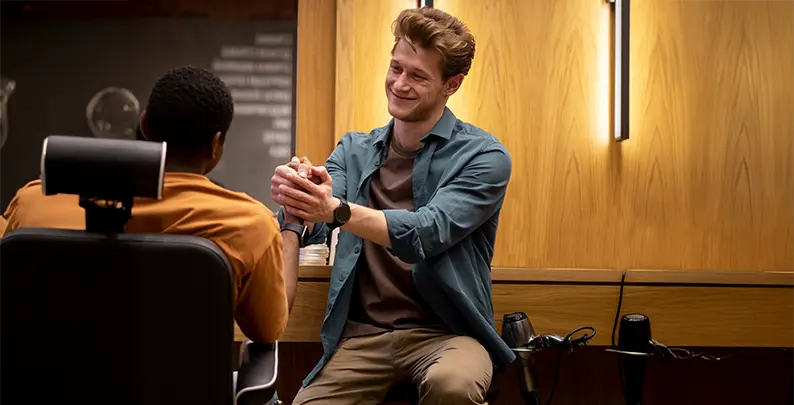
Strategic Hiring for Core Positions and Leadership Roles
Hiring should focus on core positions where expertise directly shapes creative vision and competitive differentiation: lead gameplay designers, technical directors, art directors, and senior programmers who define the studio’s technological approach. These individuals form the creative nucleus that maintains your studio’s identity and vision across projects.
-
Identifying Core Positions
Not every role demands a permanent hire. The key is distinguishing between positions that require deep institutional knowledge and cultural alignment versus those that can be effectively scaled through external partnerships.
Core positions typically include:
- Creative directors who define the studio’s artistic vision and design philosophy
- Technical directors who establish architectural standards and technology strategy
- Lead designers who shape gameplay systems and player experience
- Senior programmers who build core engine capabilities and technical infrastructure
- Art directors who establish and maintain visual identity
These roles benefit most from permanence because they require deep understanding of the studio’s history, values, and long-term goals. They make decisions that ripple across multiple projects and shape the studio’s reputation.
-
Navigating the Competitive Hiring Landscape
In today’s competitive 2026 hiring environment, success requires moving quickly and thinking creatively. Studios need efficient hiring pipelines using recruiters or specialized agencies to rapidly identify candidates who fit both role requirements and studio culture.
Global remote hiring has become necessary. Domestic talent alone doesn’t suffice for filling specialized positions. Many companies now recruit globally to access skill sets at competitive costs. This global approach expands the talent pool dramatically while potentially offering cost advantages compared to expensive local markets.
However, remote hiring introduces its own challenges: managing across time zones, building cohesion without physical proximity, and maintaining cultural alignment when team members never meet in person. Studios must invest in communication infrastructure and team-building practices to make remote teams effective.
Balancing Internal Growth with Flexible Talent Models
Strategic hiring should balance with flexible talent models. Rather than building a top-heavy permanent staff, leading studios adopt a “core plus flexible” approach.
-
The Core Plus Flexible Model
This model maintains a lean permanent team of 15-25 core contributors (designers, leads, architects), then scales through outsourcing and co-development as project needs fluctuate. This structure reduces fixed overhead while preserving creative continuity.
The core team provides stability and institutional knowledge. They understand the studio’s design philosophy, technical capabilities, and creative goals. They maintain continuity between projects and mentor new contributors. They make the critical decisions that define the studio’s identity.
The flexible layer adapts to project demands. During heavy production phases, the team expands significantly through co-development partnerships and outsourcing arrangements. During slower periods or between projects, it contracts. This flexibility keeps costs aligned with revenue and prevents the painful layoffs that plague studios with oversized permanent teams.
-
Investment in Retention
Retention matters enormously for core positions. Skills shortages in emerging areas (engine programming, advanced systems, VR development, and network architecture) create intense competition for top talent. Studios that invest in staff development, provide clear career paths, and foster collaborative culture significantly reduce costly turnover.
The cost of losing a senior team member extends far beyond recruitment expenses. You lose institutional knowledge, project context, relationship networks, and momentum. A departed lead might take months to replace and additional months for the replacement to reach full productivity. The total cost can easily exceed one year’s salary.
Retention strategies should include:
- Competitive compensation and benefits
- Clear career progression paths
- Investment in professional development and learning
- Challenging, meaningful work
- Healthy work-life balance
- Collaborative, respectful culture
Best Practices for Sustainable Studio Scaling
Sustainable scaling requires thinking beyond individual hiring decisions to systematic approaches that maintain quality and culture as the team grows.
1. Structured Onboarding
Whether bringing on permanent staff or integrating co-development partners, structured onboarding dramatically accelerates productivity. New team members need to understand your tools, workflows, design philosophy, technical architecture, and communication norms. Without structured onboarding, they waste weeks figuring out basics they could learn in days with proper guidance.
Effective onboarding includes documentation of core systems, mentorship pairing with experienced team members, structured introduction to key stakeholders, and clear early goals that build confidence while providing value.
2. Culture and Communication
As teams scale, maintaining culture and communication becomes challenging but critical. Small teams communicate naturally through proximity and frequent informal interaction. Larger teams need deliberate systems to maintain alignment.
Regular all-hands meetings, transparent roadmaps, open forums for questions and concerns, and clear channels for feedback help maintain cohesion. Leadership must actively work to preserve the culture that made the studio successful as it grows.
3. Avoiding Common Scaling Pitfalls
Many studios make predictable mistakes when scaling:
- Over-hiring during success: When a game succeeds, studios often hire aggressively, assuming growth will continue indefinitely. When the next project underperforms, they’re forced into painful layoffs.
- Under-investing in leadership: As teams grow, management and coordination become full-time jobs. Studios often promote talented individual contributors into leadership without providing training or support, leading to frustrated leaders and mismanaged teams.
- Neglecting process: Small teams succeed through informal communication and minimal process. Larger teams need structured workflows, clear decision rights, and documented practices. Studios that don’t evolve their processes as they scale descend into chaos.
- Losing creative vision: As more people contribute, creative vision can become diluted. Studios must actively work to maintain clarity about what makes their games distinctive.
Comparing the Three Scaling Models
Choosing between co-development, outsourcing, and hiring isn’t a binary decision. Each mechanism serves different needs, and leading studios deploy them strategically based on specific requirements.
When to Choose Co-Development vs. Outsourcing vs. Hiring
Understanding when each scaling approach makes sense helps studios make informed decisions that balance cost, quality, timeline, and long-term capability building.
| Scaling Model | Best For | Typical Cost Impact | Timeline | Quality Control |
| Strategic Hiring | Core creative roles, technical leadership, long-term capability | Highest fixed cost; roughly $100-150K annually per hire in Western markets | 6-12 months to recruit and onboard | Highest – internal control and cultural alignment |
| Co-Development | Complex features, emerging tech (VR/AR), knowledge transfer needs, shared risk | 20-40% cost savings vs. equivalent internal hire while maintaining integration | Flexible; ramps with project needs | High – ongoing collaboration ensures alignment |
| Outsourcing | Defined deliverables (art, QA, porting), volume tasks, live games support | 40-60% cost savings for execution-heavy work | Project-dependent; 2-12 weeks typically | Requires clear specs and process discipline |
When to Choose Strategic Hiring
Hire permanently when:
- The role directly shapes creative vision and studio identity
- Deep institutional knowledge provides significant competitive advantage
- The position requires continuous work across multiple projects
- Cultural alignment and long-term commitment matter critically
- You’re building core capabilities that define your studio
When to Choose Co-Development
Partner through co-development when:
- You need specialized expertise you don’t have internally
- Knowledge transfer and capability building matter significantly
- Complex features require deep collaboration and shared decision-making
- Flexible scaling aligns with production phases
- Shared risk in emerging technologies or experimental features makes sense
- Long-term partnership value exceeds transactional execution
When to Choose Outsourcing
Outsource when:
- Tasks are well-defined with clear specifications
- Volume work requires temporary capacity scaling
- Specialized expertise is needed for short-term, isolated tasks
- Cost efficiency matters more than knowledge transfer
- Work can be completed independently without deep integration
- Speed and parallel processing provide strategic advantages
Hybrid Scaling Models for Dynamic Production Cycles
The most sophisticated studios don’t choose just one approach. They adopt hybrid scaling that dynamically deploys different mechanisms based on project phase and production bottleneck.
Pre-Production Phase
During pre-production, focus on strategic hiring for core design and creative leadership. Maintain a small team making fundamental creative decisions. Consider co-development partnerships with specialized advisors for specific technology research (VR, networking, advanced systems) to validate feasibility early.
At this stage, the team stays small and nimble. Major decisions get made quickly, and experimentation happens without expensive overhead. External partnerships provide targeted expertise for technical validation without long-term commitments.
Production Phase
As production ramps up, scaling becomes critical. Maintain core designers and leads internally to preserve creative vision and project continuity. Scale art and animation through outsourcing or co-development, maximizing parallel workflows. Bring in co-development partners for complex systems (multiplayer, advanced mechanics, progression systems) where knowledge transfer matters.
Outsource QA staffing as production accelerates and testing volume increases.
This phase sees the largest team size and highest costs. The hybrid approach keeps creative control internal while leveraging external capacity for execution-heavy work. Parallel workflows enabled by outsourcing dramatically compress timelines.
Optimization and Polish Phase
As development nears completion, maintain a small internal team for final tweaks and creative decisions. Outsource comprehensive optimization, performance profiling, and bug fixing to specialized QA firms. Use co-development partners for platform-specific porting and certification support.
The team contracts as the work shifts from creation to refinement. External specialists handle technical optimization while internal leads make final creative calls. This prevents maintaining expensive internal capacity during a phase that needs different skills.
Live Games Phase
After launch, maintain a small live-ops core focused on analytics, economy balancing, and strategic direction. Outsource content creation, community moderation, and routine maintenance to specialists.
This minimal internal footprint keeps costs low while ensuring ongoing support. Your core team moves to the next project while external partners manage the live game. This approach maximizes profitability from successful titles without preventing new development.
Practical Example
A mid-sized studio developing an action RPG for PC and console might structure scaling like this:
Maintain internal teams for game design, creative direction, and core gameplay systems (3-5 core hires). Partner through co-development for advanced technical systems like networked multiplayer architecture, dynamic difficulty balancing, or sophisticated character behavior where the studio lacks deep expertise (1-2 co-dev partnerships). Outsource art asset creation, animation, VFX, and QA testing where volume and specialization favor external partners (4-6 outsourcing engagements).
This hybrid approach maintains creative control and knowledge continuity while achieving 30-40% cost savings versus developing everything in-house. More importantly, it allows the studio to undertake a more ambitious project than internal resources alone would permit.
Collaboration, Security, and IP Management
As development work distributes across multiple partners and geographies, protecting intellectual property and maintaining security becomes increasingly critical yet complex.
Legal and Operational Best Practices Across All Scaling Models
Whether working with co-development partners, outsourcing vendors, or remote employees, studios must establish clear legal frameworks and operational practices to protect their interests.
Intellectual Property Ownership
The default legal position creates risk for studios: copyright created by independent contractors typically remains with the contractor unless explicit agreements transfer ownership. Studios must establish clear contractual provisions ensuring all IP developed during collaboration remains the studio’s exclusive property.
Essential contract provisions include:
- Ownership and Transfer Clauses: Explicitly state that all IP (source code, art assets, design documents, game mechanics, narrative content) created by the partner becomes the hiring studio’s exclusive property when the project completes. Specify that ownership transfers automatically without additional payment. This prevents situations where contractors claim ownership of critical game assets after the fact.
- Non-Disclosure Agreements (NDAs): Legal documents binding partners to confidentiality, ensuring they can’t disclose or misuse proprietary information. NDAs should persist indefinitely, not just during the project term. Game concepts, mechanics, and technical innovations can provide competitive advantages for years.
- Confidentiality Obligations: Detail the partner’s responsibilities in maintaining confidentiality, specify consequences for breaches, and outline secure information handling procedures. Vague obligations create enforcement challenges if violations occur.
- Data Security and Management: Require partners to use encryption protocols, secure data deletion procedures, and implement access controls limiting sensitive information exposure to personnel with legitimate business needs. Specify that sensitive data must be overwritten (not merely deleted) when no longer needed, preventing recovery through forensic tools.
- Compliance with International Standards: Verify that partners operate under ISO/IEC 27001 or equivalent information security standards, demonstrating systematic data protection practices. Certification provides assurance that basic security hygiene is followed.
- Managing International Partnerships: When working with international partners, additional complexities emerge around jurisdiction, enforcement, and compliance with different legal systems. Contracts should specify governing law and dispute resolution mechanisms. Many studios include arbitration clauses to avoid costly international litigation.
Consider data residency and privacy regulations, particularly when working with partners in regions with strict data protection laws like the European Union’s GDPR. Player data, analytics, and personal information require careful handling to comply with applicable regulations.
Maintaining IP Safety, Transparency, and Accountability
Legal contracts provide the foundation, but operational practices determine actual security and accountability.
-
Version Control and Code Repository Security
Version control and secure repositories protect code integrity. Repositories should only be editable by authorized personnel. Implement code review processes requiring peer approval before merging changes. Use CI/CD (Continuous Integration/Continuous Deployment) pipelines to prevent problematic code from reaching production and to maintain clean repository versions.
Access logs should track who accesses what code, when, and from where. This audit trail helps investigate suspicious activity and provides accountability. Regular repository backups protect against accidental deletion or malicious damage.
-
Access Control and Least Privilege
Access control by role and need-to-know basis reduces exposure. Sales team members don’t need access to code repositories. Programmers don’t require financial data. Artists shouldn’t have access to player databases. The principle of “least privilege” (grant only the access necessary to perform assigned tasks) prevents cascading damage from compromised accounts.
As team members change roles or complete specific tasks, promptly revoke unnecessary access. Former employees and departed contractors should have all access removed immediately. Many breaches occur through abandoned accounts that retain unnecessary permissions.
-
Security Audits and Penetration Testing
Regular security audits and penetration testing by third-party specialists identify vulnerabilities before attackers exploit them. Threat modeling exercises during development help teams think through attack vectors specific to their infrastructure.
These assessments should cover not just technical vulnerabilities but also process weaknesses, social engineering susceptibility, and physical security gaps. Comprehensive security requires addressing the full attack surface.
-
Building Security Awareness
Employee cybersecurity training addresses the human element. Phishing remains the most common attack method because social engineering exploits people more easily than technical systems. Comprehensive training on password management, multi-factor authentication, secure remote work practices, and incident reporting creates a security-aware culture.
Training shouldn’t be a one-time checkbox. Regular simulations, updated guidance on emerging threats, and reinforcement help maintain vigilance. When security practices become habit, they’re followed consistently.
-
Incident Response Planning
Despite best efforts, breaches sometimes occur. Incident response planning ensures rapid, effective response that minimizes damage. Establish clear procedures for detecting unauthorized access, documenting incidents, containing damage, and notifying affected parties.
The faster a studio responds to compromise, the less data exposure and legal liability accumulate. Teams should practice incident response through tabletop exercises, identifying gaps in procedures before real incidents occur. Designate specific individuals responsible for coordinating response, communicating with stakeholders, and managing recovery.
-
Transparency and Communication
Transparency with partners about security expectations sets clear standards. Regular security reviews and audits of partner practices verify compliance. Open communication about concerns, near-misses, and improvements fosters a collaborative security culture.
When issues arise, transparent communication helps resolve them quickly. Partners who feel treated fairly and respectfully are more likely to acknowledge mistakes and work toward solutions. Adversarial relationships lead to finger-pointing and cover-ups that compound problems.
Conclusion
Success in modern game development doesn’t depend on team size. It depends on team composition, communication discipline, and the wisdom to scale each production dimension appropriately. The future belongs to studios that master this balance.
Studios scaling successfully in 2026 aren’t the largest. They’re the most strategically thoughtful about which production tasks warrant internal investment and which benefit from specialized external expertise. They recognize that scalability isn’t just about doing more work; it’s about doing better work more efficiently.
The challenge isn’t whether to scale but how to scale intelligently. Studios that develop this strategic capability position themselves not just for individual project success but for sustainable long-term growth in an increasingly competitive industry. Those that cling to outdated models face growing pressure and eventual irrelevance.
The tools, partnerships, and practices for successful scaling exist today. The question is whether studios will embrace them or continue fighting against industry evolution. The answer to that question will determine which studios thrive in the next decade of game development.
Frequently Asked Questions
The best approach combines co-development, outsourcing, and selective hiring—allowing studios to expand capacity, access specialized talent, and maintain quality while controlling costs and timelines.
Co-development enables studios to collaborate with external experts, sharing workload and knowledge. It accelerates production, improves innovation, and integrates seamlessly without the long-term costs of hiring full-time staff.
Outsourcing provides access to specialized skills, reduces overhead, and enables faster delivery cycles. It lets studios focus on core creativity while partners handle technical and production-heavy tasks.
Studios should hire internally for critical leadership, design, or IP-sensitive roles that require deep product ownership and long-term creative alignment with the studio’s strategic vision.
Related Posts

Have a Game Idea but No Development Team? How to Get It Built
This guide walks you through every realistic way to get your game made, what each one really costs you in time and control, and how to pick the right one before you spend a dollar finding out the hard way.
Top 10 Game Development Companies in USA (2026 Update)
In this blog, we’ll discuss the top 10 game development companies in USA, along with how to evaluate them beyond surface-level claims, so you can identify partners who actually align with your vision, technical needs, and long-term growth goals.
Top Game Development Companies in 2026: 10 Global Leaders Compared
Most game projects don’t fail because the idea was weak. They fail because the development partner couldn’t scale, adapt, or deliver when pressure peaked.