


 Unity
Unity Unreal
 Godot
Godot
 Mobile
 PC
PC Console
 Full-Cycle
 Co-Development
 Outstaffing



Unity Game Development Company Built to Ship
Juego Studios is a Unity3D game development company supporting productions that can't afford a stalled milestone. Engineering, art, and QA under one roof, backed by 200+ titles shipped for clients like Disney, Sony, Tencent, and Warner Bros. Games. You bring us a GDD, an active build, or a live title. We assemble the team, ownership level, and delivery model your production needs, scoping around exactly where it stands.
- Home
- Unity Game Development
10+
Years in Production
50+
Publishers Served
200+
Shipped Titles
250+
Engineers, Artists & QA

Forbes India Marquee List









Why Studios Choose Juego as a Unity Game Development Company
JAI: Faster Unity Production. Senior Reviewed.
JAI is Juego’s proprietary AI pipeline—specialized agents for concept, art, code, and QA, trained on a decade of shipped-title experience, with senior review gates deciding what enters your build.
Faster prototyping and production support without unchecked output creating technical debt. The same AI-accelerated pipeline compressed porting and optimization work on Atari’s RollerCoaster Tycoon Classic while preserving production discipline.
Explore RollerCoaster Tycoon Classic
KPI Accountability After Launch
Launch is milestone zero, not a finish line. The team instruments, soft-launches, and iterates against D1, D7, D30, ARPDAU, stability, engagement, and monetization targets until they hit the genre benchmark.
On School of Dragons, that discipline maintained the content, event, reward, and rollout rhythm behind a Unity MMORPG that grew to 30M+ registered players and reached Top-20 free app and Top-10 free game rankings.
One Unity Partner. Full Delivery.
Design, art, engineering, QA, release support, and LiveOps sit under one production structure—decisions made early stay available later. Full IP transfer built into the engagement. What gets built is always yours; no shared ownership or licensing carve-outs.
On Super Club Soccer, that structure delivered full-cycle Unity support from gameplay and multiplayer engineering through launch readiness and LiveOps preparation, with no handoff between teams.
Unity Game Development Built Around Your Roadmap
Whether you need complete production ownership or need to strengthen a build already underway, our custom Unity 3D game development services cover it.

End-to-End Unity Game Development
When design, engineering, and backend sit in different teams, your milestones stall, waiting on handoffs. One Unity team runs your build under a single technical plan instead—game design, prototyping, gameplay systems, multiplayer, backend integration, UI implementation, and release support, all on one milestone schedule. It’s how 200+ titles have shipped, from first prototype to live launch.

Unity Multiplayer & Networking
Your multiplayer can look solid in testing and still buckle under real player load. Matchmaking, lobby flows, and authoritative hosting run on Photon, PlayFab, or Amazon GameLift Servers. State replication and lag compensation live in your netcode layer. You get real-time and turn-based multiplayer—competitive, co-op, or live—with stable sessions and low disconnect rates, even when everyone’s playing at once.

Unity-Compatible Art & Animation
Art built outside your engine often needs rework once it’s actually in your build. 2D and 3D characters, environments, animation, UI, VFX, and shaders are built directly across URP and HDRP, tuned to your target hardware and performance budget, and checked in-engine before you approve it. You get art that performs the first time it enters your build, not after three rounds of rework.

Unity Porting & Modernization
Port or upgrade a legacy title without care, and it stops feeling like the game your players remember. Every Unity upgrade holds gameplay behavior and retention as the fixed constraint. That covers legacy code stabilization, SDK replacement, input and UI adaptation, Addressables migration, IL2CPP builds, and save-data validation. You get a modernized build that plays exactly as your players remember it.

Unity QA & Performance Optimization
QA left until the end tends to surface your biggest issues right when there’s the least time to fix them. We run frame-time, memory, garbage-collection, crash, compatibility, and regression coverage alongside development, not after it. Functional QA, profiling, automated test coverage, device testing, and certification checks built into every sprint. You get a stable, reviewable build at every milestone, not just at launch.

Unity LiveOps & Post-Launch Development
LiveOps bolted on after launch means retrofitting architecture every time you want to run an event or tweak the economy. Analytics, progression, economy systems, remote configuration, events, content deployment, monetization tests, updates, and live QA get built into your architecture before release. You get D1, D7, D30, and ARPDAU decisions made fast by the same team that already knows your build inside out.
Choose the Right Level of Ownership
The same Unity game development studio can support three very different production situations. Juego recommends the model that fits the scope, timeline, internal capacity, required skills, and ownership level. Your team chooses the model or adjusts it as production changes.
Full-Cycle Unity Game Development
Use full-cycle Unity game development services when you have the IP and direction but need one partner to manage production from the approved GDD through launch and LiveOps.
Juego owns the milestone plan, team coordination, cross-discipline delivery, QA, and release readiness.
Best for: Publishers, funded studios, and founders without a complete internal production team.
Unity Co-Development
Use co-development when an active production needs more capacity or specialist depth without creating a parallel workflow.
Juego works inside your Jira/Slack/Git/Perforce, repositories, sprint cadence, build process, and approvals while your internal leads retain roadmap and product control.
Best for: AA/AAA studios and publishers protecting a milestone, platform launch, or under-resourced production track.
Unity Team Augmentation
Use a dedicated team when the roadmap needs stable, multi-discipline capacity across several phases.
Engineers, artists, QA, and production support are assembled around the game’s platform, architecture, and release plan, then adjusted as production demand changes.
Best for: Studios planning sustained feature development, multiple releases, modernization, or long-term LiveOps.
Unsure which model fits? Share the scope and current constraint.
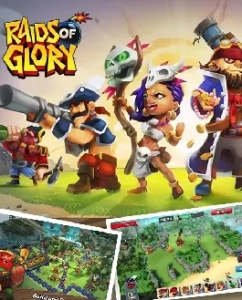
Other Unity Games We’ve Shipped

Multiplayer
What Studios Say After Shipping With Us

Well, I signed up to work with Juego Studios for a project and they really exceeded my expectations. The project was delivered on time, with no hiccups whatsoever. They are talented and professional game developers who get the job done without fail. I cannot recommend them enough!
Sam Anthony Gilfred
Sr. Project Manager
Amazon

I was very pleased with the quality of the work we received for our project. They were delivered on time and with very minimal feedback from our team. Juego Studios is good company to work and will be looking to them for our future projects!
Paul Skinner
Director
Wicked Witch Studios

Satisfying yet extremely accommodating software development studios in India, the team at Juego Studios are excellent partners to work with all thanks to the work ethic laid down. Had a wonderful time working with team who was always well versed with technicalities and precise with timelines, deliverables and project planning. Would love to recommend Juego to anyone without hesitation!
Jonathan Fitzgibbons
Project Manager
United-Airlines

It's safe to say that most regular human beings would be shocked and daunted at the idea of having to do a high quality game for iOS and Android, within a deadline of few months. I can honestly say that this work not the case with Juego Studios. They responded reactively, calmly and productively, and ended up delivering a game that both myself, the LatAm team, and users, were very happy with. There is a calm and experienced professionalism to the Juego team, and I would not hesitate to use them again.
Josh Saunders
Senior Director,
Innovation (Warner- Group)

It was great working with Juego Studios on our gaming application. We truly appreciate the team’s efforts & their commitment to the project.
Mohammad Parham Al Awadhi
Vice President,
Group IT – Emirates NBD
We partnered with Juego Studios for the development of Munna Michael, a Bollywood based game & they did a terrific job. Our main concern was to develop a good game within specific timelines and they delivered a quality product. They also help us with theme/event-based updates on a regular basis.
Vaibhavi Parikh
General Manager,
Erosnow Games
The Juego Studios team was instrumental in developing one of our recent apps. We were able to supplement our small development team with several more developers that worked on front and backend features. They filled gaps wherever necessary and accelerated our time to market. After release, they continued to help us with new features and bug fixes. I would work again with them if needed.
Robert Baily
Director of Application Programming
JumpStart Games

I want to reach out Juego Team and thank you for all the great work on the SSCS mobile application. Its been a pleasure working with Juego Studios on this project and looking forward to partnering with team again in the future.
Mathew Butler
Mobile Center of Excellence,
IEEE
Unity Projects With Verified Scope
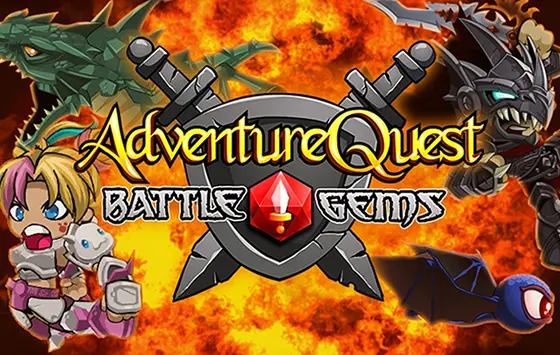
Adventure Quest Battle Gems
A match-3 puzzle RPG needed character-driven combat, hero collection, and LiveOps-ready systems built for a casual mobile audience from day one. Juego delivered the puzzle-board logic, combo and VFX systems, hero progression, and F2P economy end-to-end in Unity. The result is a stylized, replayable RPG with the readable feedback and event framework casual mobile players expect.
 Platform:
Mobile, iOS, Android
Platform:
Mobile, iOS, Android
 Game Engine:
Unity
Game Engine:
Unity
 Genre:
Full-cycle development
Art:
2D
Genre:
Full-cycle development
Art:
2D
Pro Feel Golf
A physics-dependent golf simulation needed a Unity upgrade and rendering overhaul without changing how a single shot felt. Juego re-validated ball trajectory, spin, and bounce behavior against the original build at every stage, then modernized rendering and device performance across current iOS and Android hardware. The title shipped on current platforms with its original gameplay feel fully intact.
Platform:
Mobile, iOS, Android
Game Engine:
Unity
Genre:
Porting and modernization
Art:
2D

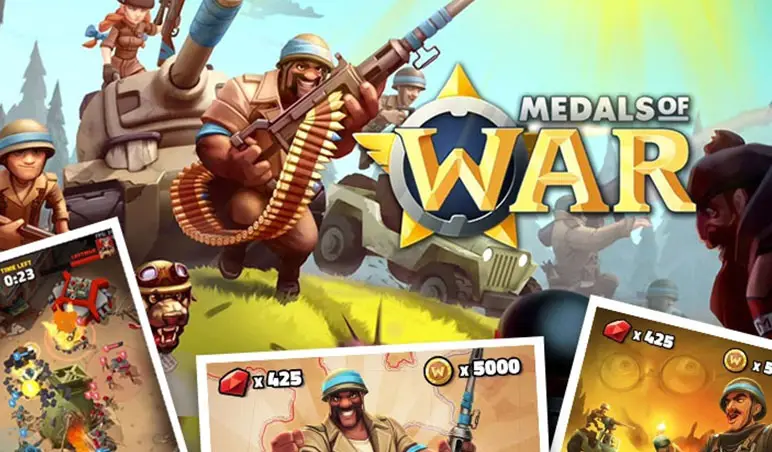
Medals of War
A WWII-themed mobile strategy title needed real-time PvP combat, a stylized unit roster, and a LiveOps content cadence built to hold a competitive player base. Juego engineered the matchmaking, tactical command systems, and seasonal event framework behind its F2P economy. The result is a polished, replayable strategy game with the balancing and event cadence live PvP titles depend on.
Platform:
iOS, Android
Game Engine:
Unity3D
Genre:
Co-development and LiveOps
Art:
3D
How Unity Production Moves Forward
Discovery & Technical Scoping
You bring the GDD or active build, plus your target platforms (mobile, PC, console), dependencies, technical debt, milestone pressure, budget, and approval process. We close out the stage with an agreed scope, risk register, engagement model, team shape, and delivery plan.
Architecture & Production Foundation
We lock architecture, Unity version, repositories, CI/CD, packages, render-pipeline standards, and performance budgets before production scales. Your technical and creative leads approve the foundation before we move on.
Prototype & Art Direction
Your core gameplay systems and in-engine art direction move from paper to a playable build. We test prototype priorities against the approved scope before full production ramps, so you confirm direction while changes are still cheap.
Production & Integration
Engineering, art, QA, and production move through shared acceptance criteria and sprint reviews with you. Each sprint closes with a playable build, resolved review notes, and updated blockers, so you always know where things stand while changes remain manageable.
QA & Launch Readiness
We run functional, regression, performance, device, and platform checks against your release candidate, then close out App Store and Google Play submission requirements and platform-specific optimization before your build is cleared for launch. Console certification is scoped per platform during discovery.
LiveOps & Growth
After launch, we keep telemetry, content calendars, economy reviews, events, and update cycles running, so your stability, retention, and monetization decisions stay connected to player behavior—with the same team that shipped your build.
Get a Scoped Unity Production Plan
Send the GDD, current build status, or production gap. Juego will recommend the engagement model, team shape, first priorities, and realistic next step.


Top Game Developer of 2018 Badge by Top App Development Company

Hopster featured by Apple on the iTunes App Store

An ISO 9001:2015 Certified Company

Top VR/AR technology service providers 2017 by APAC CIO Outlook magazine

Brand of the Year by “Silicon India”
Best Mobile App Developers in Oakland

Listed in Forbes India Marquee Entrepreneur Special

Game Changer Award from Brand Vision
Frequently Asked Questions
Unity 3D game development typically takes 3–6 months for smaller mobile games, 12–18 months for mid-scale multiplayer or cross-platform titles, and longer for live-service or AAA-scope productions. The timeline depends on scope, platform count, multiplayer complexity, art volume, and how clearly project requirements are defined before production starts. Juego Studios has delivered functional mobile builds in under 6 months for clients with well-scoped GDDs and stable milestone plans.
Custom Unity game development services are priced by the project scope and engagement model. A clearly defined smaller mobile game may cost between $20,000 and $80,000. Multiplayer, cross-platform, or content-heavy productions can range from $100,000 to $300,000 or more. Co-development is usually priced according to the scope and the responsibilities shared between teams. For ongoing support, dedicated developers typically cost around $4,000 to $8,000 per developer per month. We recommend a model based on your project’s current stage, requirements, and internal capacity.
Four things: Unity version and render-pipeline depth, platform build experience, performance discipline, and post-launch ownership. URP and HDRP are not interchangeable, and an agency strong in one may struggle with the other. Ask how they handle IL2CPP builds and mobile frame budgets. Juego Studios works across URP, HDRP, DOTS, and IL2CPP, and has delivered Unity productions for publishers including Disney, Sony, and Tencent.We’ve laid out the exact questions to ask and red flags to watch for in our guide on how to choose the right Unity studio for your project.
The right option depends on how much control you want to retain. A development partnership works well for long-term projects where you want to guide the strategy while an external Unity game development company handles execution. Outsourcing is better suited to clearly defined work that requires additional capacity or specialist expertise without a long-term commitment. We support both models, so you can choose the approach that best fits your project and internal team.
The main challenge is maintaining consistent performance across devices with different hardware capabilities. Common issues include memory spikes, CPU and GPU bottlenecks, battery drain, and app store certification failures. We address them through ongoing profiling, memory management, device-specific quality settings, asset streaming, and draw-call, shader, and texture optimization. For multiplayer titles, we also optimize network performance. These measures are built into development from the beginning instead of being left until the final stages.
Full IP transfer is built into every engagement—what you build stays yours, with no shared ownership or licensing carve-outs. An NDA is available before any project details are shared, and source code, assets, and documentation transfer to you at each milestone, not just at project close.
A dedicated Unity team assembled around your production, not a rotating pool. You get named Unity engineers and gameplay programmers, multiplayer/backend engineers where networking is in scope, 2D/3D artists and technical artists, and QA engineers, all matched to your platform, architecture, and release plan, plus a producer as your single point of contact. Team composition adjusts as production demand changes, but the people stay consistent through the engagement, working directly inside your Jira, Slack, Git, or Perforce.