


 Unity
 Unreal
 Godot

 Mobile
 PC
 Console

 Full-Cycle
 Co-Development
 Outstaffing





-
 Game Development
 Nov 19th, 2026
- Share:
Table of Contents
The best Steam Deck games are the ones that match how you like to play and that Valve has already tested on the handheld. Start with the kind of session you want, whether that is a quick card game, a quiet routine, or a long adventure, then check Valve’s rating on the game’s Steam page. Eight of the nine games below are rated Verified by Valve, and one is rated Playable. If you make games, these nine also show what Valve checks before it gives a game the Verified badge: controls, readable text, a smooth first launch, and a steady frame rate. Further down, we cover what they get right and how Juego Studios can help you build or port a game to the same standard.
TL;DR
- Card strategy: Balatro for scoring combinations, or Slay the Spire 2 for building a deck through battles.
- Relaxed play: Stardew Valley.
- Accessible action: Vampire Survivors.
- A longer adventure: Baldur’s Gate 3 for party decisions, Cyberpunk 2077 for a futuristic city, or Elden Ring for exploration and combat.
- Playing together: Valheim.
- Check first: Red Dead Redemption 2 is rated Playable, not Verified, so read its compatibility notes before buying.
- Before buying anything: look at the current rating on the game’s Steam page, especially any notes on controls, text, or launchers.
- Building for Deck: the eight Verified games here support the Deck’s built-in controls, keep text readable on the small screen, and hold 30 fps at 800p on default settings, as Valve requires. Juego Studios can help you plan for this from day one or bring an existing PC game across.
What are the best games to play on Steam Deck?
Choose by the experience you want first, then check the rating. A popular game can still be the wrong fit if you dislike reading small menus, managing complex systems, or committing to a long adventure. Our game developers picked these nine from Valve’s list of the most-played games on the Deck from 12 October to 10 November 2026, and each rating was checked on 17 November 2026. They are grouped by preference, not ranked from first to ninth. The recommendations are editorial judgments, informed by each game’s Steam page and Valve’s ratings. They are not hands-on Steam Deck benchmarks.
| Game | Valve’s Deck rating | Choose it for | Consider another pick if… |
|---|---|---|---|
| Balatro | Verified | Experimenting with card combinations | You want exploration or a story |
| Slay the Spire 2 | Verified | Tactical battles and changing deck strategies | You prefer a finished game over Early Access |
| Vampire Survivors | Verified | Direct action and upgrade decisions | You want a narrative adventure |
| Stardew Valley | Verified | Farming and a routine you shape yourself | Managing daily tasks feels like work |
| Baldur’s Gate 3 | Verified | Party choices and a substantial role-playing adventure | You want minimal reading and menus |
| Cyberpunk 2077 | Verified | Exploring a futuristic city | Visual fidelity is your main priority |
| Elden Ring | Verified | Discovery and combat with depth to master | You want a forgiving introduction to action games |
| Valheim | Verified | Shared building and survival goals | You prefer a tightly guided campaign |
| Red Dead Redemption 2 | Playable | A character-led Western adventure | You want the simplest possible setup |
Ratings come from Valve’s Steam Deck compatibility data and can change, so check each game’s Steam page before you buy.
Which games suit card strategy and straightforward action?

Balatro
Balatro lets you combine valid poker hands with Joker cards to build different scoring setups. Its Steam page lists 150 Jokers and 15 decks that each come with their own modifiers, and Valve rates it Verified.
It is a good first pick because the decisions are easy to describe: improve your hand, strengthen your scoring setup, and decide what to buy next. That gives you a clear way into a game with plenty of room to experiment.
The trade-off is focus. Choose Balatro because you enjoy refining a strategy. If you mainly want characters, locations, and a story to follow, another game here will suit you better.
Why it works on Deck: its Steam page lists full controller support, and Valve’s Verified rating means the default controls reach all content and the smallest text meets Valve’s 9-pixel minimum.
Slay the Spire 2
Slay the Spire 2 asks you to build a deck while climbing the Spire, adapting to new cards, relics, and potions across five characters. According to its Steam listing, it has been in Early Access (on sale while still in development) since 5 March 2026. Valve rates it Verified.
Pick it over Balatro when you want your card decisions tied to a run of battles. The interesting design question is how one decision changes the next: a useful card now can change which rewards or risks make sense later.
Flexible play is different from short play. A game built around individual decisions can suit an interrupted evening even when a full attempt takes a while. Buy it for the tactical decisions, and accept that an Early Access game will keep changing.
Why it works on Deck: its Steam page lists full controller support and Save Anytime, which suit a handheld you pick up and put down. For studios, that is a useful lesson for card and strategy games.
Vampire Survivors
Vampire Survivors describes itself as a time survival game with minimalistic gameplay and roguelite elements. In practice, that means each attempt starts fresh, and the gold you gather buys upgrades for the next survivor. Its Steam page lists mouse, keyboard, controller, and touch screen support, and Valve rates it Verified.
The appeal is the directness of that loop. If you want action without first learning a large quest system or managing a party, this is a good place to start.
Simple controls do not mean passive play, because the upgrade choices still decide how a run goes. It suits anyone who wants a clear objective from the first minute.
Why it works on Deck: its Steam page lists mouse, keyboard, controller, and touch screen support. A game that accepts several input types from the start is easier to adapt to a handheld.
Which game suits a slower evening?
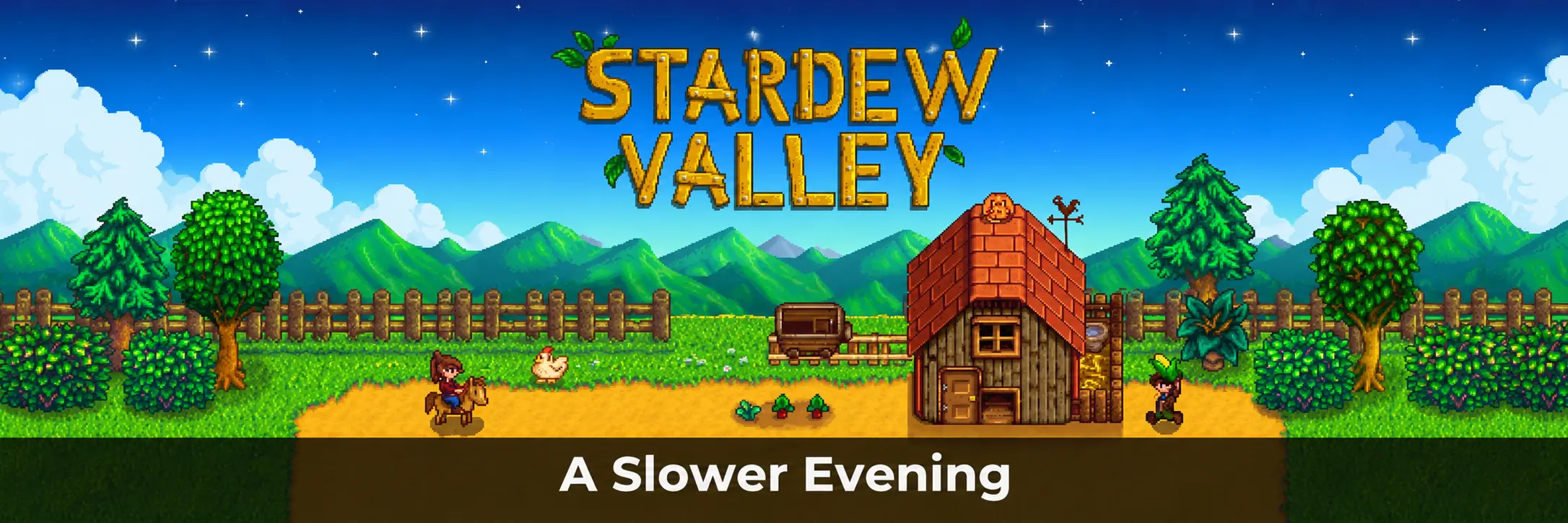
Stardew Valley
Stardew Valley starts with a farm plot you inherit from your grandfather and an overgrown field to turn into a lively farm. Fishing, crafting, and courting a partner sit alongside the farming in an open-ended country-life game, according to its Steam page. Valve rates it Verified.
Pick it when the pleasure comes from returning to a familiar place and deciding what to do next. A personal objective, such as improving the farm or pursuing a particular activity, can be enough to give a session direction.
The caution is about expectations. “Relaxed” does not mean everyone will find its routines relaxing. If you tend to turn every task into an efficiency challenge, try approaching it without optimizing everything immediately.
Why it works on Deck: its Steam page lists full controller support, and each in-game day gives a natural place to stop, which suits short handheld sessions.
Which games suit a longer adventure?

Baldur’s Gate 3
Baldur’s Gate 3 is a party-based RPG set in the Dungeons & Dragons universe, where your choices shape the story. Its Steam page says you can build a character from 12 classes and 11 races or play an Origin hero (a ready-made character with a set background), and that each companion reacts to the choices you make. Valve rates it Verified, which includes a check that the interface text is legible.
It suits players who enjoy thinking through a situation and living with the consequences. The appeal goes beyond winning a fight: you are also deciding who your character is and how the party responds to the world.
For handheld play, check the interface before committing, because inventory screens, dialogue, and ability descriptions deserve as much attention as the environments. If reading and managing a party are things you enjoy, it belongs on your shortlist. If they stand between you and the action, choose something more direct.
For studios, the lesson is Valve’s text rule: the smallest on-screen text must be at least 9 pixels tall at 1280×800, so even a menu-heavy, text-heavy game can be Verified. Interface scaling is something teams need to plan for.
Cyberpunk 2077
Cyberpunk 2077 is an open-world, action-adventure RPG set in the dark future of Night City, a city built around power, glamor, and body modification, as its Steam page describes it. Valve rates it Verified.
Pick it when your priority is spending time in a futuristic city and developing your own character within it. That sense of place is the reason to consider the game. Its graphical reputation alone is a weaker basis for a handheld purchase.
A Verified rating sets a minimum for performance, not a ceiling, so compatibility and the visual experience you want are separate purchasing questions.
Valve tests the default settings a first-time player gets, and those must reach 30 fps at 800p. For a large 3D game, that means shipping a sensible default for Deck, which is why performance tuning belongs in any handheld port.
Elden Ring
Elden Ring is an action RPG with open fields and large dungeons that connect seamlessly. Its Steam page describes combat that is simple to learn with hidden depths of mastery, and countless ways to combine the weapons, armor, items, and magic you equip. Valve rates it Verified.
It suits players who enjoy discovering where to go and learning through repeated attempts. The attraction is a world that invites curiosity alongside combat that rewards attention.
The first question is whether you enjoy that kind of challenge. Portability is useful, but it will not make an experience you find frustrating more appealing. Valve rates the game on its default settings, so start there. Choose Elden Ring because you want to explore and persevere, not because it appears on many recommendation lists.
Why it works on Deck: its Steam page lists full controller support and Save Anytime, and Valve’s Verified rating means the default controls reach all content. For studios, an action game built around precise controller input is a natural fit for a handheld.
Red Dead Redemption 2
Red Dead Redemption 2 opens in America, 1899, with Arthur Morgan and the Van der Linde Gang as outlaws on the run. Valve rates it Playable, not Verified, and its test results flag problems with the launcher and with hard-to-read interface text, plus a first-time setup that needs an internet connection. Its Steam page lists partial controller support and a Rockstar Games account that you can link to your Steam account.
It suits players drawn to a Western setting and a character-led adventure. It serves a different mood from a card game or a survival run: the reason to return is the world and the people in it.
Before buying for the Deck, read the current compatibility notes and set up the account you need. Place it below simpler options for a first handheld purchase, particularly if avoiding extra setup matters to you.
For studios, this is the checklist in reverse: a launcher that has to work with a controller, small text, and a first-time setup that needs a connection are all things a team can plan around before launch.
Which game suits playing with friends?

Valheim
Valheim is an exploration and survival game for one to ten players, set in a procedurally generated world (one the game builds for you) inspired by Norse mythology. According to its Steam page, you gather materials to craft weapons, armor, tools, and ships, and you raise longhouses and bases for protection. You can play alone or with up to ten players on player-hosted dedicated servers, and Valve rates it Verified.
It suits groups that enjoy making their own plans. Building something together or preparing for an expedition gives friends a shared reason to return.
The trade-off is coordination. If your group wants a clearly directed campaign, talk that through before buying. A game with room to set your own goals works best when everyone likes that freedom.
Why it works on Deck: its Steam page lists online co-op and full controller support. For any online game, Valve’s system-support check includes whether anti-cheat software works through Proton, and Valve says some providers are currently unsupported.
How should you check Steam Deck-compatible games before buying?
Start with the rating on the game’s Steam page. Valve gives each reviewed game one of four ratings, and its Deck Verified explanation describes them like this:
| Rating | Valve’s description |
|---|---|
| Verified | “The game works great on Steam Deck, right out of the box.” |
| Playable | “The game may require some manual tweaking by the user to play.” |
| Unsupported | “The game is currently not functional on Steam Deck.” |
| Unknown | “We haven’t checked this game for compatibility yet.” |
For Playable and Unsupported games, read the detailed notes on the store page instead of judging by the label alone. Valve says ratings may change over time as it keeps testing and updating Deck software, so check the current rating before each purchase.
Valve’s checks cover four areas: input (controls), display, seamlessness (how the game launches), and system support, which means whether the game and its extra software, including anti-cheat, work through Proton, Valve’s Windows compatibility layer. Valve’s developer documentation also sets two minimums for a Verified rating: the smallest on-screen text must be at least 9 pixels tall at the Deck’s 1280×800 resolution, and the default settings must reach 30 frames per second (how many images the screen draws each second) at 800p (the screen’s height in pixels).
Next, check whatever is most likely to affect your enjoyment:
- Readability: Can you comfortably follow menus, dialogue, and interface text?
- Controls: Does the layout suit the way you want to play?
- Setup: Are you comfortable navigating a launcher or configuring controls?
- Performance: Does the game hold a playable frame rate on its default settings? Verified means Valve’s minimum is met, not that it will run better than that.
What do Steam Deck Verified games get right?
For studios, the Steam Deck Verified requirements are a checklist, and the eight Verified games above meet all of them. Valve’s Steamworks documentation lists what a game needs:
- Controls: the default controller configuration reaches all content without the player changing in-game settings.
- Button prompts: keyboard and mouse icons do not appear when a controller is the active input.
- Text entry: any text field opens the on-screen keyboard or offers built-in entry that works with a controller alone.
- Readable text: the smallest on-screen text is at least 9 pixels tall at 1280×800.
- Performance: the default settings give a playable frame rate, which on Steam Deck means 30 fps at 800p.
- Launchers: if the game has one, it must be fully navigable with a controller, and Valve recommends avoiding launchers.
- Anti-cheat and middleware: games without a native Linux build run through Proton, and some anti-cheat providers are currently unsupported.
Valve also states that any game Verified on Steam Deck is guaranteed to be Verified on Steam Machine, so building to this checklist covers both.
How can Juego Studios help you create games like these?
Steam Deck game development comes down to three jobs. The first is building with handheld play in mind from the start: controller-first menus, text that scales, and a performance target set early. The second is bringing an existing PC or console game across, which usually means adding controller support, scaling the interface, and tuning the default settings. The third is checking the build against Valve’s checklist before release.
Some of our past work covers the same ground, though neither project is a Steam Deck title. Atari brought us in to port RollerCoaster Tycoon Classic from PC to mobile, and we built Super Club Soccer for PC and Steam, which you can read about in how we built a PC football game for Steam. You can also browse more games built for PC and console in our portfolio.
If you are planning a game for Deck or want an existing one to meet Valve’s checklist, you can talk to our team.
Which game should you try first?
If you are narrowing down the best games on Steam Deck, begin with one clear preference. Choose Balatro for card combinations, Stardew Valley for a routine you can shape, or Vampire Survivors for direct action.
Move to Baldur’s Gate 3, Cyberpunk 2077, or Elden Ring when you want a larger adventure. Whichever you pick, check its rating on the store page before you buy. If you are building for the Deck instead of playing on it, the checklist above is the place to start, and our team is happy to talk it through on the contact page.
What else do people ask about Steam Deck games?
No. Valve gives each game it has reviewed one of four ratings, as set out in its Deck Verified explanation. An Unknown rating means Valve has not checked the game yet. It does not mean the game fails to work.
From this shortlist, start with Balatro, Stardew Valley, or Vampire Survivors, depending on whether you prefer card strategy, farming, or action. Begin with a gameplay style you already enjoy before exploring more complex options.
Yes, once a game is installed. Valve’s FAQ says that once a game is installed on disk, you can play while the Deck is offline unless the game requires an internet connection. Downloading games and playing online multiplayer both need a connection. Check each game’s requirements before you travel, especially Red Dead Redemption 2, whose first-time setup needs one.
No. Valve states on its Deck Verified pagethat ratings are the same for the LCD and OLED models.
The Steam Deck Verified requirements cover controls, text, performance, and launch. In short, the default controller layout must reach all content, the smallest text must be at least 9 pixels tall at 1280×800, and the default settings must hold a playable frame rate, which Valve defines as 30 fps at 800p. The full list is in Valve’s Steamworks documentation.
Often, yes. The usual work is adding controller support, scaling the interface so text stays readable, and tuning the default settings for the Deck’s 800p screen. Whether the game then reaches Verified depends on meeting every item in Valve’s checklist, including its launcher and anti-cheat rules. For how that kind of move works, see porting a game to a new platform.
Related Posts

Best Steam Deck Games and How Juego Studios Can Help You Create Similar Experiences
The best Steam Deck games are the ones that match how you like to play and that Valve has already tested on the handheld. Start with the kind of session you want, whether that is a quick card game, a quiet routine, or a long adventure, then check Valve’s rating on the game’s Steam page.

How to Hire a Facebook Game Developer in 2027: What to Check Before You Sign
Ask three developers to put your card or puzzle game on Facebook, and you can get three answers that don’t match. One quotes a full iPhone and Android app you never asked for. Another says Facebook games died years ago.

Turning Your Book, Film, or Brand Character Into a Game: What to Prepare and What to Expect
We get that message in many forms. A novel with a loyal readership. A film with a release date already set. A creator whose characters live in short animated videos. A preschool with its own cast of characters. An old film someone wants to bring back as a horror game.