


 Unity
 Unreal
 Godot

 Mobile
 PC
 Console

 Full-Cycle
 Co-Development
 Outstaffing




-
 Game Development
 Nov 13th, 2026
- Share:
Table of Contents
- TL;DR (Quick Summary)
- Can any book, film, or character become a game?
- What kind of game fits a book, a film, or a character?
- What should you have ready before development starts?
- Who owns the rights, and who has to approve the game?
- How do we keep the game true to your world?
- Which games have we built from existing IP?
- What changes the size of an IP game?
- What is the best first step?
- Should you hand over the whole project or add a team to yours?
- Conclusion
“I have a book people love. Can you turn it into a game?”
We get that message in many forms. A novel with a loyal readership. A film with a release date already set. A creator whose characters live in short animated videos. A preschool with its own cast of characters. An old film someone wants to bring back as a horror game. A cartoon mascot that a brand wants kids to play with. Each one is a good starting point, and each one is almost impossible to answer in one email, because “a game” can mean a small mobile runner that goes live alongside a film or an online world that keeps running for years.
Most of the difference between those two comes from a few decisions made before anyone opens a game engine: what the player actually does, who holds which rights, who approves what, and how big the first version should be. Settle those and your first call turns into a plan. Leave them open and it turns into a questionnaire. This post goes through them in the order they come up, so you arrive at that call knowing what to say.
[Discuss your IP game project]
TL;DR (Quick Summary)
Turning a book into a video game (or a film or a character) takes four things lined up: a clear idea of what the player does, reference material a team can build from, proof of who holds the game rights, and one person who can approve work quickly. The game type then follows your situation: a film with a release date usually suits a short, polished mobile game, a franchise with fans suits an online game with regular updates, and a brand character usually suits a simple casual game. Budgets in our indie game development cost guide start at $20,000 to $100,000 for a small 2D game and reach $300,000 and more for a high-end 3D one, before license fees, so a small playable piece is the safest first step before you commit to the full build.
Key Takeaways
- A book gives you a story. A game needs something the player does again and again.
- Check who holds the game rights before you pay for anything, and ask a trademark lawyer about names and titles, because copyright doesn’t cover them.
- Every new character, place, and item needs someone on your side to approve it.
- The size of the world, the platforms and online play move the budget more than the genre does.
- A small playable version answers most of the open questions cheaply.
Can any book, film, or character become a game?
Almost always, yes, in some form. Quiet, character-driven stories can work too, as can puzzle, cozy, or narrative games, not only action ones. If you’re wondering how to turn a book into a video game, the real question is whether yours passes three tests.
- There’s something for the player to do. A plot isn’t a game. A player needs an action they’re happy to repeat, whether that’s racing, collecting, solving, building, or fighting.
- You can legally do it. Someone has to hold the game rights, and it has to be you or someone who has agreed to the project. We cover that in the rights section below.
- The size fits the budget. An open-world adaptation and a short mobile game can both be “a game based on my story,” and they sit in very different budget ranges.
When one of those isn’t in place yet, the answer is usually “not yet” rather than “no.” A story with no obvious activity needs a design pass to find one. Unclear rights get sorted before work starts. A big idea on a small budget can usually start as a smaller first version.
Characters follow the same logic. If you’re asking how to create a game from a fictional character, a mascot, or a cartoon with a clear personality, a look people recognize, and one simple activity to build around, it is often an easier starting point than a full story. The sections below take these in order: what the player does and which game type fits, then rights and approvals, then size and cost.
What kind of game fits a book, a film, or a character?
Whether you’re working out how to turn a book into a game or a film into one, the answer depends less on the genre you like and more on three things: how fans already meet your world, when the game has to ship, and how long you want people to keep playing. That’s the first conversation we have with anyone who arrives with a story and no game design.
| Your IP | Game type that often fits | What drives the schedule | Closest Juego Studios project |
|---|---|---|---|
| Book or novel series | Story-driven adventure or role-playing game where scenes and places from the books become levels | How much of the world the player can explore | School of Dragons, a lore-heavy world fans expect to see kept intact |
| Film or TV release with a fixed date | A short, polished mobile game that goes live around release | The release date, which means the scope gets locked early | Hobbit, Munna Michael: Dance & Run |
| Franchise with an active fan base | An online game with regular events and updates | How many new characters, places, and seasons you plan after launch | School of Dragons, Ghostbusters: Spirits Unleashed, Nickverse |
| Brand character or mascot | A simple casual game (runner, arcade, or collecting) built around the character | Number of characters, platforms, and the age group | Hello Kitty Orchard, Chhota Bheem: Up the Hill |
Read about each of these projects in the section on games we’ve built from existing IP.
The first design job is turning your world into a loop: the main thing the player does again and again. In a book-to-game adaptation, a novel can spend a chapter on a quiet conversation, but a player needs something to do in the tenth hour as well as the first. Ask for a big open world, and the map alone can change the budget more than almost any other choice.
If the game is aimed at children under 13 in the US, the federal kids’ privacy rule (COPPA) affects what the game can collect, so mention the age group on the first call. The FTC’s updated rule has applied in full since April 22, 2026 (a few provisions have different dates), and it requires separate parental consent before children’s data is shared with third parties for targeted ads. That matters most for mascot games with ads or sponsor tie-ins.
What should you have ready before development starts?
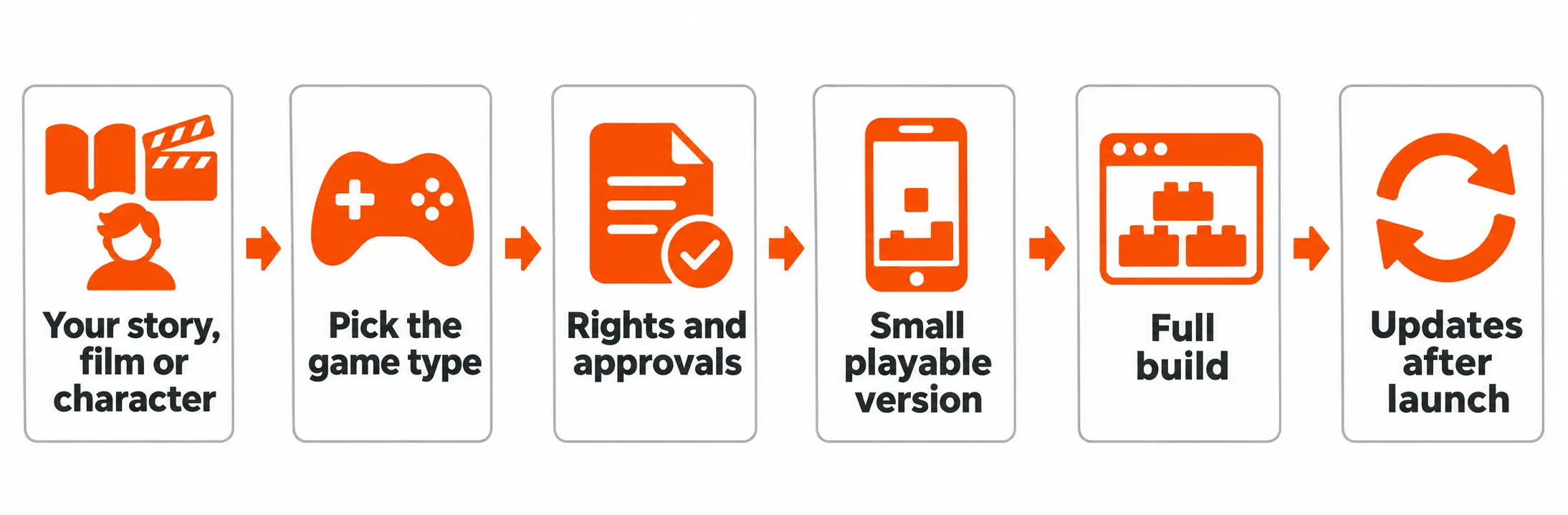
A short brief, your reference material, one person who can approve things, and a plan for how the game makes money and who publishes it. You don’t need a finished game design, but the more of these you have, the fewer weeks go on guessing.
- The world in a few pages: characters, places, tone, and what must never appear in the game. Studios call this a world bible or a style guide if it covers the look.
- Character sheets showing each main character from the front, side, and back, plus a color palette. Artists build 3D models from these.
- A line or two on what the player does: fight, explore, collect, race, build, solve.
- Where it will be played and by whom: phone, PC, console, or Roblox, and the age range.
- The paperwork showing you hold the rights to the story, the characters, any music, and anyone’s voice or likeness.
- One approver who can say yes or no within a couple of days.
- How the game should make money: a free promo game, a paid game, or one with ads or in-app purchases.
- Who will publish it, and whose App Store, Google Play or Steam account it goes on.
- A few games like the one you want to build, and a few you don’t want yours to resemble. Both lists tell us more about the feel you’re after than a long description would.
If you don’t have art yet, start with the look before anyone models anything. Our guide to locking a visual style before production explains how.
Download a Free “What to Bring to Your First Call” Checklist
Who owns the rights, and who has to approve the game?
The copyright owner, or someone they’ve given the exclusive rights to, decides whether a game based on the work can be made. The U.S. Copyright Office is clear that only the owner can make or authorize an adaptation of a work, and that making one without authorization may be infringement. A game based on your book, film, or character is an adaptation too, so the same logic applies.
In practice, it breaks down like this:
If you wrote and published the book yourself, check any publishing or distribution agreement for who holds media and game rights. If a studio, network, or publisher holds the rights to your film or show, it will probably also decide about the game. Either way, a studio will ask to see the paper: the clause in your publishing contract that covers games, or a short license letter from the rights holder that does.
Characters you don’t own are a different case. Being inspired by a style or genre is fine. Using someone else’s characters, names or world, such as a famous anime’s, a toy brand’s or a Disney film’s, needs that owner’s license, and we can’t build it without one.
Music and an actor’s voice or likeness can need separate agreements, which is worth sorting out early if the game uses either (our Munna Michael runner, for example, has a lead character modeled on the film’s actor, and that kind of likeness is worth getting agreed upon in writing).
Names need a separate look. Copyright protects the creative work, not names, titles, or slogans, which can often be protected as trademarks instead. If your character’s name or logo matters to the brand, ask a trademark lawyer before launch.
We’re not lawyers, and we don’t negotiate rights for you. What we can do is start work once you tell us what you hold and ask the right questions early. When the IP belongs to someone else, such as a studio or a licensor, expect them to review the game as it’s built.
How do we keep the game true to your world?
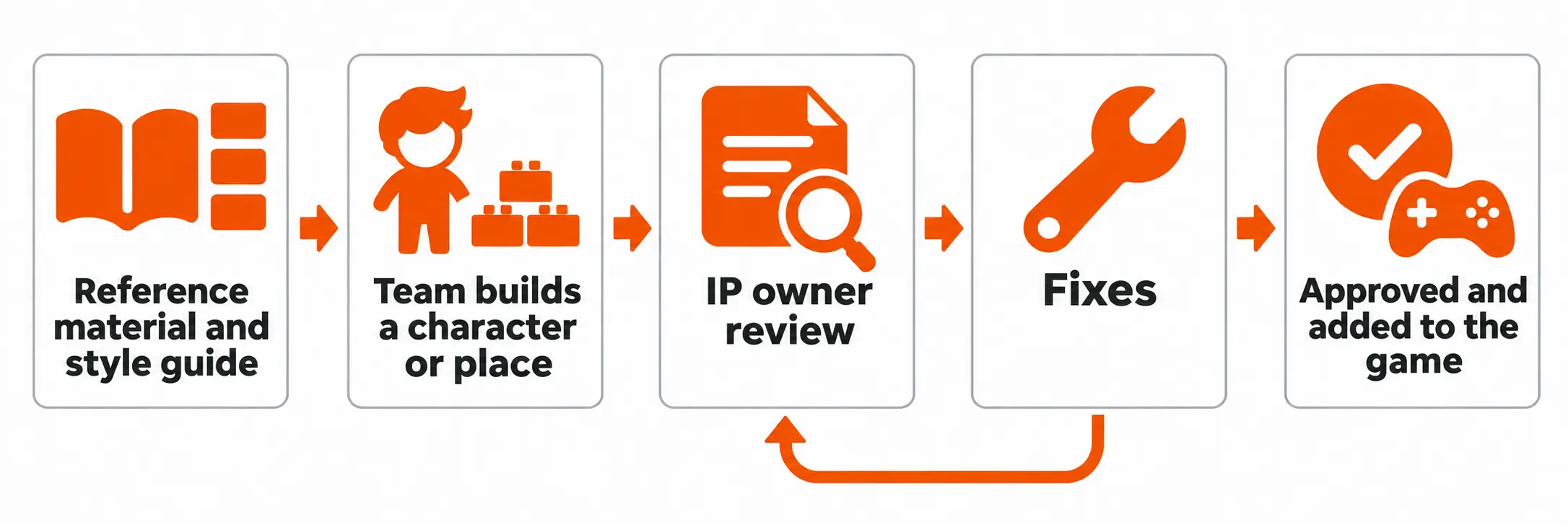
By agreeing to the reference material first and putting a review step between every new asset and the game. That’s how we worked on School of Dragons: every new asset was checked against DreamWorks’ style guides, character references, and lore documentation and had to pass franchise approval before it went in.
On Ghostbusters: Spirits Unleashed, we kept the art consistent by studying the reference material, following approved style guides and holding regular art direction syncs with the client studio.
On Munna Michael: Dance & Run, our team studied the film’s trailers and clips to build the lead actor’s dance moves, and the game’s soundtrack uses original songs from the film.
Ask any team how approvals work and how long a review round takes, because those days add up across a whole game. And if you’re the IP owner, you keep creative control. As our School of Dragons case study puts it, working with a partner gives you extra people on the project while you keep the creative say.
Which games have we built from existing IP?
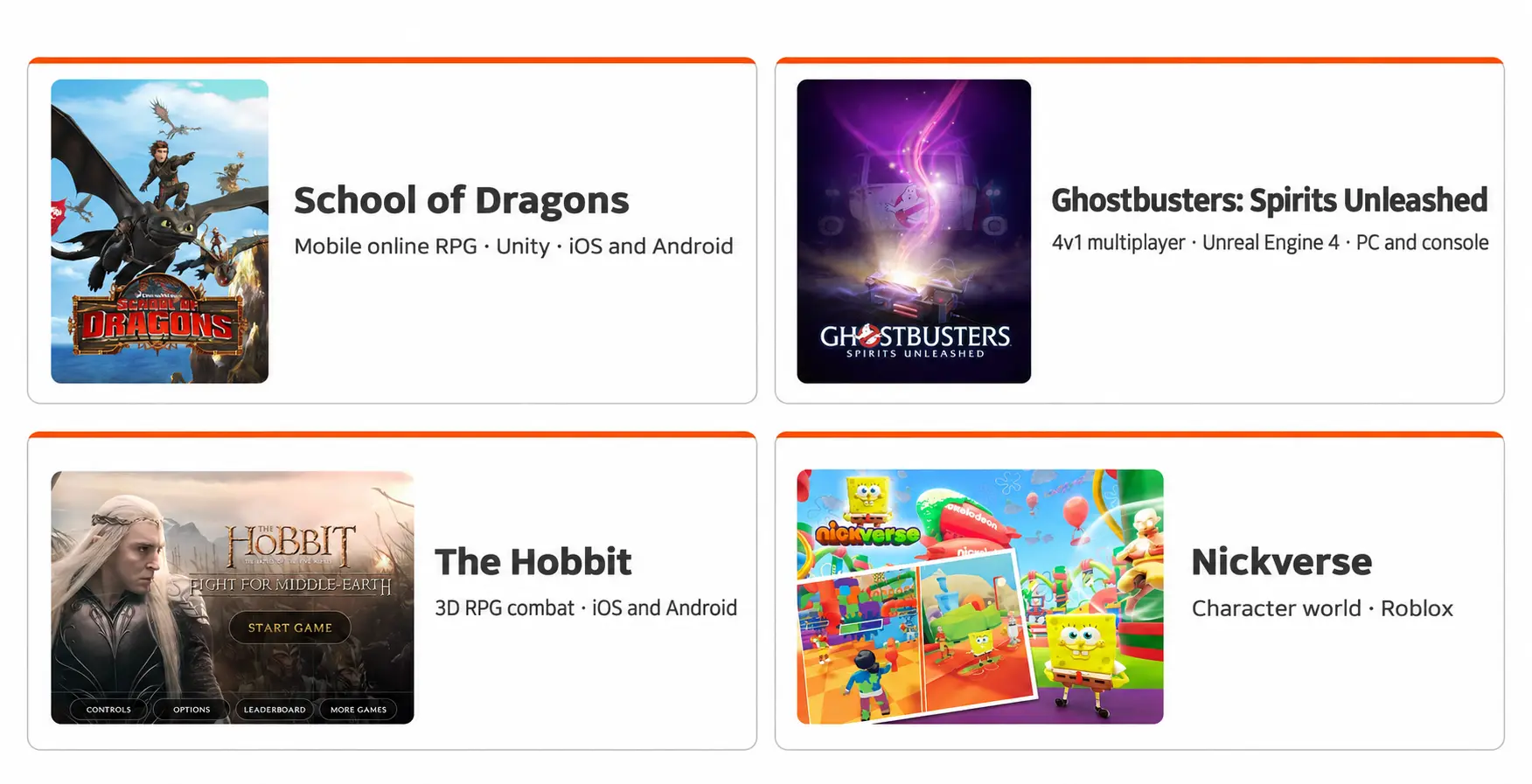
Four projects show the range, from a fixed-date film game to an online world that keeps growing.
School of Dragons
School of Dragons is a mobile MMORPG (a massive online role-playing game) set in DreamWorks’ How to Train Your Dragon world, built in Unity for iOS and Android. We worked on it as a co-development and LiveOps partner. LiveOps covers the events, rewards, and updates that keep players coming back. Our School of Dragons case study covers the build, and our LiveOps write-up reports 30M+ registered players worldwide and Top-20 free app and Top-10 free game rankings on mobile.
Ghostbusters: Spirits Unleashed
A 4v1 asymmetrical multiplayer game (four players hunt, one plays the ghost) built on Unreal Engine 4 for PC, PlayStation, Xbox, and Nintendo Switch. We co-developed it with the client studio. Here’s the Ghostbusters case study.
The Hobbit
A 3D RPG combat game for iOS and Android, released to coincide with Warner Bros’ The Hobbit: Battle of the Five Armies. Players pick one of four races (Humans, Dwarves, Elves, or Orcs), each with its own strengths and weaknesses, and a global leaderboard ranks battle results. A film-to-video game adaptation like this has a fixed release date, so the useful question is what a small, polished game can do before opening night. See the Hobbit portfolio page.
Nickverse
A Nickelodeon world inside Roblox, where fans can visit places like the Krusty Krab, meet characters such as SpongeBob SquarePants, and decorate their own spaces. It shows how a character-led brand can live in a platform where its audience already plays. More on the Nickverse portfolio page.
Smaller projects include Munna Michael: Dance & Run, an endless runner made to promote a Bollywood film, which Google Play featured in the first week of its 2017 release; Kidd Keo: Back to Newport, a mobile game based on a hit music album; Hello Kitty Orchard, a 2D arcade game; and Chhota Bheem: Up the Hill. More are in our promotional games portfolio.
What changes the size of an IP game?
Two projects that both say “game based on my story” can differ in budget by a factor of ten. Six things explain most of that gap, and most of them are decisions you can make before the first call.
- How much of the world players can explore. One arena, a handful of levels, or an open map are three very different amounts of art, level design, and testing.
- Platforms. Our indie game development cost guide puts a PC version at roughly 10 to 20 percent above a mobile build, console at 30 to 50 percent above, and a cross-platform release at 40 to 70 percent above.
- Online or offline. Multiplayer needs servers, matchmaking, and anti-cheat, so it sits in a higher range than a single-player game of the same look.
- Number of characters, places, and items. In an IP game each one is built to your reference material and goes through your approval, so a bigger cast means more review rounds as well as more art.
- Approval rounds. One approver who answers in a couple of days keeps the schedule predictable. A chain of approvers across a studio and a licensor does not.
- Life after launch. If the plan includes events, new seasons, and live updates (what we call LiveOps), we’d treat the first year of support as its own budget line rather than folding it into the build, since it grows with how often you want to release events and updates.
As a reference point, here are the budget ranges from our indie game development cost guide (figures as of September 2026), grouped by scope:
| Scope | Budget range (USD) | Where IP projects often land |
| Small 2D game | $20,000 to $100,000 | Brand mascot casual games and short promo games |
| Mid-scale game | $50,000 to $300,000 | Story-led mobile or PC games from a book or show |
| Online multiplayer game | $108,000 to $500,000 | Franchise games with events and updates |
| High-end 3D game | $300,000 to $2M+ | Open-world or console adaptations |
These are typical market ranges for indie-scale teams, not a quote. Team sizes and timelines for each scope are in the guide.
Read the table with three limits in mind. It leaves out the costs only an IP game has: license fees and royalties paid to the rights holder, clearance for any likeness or music, and the time approval rounds add to the schedule. It also leaves out marketing. On a film tie-in the release date sets the schedule, so the scope is fitted to it. And what you’ll actually pay depends on your brief, so the useful number comes after we’ve seen it.
Want a range for your own project?
Hop on a call and walk us through your book, film, or character and where you want it played. A short brief helps if you have one. We'll tell you which row of this table it sits in and what would move it.
What is the best first step?
If you’re wondering how to adapt a story into a video game, start with a small playable version, which game teams call a demo or a vertical slice: one character, one place, and the main thing the player does, in near-final art. It answers three questions before you commit to the full game:
- Does the world work as a game?
- Does it look right to you and your fans?
- What will the rest realistically cost?
It also tests the approval process. If one character takes two weeks to get signed off, you want to find that out now. And it doubles as a pitch: a playable demo gives a publisher or investor something real to react to, which a document can’t.
If your goal is publicity, such as a game that supports a film or a campaign, it helps to mention that when we speak. It shapes what we’d build first, and it may mean a short game is a better fit than a full one.
Should you hand over the whole project or add a team to yours?
If you don’t have a development team, hand over the whole project. If you already have developers and need extra capacity or a specialist, add people to your team.
For a first-time IP owner, our game development services cover design, art, engineering, and testing through launch. If you have a studio and need engineers or artists working inside your production, that’s game co-development, the model we used on Ghostbusters. And if you only need extra people for a stretch, you can bring in dedicated developers.
If what you need is a publisher to fund and market the game, a development team won’t replace one. Budget is one of the most common blockers we hear about, and people usually go one of a few ways: a publisher who funds and markets the game, investors who back you once there’s a playable demo, crowdfunding, or paying for a small playable version first and using it as the pitch. And if your world is still a few pages of notes, spending a little on a brief first usually saves money later.
Conclusion
Back to the question that started this: “I have a book people love. Can you turn it into a game?” Almost always, yes, in some form. Your book, film, or character gives you the one thing a game can’t invent: an audience that already cares. What turns that into a game is a short list of decisions: what the player does, who holds the rights, who approves the work, and how big the first version should be. Start with a small playable version, and the rest gets much easier to plan, price and pitch.
You don’t need all of them settled to talk to us. Hop on a call and tell us what you have, even if it’s a few pages and a feeling, and we’ll tell you what we’d build, what it would take, and whether a game is the right move at all.
Frequently Asked Questions
Start with three checks: that you hold the game rights, that the story has something for a player to do again and again, and that the size of the game fits your budget. Then build a small playable version before committing to the full game. We’ve covered each step above, and a call is the quickest way to find where your book fits.
Start with who holds the game rights and when the game has to launch, because those two decide what’s possible. To turn a movie into a video game for a fixed release date, a short, polished mobile game is often the right fit. To turn a character into a video game, a simple casual game built around that character is usually the easiest place to begin.
It depends on the size of the world, the platforms, and whether the game is online. In our indie game development cost guide, ranges run from about $20,000 to $100,000 for a small 2D game up to $300,000 and above for a high-end 3D game, and they don’t include license fees or marketing. Walk us through your project on a call and we’ll tell you where it sits.
A small 2D game typically takes 6 to 12 months, a mid-scale game 12 to 18, an online multiplayer game 12 to 24, and a high-end 3D game 18 to 36, based on our indie game development cost guide. For a fuller walk-through of the stages, see our video game development timeline guide. For a film or campaign, the release date sets the schedule, and the scope is fitted to it. A firm timeline is only possible once the scope, platforms, and approval process are settled, which is what the first call is for.
You don’t need everything settled, but you should know who holds the game rights. Contact us with what you have, and tell us if a publisher, studio, or licensor is involved. They may need to approve the game, and that affects the schedule.
Yes. As the IP owner, you decide what stays true to your world. We build to your reference material and send characters, places, and items for your approval, the same way we worked on franchise games like School of Dragons.
Then the first step is to develop the look, meaning character designs, a color palette, and a few key scenes, before anything is built in 3D. A short art direction phase also gives you something to show investors, publishers, or fans.
Yes. US clients contract through Juego Studios Inc., our US entity that is incorporated in Delaware and registered in Texas. Our delivery team is based in India and can work overlapping hours with US time zones. We sign an NDA before scope is discussed, and the work is delivered with full IP transfer and source-code history.
That’s common, and a full build isn’t the only starting point. A small playable version costs far less than the full game and gives a publisher or investor something real to react to. Publishers, investors, and crowdfunding are the routes indie teams most often use to fund the rest.
Related Posts
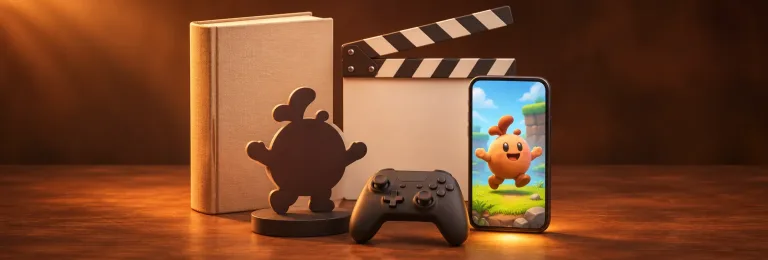
Turning Your Book, Film, or Brand Character Into a Game: What to Prepare and What to Expect
We get that message in many forms. A novel with a loyal readership. A film with a release date already set. A creator whose characters live in short animated videos. A preschool with its own cast of characters. An old film someone wants to bring back as a horror game.
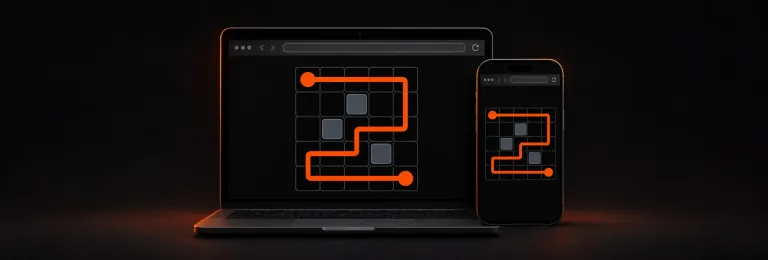
Built Your Game Prototype With AI? Here’s How to Make It Shippable
Imagine your AI-generated game prototype is a small tile puzzle you built with an AI coding tool. Friends open it in their browsers, drag tiles into place, and ask when you’re adding more levels. Then you try the same game on a phone. The page scrolls when you drag a tile, and after you close the app, your progress is gone.
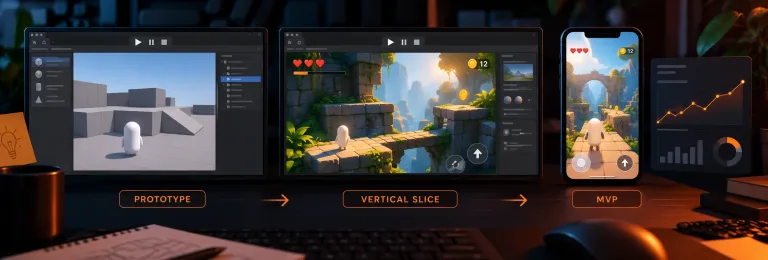
Vertical Slice vs Prototype vs MVP: What to Build Before You Pitch Publishers or Investors
A prototype, a vertical slice, and an MVP each prove something different, and the right one depends on who you’re pitching. Here’s how to choose before you spend weeks on the wrong build.