

 Unity
Unity Unreal
 Godot
Godot
 Mobile
 PC
PC Console
 Full-Cycle
 Co-Development
 Outstaffing




Pro
Feel Golf
Unity Upgrade & Physics-Rendering Modernization for a Mobile Golf Simulation
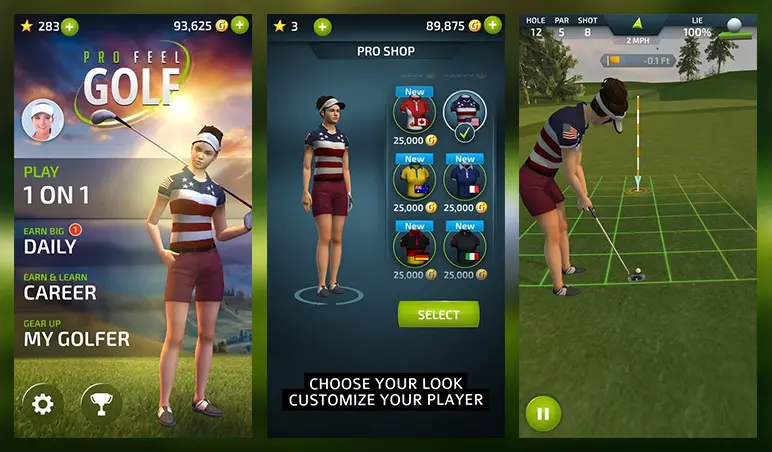
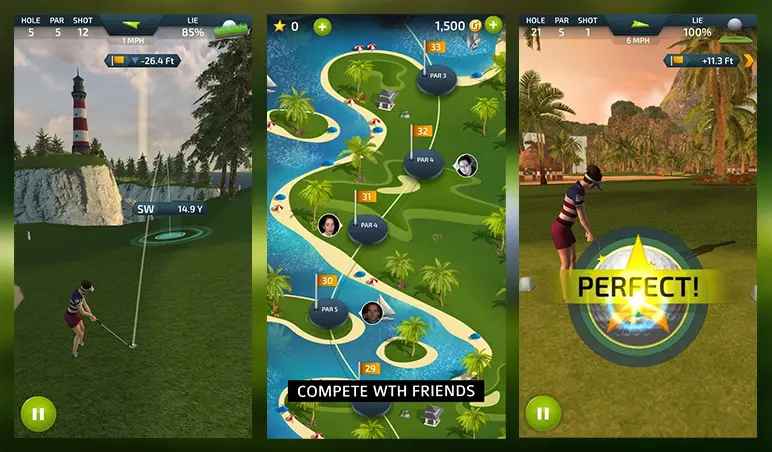
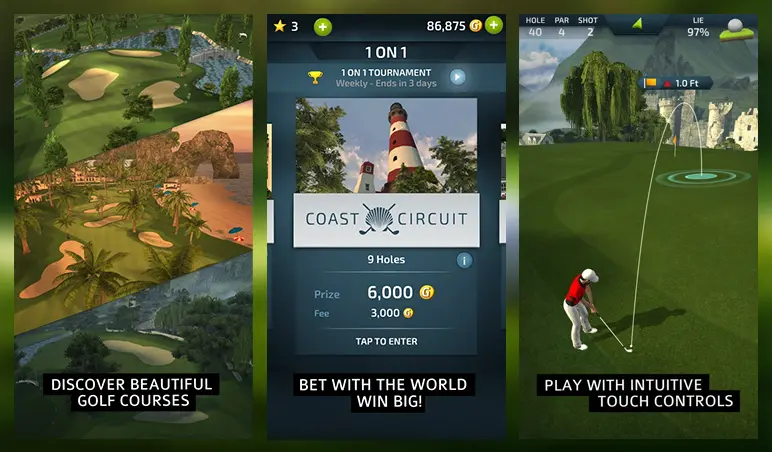
Pro Feel Golf is a mobile golf simulation title where gameplay feel, ball trajectory, club response, camera follow, and course presentation, is the product. Juego Studios modernized the game for current mobile platforms while preserving that precision feel intact.
Project Context
Pro Feel Golf arrived with proven gameplay at its core, built on a physics model that players depended on for accurate ball flight, shot control, and course interaction. The challenge was carrying those systems intact through a significant technical transition: an older Unity version, rendering systems that hadn't kept pace with modern mobile hardware, and physics dependencies requiring careful re-validation to avoid any change in gameplay feel.
Key requirements included:
- Upgrade the Unity version and stabilize the codebase for current iOS and Android build pipelines
- Re-validate the physics model (ball trajectory, shot mechanics, spin, and bounce behavior) against the modernized engine to ensure no deviation from intended gameplay feel
- Improve rendering quality for course presentation, lighting, and visual responsiveness on current mobile hardware
- Optimize device-level performance across a wide range of modern iOS and Android devices
- Validate all camera systems: shot follow, course fly-through, and replay, for correct behavior post-upgrade
- Audit all UI flows, club selection, shot controls, and score tracking against current platform requirements
Our Contribution & Execution
Juego Studios managed the full modernization scope, from Unity upgrade and physics re-validation through rendering improvements and performance tuning, with preservation of gameplay feel as the guiding constraint throughout.
Our contributions included:
- Unity engine upgrade, codebase stabilization, and cross-platform build pipeline rebuild for current iOS and Android targets
- Physics system re-validation: ball trajectory, shot control inputs, spin mechanics, terrain interaction, and bounce behavior tested against the original gameplay model at each stage of the upgrade
- Rendering improvements targeting course presentation, lighting fidelity, and visual responsiveness on current mobile GPU architectures
- Device-level performance profiling and optimization, including frame rate stability and memory management improvements across modern iOS and Android hardware
- Camera system validation: shot-follow, course camera, and replay systems confirmed correct post-upgrade
- UI flow audit: shot controls, club selection, scorecard, and all navigation states tested against current iOS/Android platform guidelines
Execution approach:
- Prioritized physics re-validation before any rendering or performance work, ensuring the core gameplay model remained unchanged through each stage of the upgrade
- Used baseline recordings of ball trajectory and shot behavior from the original build as regression benchmarks throughout the modernization process
- Applied rendering improvements incrementally to avoid introducing performance regressions on lower-end devices
- Validated device performance across both flagship and mid-range hardware to preserve broad playability
Want to see how this approach would work for your mobile simulation title?
Discuss Your Mobile ProjectProduction & Live Readiness
Modernizing a physics-dependent simulation game requires more than an engine upgrade. Every system that touches the core feel of the game needs re-validation against the new technical foundation. Here is what the upgrade covered.
- Unity engine upgrade with rebuilt cross-platform build pipeline for current iOS and Android targets
- Physics model fully re-validated: ball flight, club impact, spin, bounce, and terrain response confirmed against original gameplay benchmarks
- Rendering pipeline updated for current mobile GPU architectures, with improvements to course lighting, material quality, and visual responsiveness
- Frame rate and memory profiled and optimized across a broad range of modern iOS and Android hardware
- Camera systems validated post-upgrade: shot-follow, course presentation, and replay all confirmed stable
- All UI flows tested against current iOS and Android platform requirements
- Build pipeline hardened for current App Store and Google Play submission requirements
Outcome
The game shipped in a modernized state, technically current across all platform requirements, with the original physics-driven gameplay feel preserved.
- Legacy mobile golf simulation successfully brought to modern iOS and Android with full feature parity
- Physics model confirmed consistent with original gameplay behavior post-upgrade: ball trajectory, shot control, and course interaction all unchanged
- Rendering quality improved for course presentation and visual responsiveness on current mobile hardware
- Frame rate stability and memory performance optimized across modern device targets
- Build pipeline validated for current App Store and Google Play submission requirements
What This Demonstrates
For publishers and studios with physics-dependent mobile titles to modernize, Pro Feel Golf shows Juego Studios’ porting capability in cases where the upgrade cannot afford to change how the game feels.
- Full-scope legacy porting (Unity upgrade, physics re-validation, rendering improvements, and performance optimization) managed as an integrated workstream with gameplay feel as the fixed constraint
- Physics validation methodology for simulation titles: systematic regression testing against baseline gameplay data at each stage of the upgrade
- Rendering modernization for mobile GPU architectures without introducing performance regressions on mid-range devices
- Broad device compatibility maintained through targeted performance profiling across the current iOS and Android hardware landscape

If You Have a Legacy Mobile Simulation Title to Modernize
We typically:
Publishers and studios sitting on legacy mobile simulation titles face a specific challenge: the game’s value is tied to how it feels to play, and any physics or rendering change that ships unvalidated risks breaking that. Meanwhile, the technical foundation is no longer viable on current hardware and platform requirements.
- Audit legacy codebases and identify compatibility blockers against current iOS/Android requirements
- Upgrade Unity versions and stabilize codebases without breaking existing physics logic or gameplay feel
- Re-validate physics systems using baseline recordings from the original build as regression benchmarks
- Improve rendering quality for current mobile GPU architectures without sacrificing performance on mid-range devices
- Optimize frame rate and memory performance across the target device range
- Validate all camera systems, UI flows, and platform dependencies post-upgrade
Precision porting modernized for today's devices, faithful to the original feel.
Talk to Us TodayFrequently Asked Questions
1 Can you handle complete game development from concept to launch?▲
Yes. We provide full-cycle game development covering concept validation, pre-production planning, gameplay system implementation, art production, backend integration, monetization setup, QA, deployment, and post-launch LiveOps support. Our teams work across Unity and Unreal pipelines for mobile, PC, and console titles.
2 Can you port and modernize a legacy mobile simulation title?▲
Yes. We handle legacy mobile titles requiring Unity upgrades, physics re-validation, rendering improvements, and platform compatibility modernization. The key is treating gameplay feel as a fixed constraint, not a nice-to-have, from the start of the engagement.
3 How do you ensure the physics feel doesn't change during a Unity upgrade?▲
Before any upgrade work begins, we capture baseline recordings of core physics behavior — ball trajectory, shot response, terrain interaction, bounce, from the original build. These recordings serve as regression benchmarks throughout the modernization process. Physics re-validation happens at each stage of the upgrade, not just at the end, so any deviation is caught and corrected before it compounds.
4 How do you balance rendering improvements with performance on lower-end devices?▲
We profile performance across a representative set of target devices, including mid-range hardware, not just flagships, before and after each rendering change. Improvements are applied incrementally, and any change that introduces a frame rate or memory regression on the target device range is tuned or rolled back before advancing. The goal is better visuals where the hardware supports it, without breaking playability on devices within the intended audience.
Other Related Work