


 Unity
Unity Unreal
 Godot
Godot
 Mobile
 PC
PC Console
 Full-Cycle
 Co-Development
 Outstaffing




-
 Art & Design
 Nov 17th, 2025
- Share:
Table of Contents
- Understanding Industry Expectations
- Core Components of an Effective Game Art Portfolio
- Selecting and Curating Portfolio Content
- Structuring and Presenting the Portfolio
- Customizing Portfolios for Specific Opportunities
- Discipline-Specific Guidelines
- Common Mistakes and How to Avoid Them
- Keeping the Portfolio Current
- Final Recommendations for Sustained Portfolio Excellence
- Conclusion
A portfolio stands as the most essential tool for any game artist looking for employment or freelance work. When hiring managers at game development studios review a job application, the first thing they look at isn’t the resume or cover letter: it’s the portfolio. This single collection becomes the main way employers judge whether an artist fits their team.
In the competitive gaming world, a solid portfolio opens doors to opportunities. It reveals not only technical skills but also creative problem-solving abilities and the know-how to work within game development workflows. For freelancers, the portfolio acts as evidence of previous achievements and competence. For those chasing their first industry position, it shows dedication to the craft and a grasp of professional expectations.
The stakes run high. Art directors, producers, and recruiters usually spend just 30 seconds to one minute looking at each portfolio because of their busy schedules. This brief moment means that first impressions matter enormously, and the work needs to communicate clearly and powerfully from the opening image.
Understanding Industry Expectations
To build a portfolio that gets noticed, you need to understand what hiring managers are actually looking for. Knowing their evaluation criteria helps you present your work in ways that align with industry standards and studio needs.
What Art Directors Look For in a Portfolio
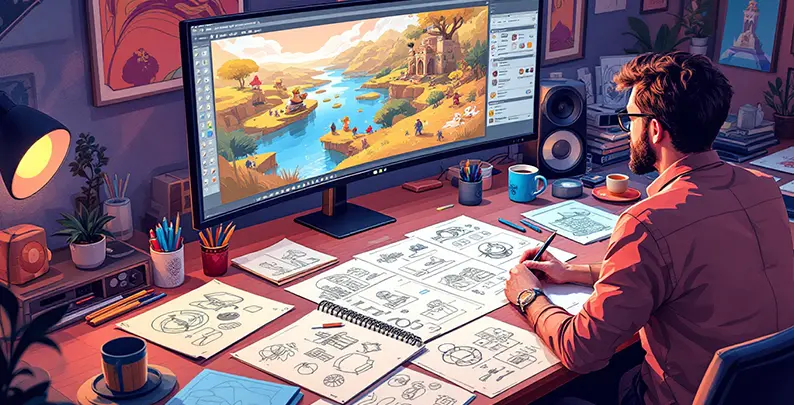
Game art directors and hiring managers evaluate portfolios through a particular viewpoint centered on three essential qualities: skill level, originality, and what industry professionals call “the x-factor.” Without these three elements, landing a job becomes much harder.
Skill Level speaks to the artist’s command of basic artistic principles. This covers knowledge of perspective, color theory, lighting, composition, and anatomy. Whether dealing with characters, environments, or props, these fundamentals need to be solid and visible in every piece.
Originality shows that the work displays unique thinking instead of just copying current styles or popular designs. Art directors know the creative landscape well and can spot work that feels like an imitation or is too heavily influenced by others. They’re looking for artists who add their own perspective to their work.
The X-Factor proves harder to pin down, but includes that special quality that makes viewers want to hire the artist. This might show up through unexpected design choices, outstanding composition, or work that feels new and captivating.
Quality, Relevance, and Originality in Game Art
Game art needs to be both technically sound and conceptually fitting. This means the work should match the kinds of projects the artist wants to tackle. If an artist dreams of working on fantasy games, the portfolio should display strong fantasy work. If they’re aiming for indie horror titles, their top pieces should capture that mood.
Relevance stretches beyond matching genre tastes. It also means presenting work that’s ready for games and shows an understanding of how art works within real games. A gorgeous piece that looks amazing by itself, but would be tough to bring into an engine signals to employers that the artist might not grasp production workflows.
Originality needs to sit alongside technical accuracy. Concept artists who focus on realism must show historical knowledge and practical design sense. Character designers need to display believable anatomy and workable design. Environment artists must build unified worlds where everything feels connected.
Core Components of an Effective Game Art Portfolio
A successful portfolio depends on several key elements working together. Each component plays a specific role in demonstrating your capabilities and artistic vision to potential employers.
1. Artistic Fundamentals and Technical Proficiency
The base of any strong portfolio depends on proven mastery of artistic essentials. This covers exact anatomy for character work, correct perspective and spatial understanding for environments, knowledge of how light and shadow play with surfaces, and color balance that lifts the piece instead of weakening it.
Technical proficiency means handling industry-standard software with skill. For 3D artists, this involves modeling in Maya, Blender, or ZBrush, texturing in Substance Painter or Photoshop, and grasping real-time rendering ideas like PBR (Physically Based Rendering) workflows. For concept artists, it means comfortable use of Photoshop or similar programs, showing strong drawing skills through sketches, and the capacity to shift quickly from rough ideas to finished concepts.
Technical ability should show not just in completed pieces but also in how those pieces are presented. A character turnaround sheet with correct proportions, a 3D asset displayed from several angles with clean topology visible, or a concept sheet with various design iterations all prove technical skill.
2. Unique Style and Conceptual Thinking
While fundamentals build the base, what really makes a portfolio shine is having a clear artistic voice. This doesn’t mean that an artist needs to be instantly known by their work alone, but instead that the portfolio should have visual unity and show the artist’s specific way of viewing and tackling problems.
Conceptual thinking means revealing how the artist handles design challenges. For environment artists, this might mean showing how architectural or natural elements combine to form interesting spaces. For character designers, it could mean displaying how a character’s outline, proportions, and details all merge to express their purpose in a game world.
A strong game art portfolio usually contains work that shows the artist thinking past the basic assignment. A concept artist might add character explorations from their own game universe instead of only client projects. An environment artist might present a complete scene with several props they built rather than just separate assets.
3. The Importance of a Signature Piece
Every portfolio should contain at least one hero piece: a standout work that grabs attention right away and shows the artist’s peak abilities. This piece should be the first thing viewers encounter. It creates expectations for what comes next and either pushes reviewers to keep looking or leads them to skip ahead.
This signature piece doesn’t need to be huge in scale. It just needs to be made with exceptional quality, show strong artistic fundamentals, and highlight originality. For a character artist, this might be a fully rendered character with great anatomy and unusual design. For an environment artist, it could be a moody scene with gorgeous lighting and thorough attention to detail.
The signature piece should also represent the kind of work the artist wants to create. Putting something loosely related just because it looks striking can actually damage the portfolio by causing unclear expectations about what the artist truly focuses on.
Selecting and Curating Portfolio Content
Choosing which pieces to include in your portfolio is just as important as creating them. Smart curation separates memorable portfolios from forgettable ones.
1. Prioritizing Quality Over Quantity
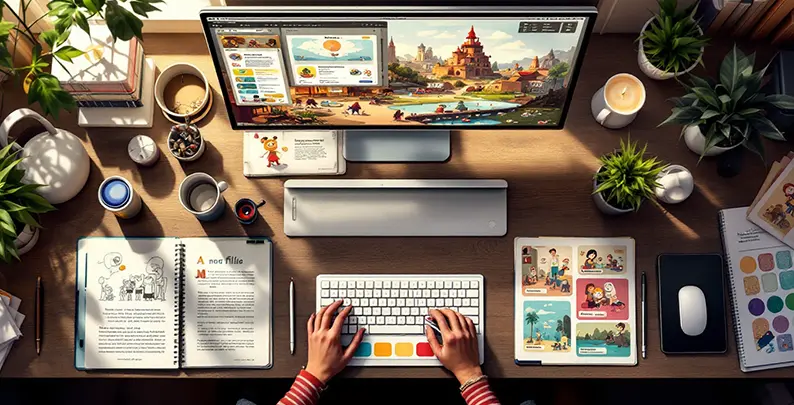
This principle bears repeating: five outstanding pieces make a far better impression than twenty average ones. The weakest work in a portfolio typically becomes the standard by which reviewers measure all other work. Adding below-average pieces waters down the total impact of the portfolio and hints that the artist lacks either ability or good judgment about their own skills.
The selection process demands honesty and tough choices. If a piece doesn’t show the artist’s current best work, if it has obvious technical problems, or if it no longer matches their goal direction, it should be cut. A game portfolio that feels focused and unified leaves reviewers with a good impression, while a stuffed portfolio with weak filler pieces encourages rejection.
Beginners often find this difficult because early-career artists have less overall work to choose from. Still, even with a few pieces, concentrating on displaying only outstanding work beats filling the portfolio with weaker examples just to look more productive.
2. Balancing Specialization and Versatility
The gaming industry appreciates both specialists and flexible artists. Specialists in particular roles (character animation, environment modeling, VFX) typically have an easier time landing positions because they can quickly contribute in their focused area. Yet flexibility also holds worth, especially in smaller studios or for freelancers.
The trick is picking a clear main specialization while displaying secondary skills only if they’re also strong. If an artist specializes in character design but also has decent environment work, both can be added, but the character work should fill most of the portfolio and appear first. This clarity helps potential employers quickly grasp what the artist offers.
For those pursuing multiple areas (like character design and animation), it might make sense to build separate portfolio versions focused on each specialty, or to divide sections within a single portfolio clearly. This stops confusion and lets reviewers rapidly judge fit for the particular role they’re filling.
3. Ensuring Game-Readiness: Optimization and Context
Game art must work within real game engines. A beautiful 3D model with messy topology, too many polygons, or badly optimized textures can’t be used in production without fixes. Portfolios should prove that the artist gets game pipelines and optimization.
This means adding details about polycount, texture resolution, and optimization decisions. Displaying wireframes next to renders shows that the artist considers geometry efficiency. Noting that a character was optimized for mobile platforms while keeping visual quality demonstrates pipeline knowledge.
Context counts enormously. A beautiful prop shown alone is less striking than the same prop shown inside a full environment, proving how it works at real game scale. Similarly, displaying an asset that was delivered engine-ready with correct naming conventions, collision setup, and material hierarchy confirms production experience.
4. Including Process Work and Skill Progression
Displaying only finished, polished pieces gives a limited perspective into how an artist operates. Adding process work (initial sketches, concept iterations, blockouts, and refinement stages) paints a much fuller picture of the artist’s problem-solving method and creative thinking.
For concept artists, this means adding thumbnail sketches, dropped design ideas, and several variations next to the final selected direction. For 3D artists, it could mean showing a path from rough blocking to a final, detailed model. For animators, it might mean displaying key frames or simplified blocking before the final polish.
This method serves several goals. It proves that the artist knows how work grows through iteration instead of mysteriously appearing fully finished. It reveals the thought process and problem-solving style. It also gives hiring managers confidence that the artist has absorbed criticism and can take feedback to better their work.
Showing growth across time strengthens a game portfolio. Adding at least some recent work beside established pieces confirms that the artist continues developing their skills and staying engaged with the craft.
Structuring and Presenting the Portfolio
How you organize and display your work can make or break a first impression. The right platform and presentation structure ensure your art gets the attention it deserves.
1. Choosing the Right Platform
ArtStation remains the go-to platform for game artists and concept artists. With a clear focus on game development, animation, and digital art, ArtStation has become what the industry expects. The platform supports selling artwork, has strong job listing features, and keeps a high-quality community focused on game development professionals.
Behance fits better for artists working across several disciplines or those wanting broader creative exposure. With a larger overall user base across different creative fields, Behance offers wider visibility but less focus. It has a cleaner interface, making it great for those who like a minimalist look. However, fewer game studios actively recruit from Behance compared to ArtStation.
Custom websites provide maximum control and a professional presentation, but need technical knowledge or investment in development. A custom site allows for unique branding and full creative control, but may be missed by recruiters who stick to industry-standard platforms. The best approach often mixes a strong presence on ArtStation or Behance with a personal website that provides extra context or showcases work that doesn’t fit the standard portfolio format.
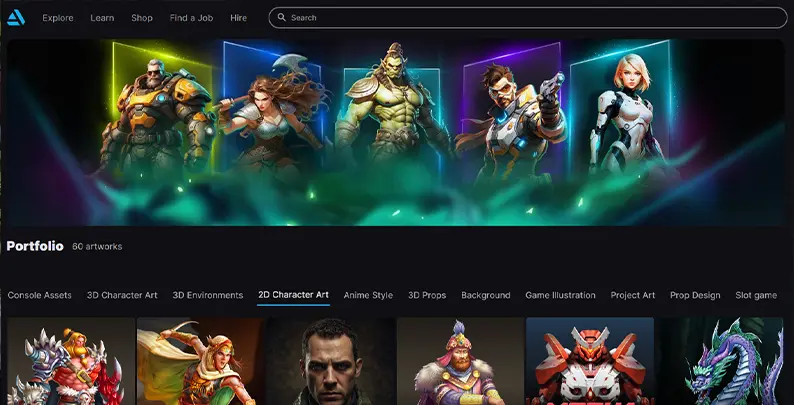
2. Layout Best Practices and Navigational Simplicity
The portfolio layout should favor clarity over complexity. Art directors are busy professionals who want to find what they’re looking for quickly. Too many animations, unclear navigation, or messy layouts frustrate viewers and waste the limited time they spend on each portfolio.
Best practices include placing the strongest work front and center at the beginning, using consistent spacing and sizing to guide the eye naturally through the portfolio, and making sure that project pages load quickly. Thumbnails should be readable and display work clearly even at small sizes, since many recruiters first browse game art portfolios on mobile devices.
Avoid overwhelming homepage displays. Showing five high-quality featured pieces on the homepage works better than trying to showcase dozens of projects at once. Let viewers choose to dig deeper into work that grabs their attention rather than forcing them to process everything at the same time.
3. Organizing by Project or Discipline
Two effective organizational approaches exist: grouping work by project (showing all art related to one game together) or organizing by discipline (grouping all character work, then all environment work, then all animation, etc.).
Project-based organization works well for showcasing complete bodies of work and how different assets come together as a unit. It also tells a story about what the artist contributed to a finished product. This approach is especially effective for showing game-ready assets in context.
Discipline-based organization makes sense for artists with diverse skills or those applying to specific positions that stress particular specialties. It also helps viewers quickly find work relevant to the specific role they’re hiring for.
The choice depends on the artist’s experience level and the type of roles they’re chasing. Those with less completed project experience might organize by discipline to showcase technical strength in specific areas. Those with shipped titles should stress complete project work.
4. Descriptions, Credits, and Process Insights
Every piece in the portfolio should include a title and a brief description. This context helps viewers understand what they’re looking at and shows communication skills, a critical ability in collaborative team environments.
Descriptions should be short but informative. Include the software used, the role played in a team project, specific techniques demonstrated, and any technical specifications relevant to game production. For instance, mentioning that a character was created for mobile platforms with optimization for sub-2000 polygon counts provides valuable context.
Give proper credit, especially for collaborative work. If a piece was created as part of a team, clearly indicate which elements the artist personally created. Premier game art companies appreciate honesty about individual contributions and dislike portfolios that misrepresent team effort.
Explaining process and decision-making strengthens portfolio communication. A few sentences about why specific design choices were made, challenges faced, or unique approaches employed provide insight into the artist’s thinking. This narrative element helps potential employers understand how the artist approaches problems.
5. Ensuring Device and Browser Compatibility
With many recruiter reviews happening on mobile devices, portfolio websites must function smoothly on phones and tablets. Responsive design that adjusts layout and image sizes for different screens is essential. Large image files and complex layouts that require horizontal scrolling create frustrating experiences that prompt reviewers to move on.
Test the portfolio on multiple browsers and devices before considering it complete. Chrome, Firefox, Safari, and Edge all render websites slightly differently. What looks perfect on a computer may display poorly on mobile. Performance matters: slow loading times cause viewers to abandon the portfolio before it fully displays.
High-contrast thumbnails with clear silhouettes are essential for small-screen viewing. When portfolio work displays as small thumbnails in a grid, each piece must remain recognizable and visually appealing at reduced sizes.
6. Including a Professional Bio and Contact Details
The portfolio should include a professional bio that humanizes the artist while maintaining professionalism. This is the place to highlight background, specializations, career goals, and what drives the artist’s passion for game development. This section helps potential employers understand the artist’s journey and perspective.
Contact information must be clear and easy to find. Include email address (preferably a professional-looking one), links to social media relevant to game development, and any other contact methods. Many recruiters prefer email, while others might use LinkedIn. Having multiple contact options improves the chances that interested parties can connect.
Consider including a resume or CV in a downloadable format. This provides formal documentation of employment history, education, and relevant skills that complement the portfolio. Some artists also include a cover letter or “about me” section that can be quickly customized for different opportunities.
Customizing Portfolios for Specific Opportunities
A one-size-fits-all approach rarely works when applied to game studios. Tailoring your portfolio to match specific opportunities dramatically increases your chances of getting noticed and hired.
1. Researching Studio Aesthetics and Role Requirements
Before applying to any studio, invest time in understanding the company’s visual style, current projects, and the specific role requirements. Look at their recently released games to understand what visual direction matters to them. Follow the studio’s art leads and senior artists on ArtStation to see their individual styles and approaches.
This research informs which portfolio pieces to highlight and helps tailor presentations for specific applications. An artist applying to a gritty noir detective game studio should lead with work that demonstrates that aesthetic, even if they also have bright, colorful pieces elsewhere.
Reading job descriptions carefully reveals which skills and specialties the studio values. A role listing experience with hand-painted textures for fantasy games suggests that showing strong hand-painted work is more important than photorealistic rendering examples.
2. Aligning Work with Studio Genres and Styles
Game studios often specialize in particular genres: horror, fantasy, sci-fi, casual mobile games, competitive esports titles, etc. A portfolio that aligns with the studio’s focus is far more compelling than generic work.
If a studio specializes in stylized fantasy games, showing stylized fantasy portfolio pieces is far more impactful than showing equally strong work in photorealistic sci-fi style. The alignment proves that the artist not only has technical skill but also understands and connects with the studio’s creative vision.
This doesn’t mean artists must completely redo their portfolios for each application. Rather, if a portfolio contains diverse work, leading with pieces that match the studio’s aesthetic and genre makes a powerful impression. Many artists create multiple portfolio variations, each highlighting different aspects of their work to align with different target opportunities.
3. Portfolio Variations for AAA vs. Indie Studios
AAA studios and indie teams have different expectations and workflows. AAA studios often have specialized roles and expect artists to excel in narrow, focused areas. They want to see evidence of experience with complex systems, high-quality asset production, and experience shipping large-scale projects.
Indie studios often value flexibility because team members wear multiple hats. They want to see artists who can work across different areas and adapt to varying project needs. An indie-focused portfolio might stress showing breadth of skills rather than deep specialization.
AAA portfolios should showcase attention to detail, understanding of high-end production pipelines, and the ability to work with constraints around performance and optimization on various platforms. Indie portfolios benefit from showing personality, unique creative vision, and the ability to work efficiently without a massive production infrastructure.
4. Submission Best Practices
When submitting portfolio work to studios, follow the application instructions exactly. If they request specific file formats or portfolio layouts, comply precisely. Attention to detail in the application process reflects how carefully the artist will approach project work.
Always include a customized message addressing the specific role and briefly explaining why the artist is interested in that particular position. Generic applications that could be sent to any studio are far less effective than personalized ones showing knowledge of the company and role.
Meet all deadlines well in advance rather than submitting at the last moment. Early submissions demonstrate professionalism and seriousness about the opportunity.
Discipline-Specific Guidelines
Different game art disciplines have unique portfolio requirements. Understanding what matters most for your specialty helps you showcase your skills effectively.
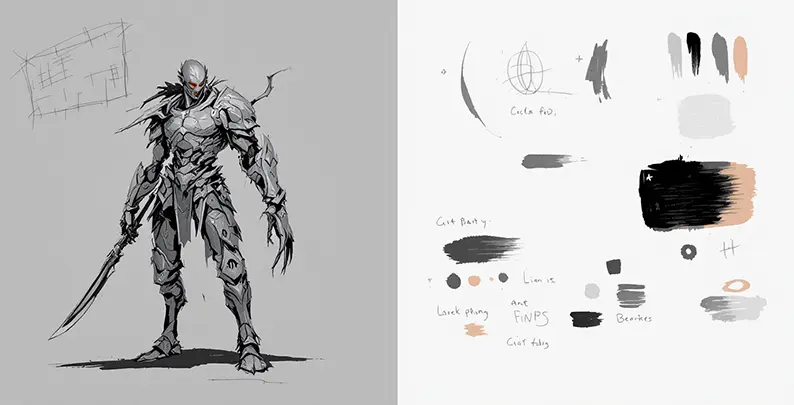
1. Concept Art: Design Sheets and Visual Storytelling
Concept art portfolios should showcase multiple finished designs alongside process work and design sheets. Rather than just showing single character designs, concept artists benefit from creating complete visual worlds with multiple characters, environments, props, and vehicles that all feel unified.
Design sheets are essential in concept art portfolios. These demonstrate how a character, vehicle, or environment works from multiple angles and explain functional details. A character design sheet showing front, back, side, and three-quarter views proves the artist understands form and proportion from all angles.
Visual storytelling means creating work that communicates narrative information through imagery alone. A concept piece should tell a story about who a character is, what environment they inhabit, and what that world feels like. This is particularly important for game concept art, which must inform and inspire the entire visual development of a project.
Concept artists should demonstrate understanding of how their designs translate into 3D and function within games. Showing awareness of polygon budgets, silhouette readability for gameplay, and how designs work at game distance (not just close-up) proves production experience.
2. 3D Art: Models, Textures, and Engine-Ready Assets
3D artists should showcase models presented in multiple ways: renders showing the finished model in-engine or beautifully lit, wireframes showing clean topology and efficient geometry, and texture breakdowns revealing material maps and detail work.
Showing assets in context proves they are production-ready. A character displayed as a standalone rendered image is less impressive than the same character placed in an environment scene, demonstrating appropriate scale and how it functions alongside other elements.
Technical specifications strengthen 3D portfolios. Including information about triangle count, texture resolution, LOD strategy (how the asset maintains quality across distance), and polycount optimization demonstrates technical understanding. This information should be presented clearly without cluttering the visual presentation.
Texture quality is critical in 3D portfolios. Substance Painter or similar tools should be used to create PBR materials that render correctly in modern game engines. Showing material maps (base color, normal, roughness, metallic, and emissive layers) alongside final renders proves understanding of contemporary texturing workflows.
3. Animation: Gameplay Loops, Weight, and Timing
Animation portfolios should stress gameplay-critical animations: walk cycles, jump animations, attack sequences, and other loops that players see constantly. These are often more impressive than cinematic animations because they demand timing and weight that feel responsive to player input.
Weight refers to how heavy and substantial an animated character or object feels. Poor timing and spacing can make even a character model appear weightless and floaty. Strong animation portfolios clearly demonstrate understanding of how movement speed, acceleration, and anticipation create the illusion of weight and substance.
Timing is fundamental to animation quality. Game animations require snappiness, a responsive feel that reacts quickly to player input, which differs from film animation’s smoother timing. Showing animations that feel responsive to gameplay while still maintaining believable motion and weight proves game animation expertise.
Animators should include breakdowns showing key frames and how the animation progresses frame-by-frame, not just final polished sequences. This demonstrates technical understanding of how animation works and the thought process behind timing decisions.
4. Optional: UI/UX, VFX, Technical Art Considerations
UI/UX artists should present work showing both the aesthetic quality of interface elements and an understanding of usability and information hierarchy. Case studies explaining design decisions and user research strengthen UI portfolios significantly.
VFX portfolios work best when showing effects in motion. Still images cannot convey the dynamic nature of particle effects, shaders, and motion graphics. Animated GIFs or video clips showcasing effects in context are essential for VFX artists.
Technical artists working on shaders, tools, or specialized systems should show how their work improves production pipelines or enables specific visual effects. Explaining technical implementation alongside visual results helps non-technical reviewers understand the value and complexity of the work.
Common Mistakes and How to Avoid Them
Even talented artists can sabotage their chances with avoidable portfolio mistakes. Recognizing these common pitfalls helps you create a stronger, more effective presentation.

1. Overcrowding with Weak or Irrelevant Work
Including work that doesn’t represent the artist’s best abilities waters down the overall impression. Every piece should be strong enough to stand on its own. Padding portfolios with weak filler pieces signals either a lack of skill or poor judgment.
Overcrowded portfolios create mental overload. When viewers face too many options, they can’t process all of them and likely dismiss the portfolio as unfocused or amateurish.
Solution: Conduct an honest self-assessment of every portfolio piece. If removing it would strengthen the overall presentation, remove it. Fewer excellent pieces always outperform many mediocre ones.
2. Lack of Clarity in Presentation or Role Attribution
Viewers should immediately understand what they’re looking at, what the artist’s specific contribution was, and why each piece matters. Unclear presentations waste the limited time available.
In collaborative projects, misrepresenting personal contribution is a serious problem. If a piece involved multiple artists, clarity about individual roles is both ethical and professional.
Solution: Include clear titles, descriptions explaining the context, and explicit attribution of work in team projects. Use captions and annotations to guide viewers through the work.
3. Neglecting Updates and Outdated Work
A portfolio that hasn’t been updated in years signals that the artist is no longer actively developing their skills. Outdated work reflects older techniques and may appear less relevant to current industry trends and technologies.
Solution: Update portfolios regularly, ideally every three to six months, with new work. If newer personal projects are under NDA (non-disclosure agreement), consider creating original portfolio pieces outside of work. Refresh and polish existing pieces while adding truly new work to show current capability.
4. Misrepresenting Skills or Omitting Contact Information
Including work that isn’t actually the artist’s creation or inflating actual responsibilities undermines credibility. Studios conduct reference checks and will discover misrepresentation.
Making contact difficult prevents potential opportunities. If viewers want to reach out but can’t find email or social media links, the portfolio fails its basic purpose.
Solution: Be honest about skills and contributions. Make contact information prominent and easily accessible. Double-check that all links work and that email addresses are professional and actively monitored.
Keeping the Portfolio Current
Your gaming portfolio should evolve as you grow as an artist. Regular updates keep your work relevant and show potential employers that you’re actively engaged with your craft.
1. Updating with New Projects and Improved Techniques
Regular portfolio updates demonstrate active development and continued growth. At a minimum, artists should add new work every few months and refresh existing pieces as skills improve.
Keeping the portfolio current is particularly important for those still early in their careers. Junior artists who can show continuous improvement have stronger hiring prospects than those showing stagnant work from years ago.
As artists develop new specialties or techniques, updating the portfolio to reflect this evolution expands career opportunities. An artist who has mastered a new tool or style should showcase that growth.
2. Staying Aligned with Modern Tools and Pipelines
Game development tools and industry practices evolve constantly. Portfolios should reflect current standard practices: modern rendering techniques, current software versions, and contemporary optimization strategies.
This doesn’t mean abandoning established techniques or chasing every new trend. Rather, it means being aware of how the industry is evolving and making sure that portfolio work demonstrates understanding of contemporary practices.
An artist using outdated software or workflows risks appearing out of touch with current industry standards. Investing in learning modern tools and including work created with them signals career commitment.
3. Demonstrating Lifelong Learning and Growth
Truly impressive portfolios show evidence of continuous improvement and experimentation. Including work that demonstrates exploration of new techniques, styles, or specializations proves intellectual curiosity and professional growth.
Personal projects that push creative boundaries show passion for the craft beyond what may be required by client work or employment. This willingness to experiment and grow is highly valued in the industry.
Final Recommendations for Sustained Portfolio Excellence
Building and maintaining an exceptional game art portfolio is an ongoing process rather than a one-time project. The most successful artists treat their portfolios as living documents that evolve alongside their career growth and industry changes.
Start by selecting a quality platform: ArtStation for most game artists, or Behance if working across multiple disciplines. Invest time in creating a professional presentation with clear organization, mobile optimization, and smooth navigation. Lead with the strongest work and support it with process documentation and thoughtful descriptions.
Maintain strict quality control by including only pieces that genuinely represent the artist’s best work. Customize portfolio presentations for different opportunities while building a core collection of work that effectively demonstrates capability.
Update regularly with new work showing continued growth and current skill level. Seek feedback from industry professionals, mentors, and peers. Be willing to remove work that no longer serves the portfolio’s purpose.
Conclusion
Building a strong game art portfolio is challenging work requiring honesty about current abilities, willingness to improve, and commitment to the craft. The artists who succeed in competitive markets are those who treat portfolio development as a key part of their professional identity.
Every piece in a portfolio represents an opportunity to demonstrate not just technical skill but also creative thinking, communication ability, and commitment to excellence. As artists continue to develop their capabilities, solve more complex problems, and push their creative boundaries, their portfolios should reflect this evolution.
The gaming industry values artists who are passionate about their work, committed to improvement, and interested in collaborating with talented teams to create memorable experiences. A well-crafted, thoughtfully curated portfolio communicates all of these qualities to potential employers and clients.
Those willing to invest the time and effort into portfolio excellence will find that opportunities follow. The portfolio becomes more than a collection of images: it becomes proof of dedication, growth, and professional integrity that opens doors to meaningful work in the dynamic and creatively rewarding field of game development.
Frequently Asked Questions
A professional game art portfolio should feature high-quality artwork, relevant game-ready assets, process breakdowns, and clear role descriptions that demonstrate artistic and technical proficiency.
Ideally, a game art portfolio should contain 10–15 of the artist’s strongest works, showcasing quality over quantity and relevance to the target studio or specialization.
A game art portfolio should be updated every few months or after completing significant projects, ensuring that it always reflects the artist’s current skills and industry standards.
Tailoring a portfolio for each game studio demonstrates understanding of their art style, genre, and expectations, increasing the chances of matching the company’s specific creative vision.
Related Posts
How to Evaluate a Game Art Outsourcing Partner in 2026
Discover the top game art outsourcing companies, offering a wide variety of services that make your project stand out. Game art types like 2D, 3D as well as Low Poly, Cartoon, and Hand-Painting- our experts can create them all using tools like Maya, Blender, and others, resulting in tailor-made vivid visuals for the project.
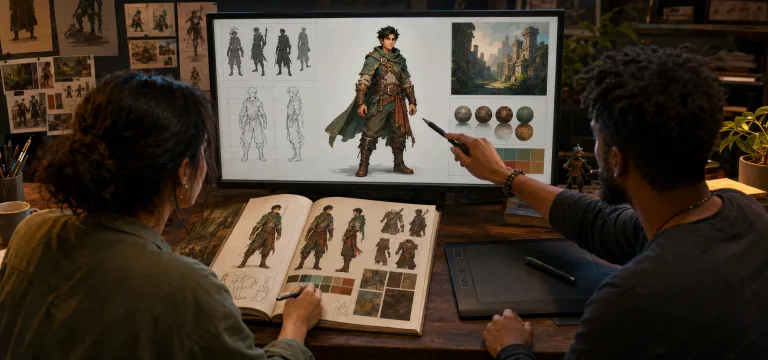
Art Direction in Games: How to Lock a Visual Style Before Production
Locking your game’s art direction is a pre-production decision, not something you discover while assets ship. The short answer: pick the direction on a small set of hero assets before scaling to full production, write it down as a working reference rather than a mood board, and put one named owner in charge of holding it as the asset count grows. Skip any of those three, and the style call you make in week one turns into a rework bill you’re still paying months later, once outsourced artists and a growing team are all touching the same asset set.
3D Game Art Outsourcing in 2026: Costs, Execution Models, & Partner Evaluation Explained
Visual standards in games have escalated sharply. High-poly characters, cinematic environments, real-time lighting pipelines, and engine-optimized assets are now baseline expectations, not premium features. Internal teams, no matter how strong, cannot expand infinitely without affecting cost structure, delivery speed, or creative consistency.
That reality explains why 3D game art outsourcing has shifted from tactical support to strategic production design. The global 3D game art outsourcing market is expected to reach $2.7 billion by 2028, signaling sustained demand from publishers, studios, and IP owners who need scalable art capacity without destabilizing core teams.
When used correctly, outsourcing does not dilute vision. It protects it. It allows internal leadership to retain art direction while external specialists handle production volume, style replication, and pipeline execution. This guide breaks down how 3D game art outsourcing works in 2026, including costs, engagement models, processes, and the studios that execute at scale.