


 Unity
Unity Unreal
 Godot
Godot
 Mobile
 PC
PC Console
 Full-Cycle
 Co-Development
 Outstaffing



-
 Game Development
 Feb 5th, 2026
- Share:
Table of Contents
Australia’s game development scene has a particular kind of confidence: not loud, not try-hard — just quietly excellent. One minute it’s a hand-drawn bug-knight Metroidvania that becomes a global obsession, the next it’s a slapstick goose causing international chaos, or a deceptively cozy unpacking game that somehow makes people emotional about a toaster.
And in 2026, the “Australian-made” label means more than pride. It’s a real industry: thousands of developers, hundreds of studios, and a growing set of government incentives that make Australia a serious place to build commercial games — not just creative experiments. According to the IGEA Australian Game Development Survey FY2024, Australia’s game development sector reported 2,465 workers and $339 million in income in FY2024, with 93% of revenue coming from exports and 85% of studios developing their own IP. Policy support is also reshaping the landscape — including the federal Digital Games Tax Offset (DGTO), which has been widely reported as a major tailwind for local studios.
Below is a curated list of 10 famous Australian-developed games that remain culturally and commercially relevant in 2026 — spanning indie icons, mobile hits, and ambitious productions that showcase the breadth of leading game development companies in Australia and their development talent.
Inspired by the success of Australian-developed games? Work with experienced developers to turn your game concept into a globally successful title.
Quick Overview: Top 10 Australian-Developed Games
A snapshot of the studios, genres, and platforms defining Australia’s gaming exports in 2026.
| Game | Studio (City) | Core Genre | Primary Platforms |
| Hollow Knight: Silksong | Team Cherry (Adelaide) | Metroidvania action-platformer | PC, consoles |
| KILL KNIGHT | House of Suffering (Australia) | Twin-stick shooter / action | PC, consoles |
| Wild Bastards | Blue Manchu (Canberra-linked) | Tactical roguelite FPS | PC, consoles |
| Cult of the Lamb | Massive Monster (Melbourne) | Roguelike / cult management | PC, consoles |
| CONSCRIPT | Catchweight Studio (Melbourne) | Survival horror | PC, consoles |
| The Forgotten City | Modern Storyteller (Melbourne) | Time-loop mystery | PC, consoles |
| Untitled Goose Game | House House (Melbourne) | Stealth puzzle / comedy | PC, consoles, mobile |
| Crossy Road | Hipster Whale (Melbourne) | Endless runner / casual | Mobile, consoles |
| Diets & Deities | Australian indie team | Rhythm cooking / cultural food | PC, consoles |
| Dead Static Drive | Reuben Games (Melbourne) | Road-trip horror / action | PC, Xbox |
Australia’s game development ecosystem is known for creative indie hits and innovative gameplay. Partner with a studio that understands global gaming trends.
10 Notable Australian-Developed Video Games
These titles represent the diversity and creative ambition of Australia’s game development ecosystem. From precision-crafted indies to bold experimental projects, each game demonstrates how Australian studios combine technical expertise with distinctive creative vision to build experiences that resonate globally.
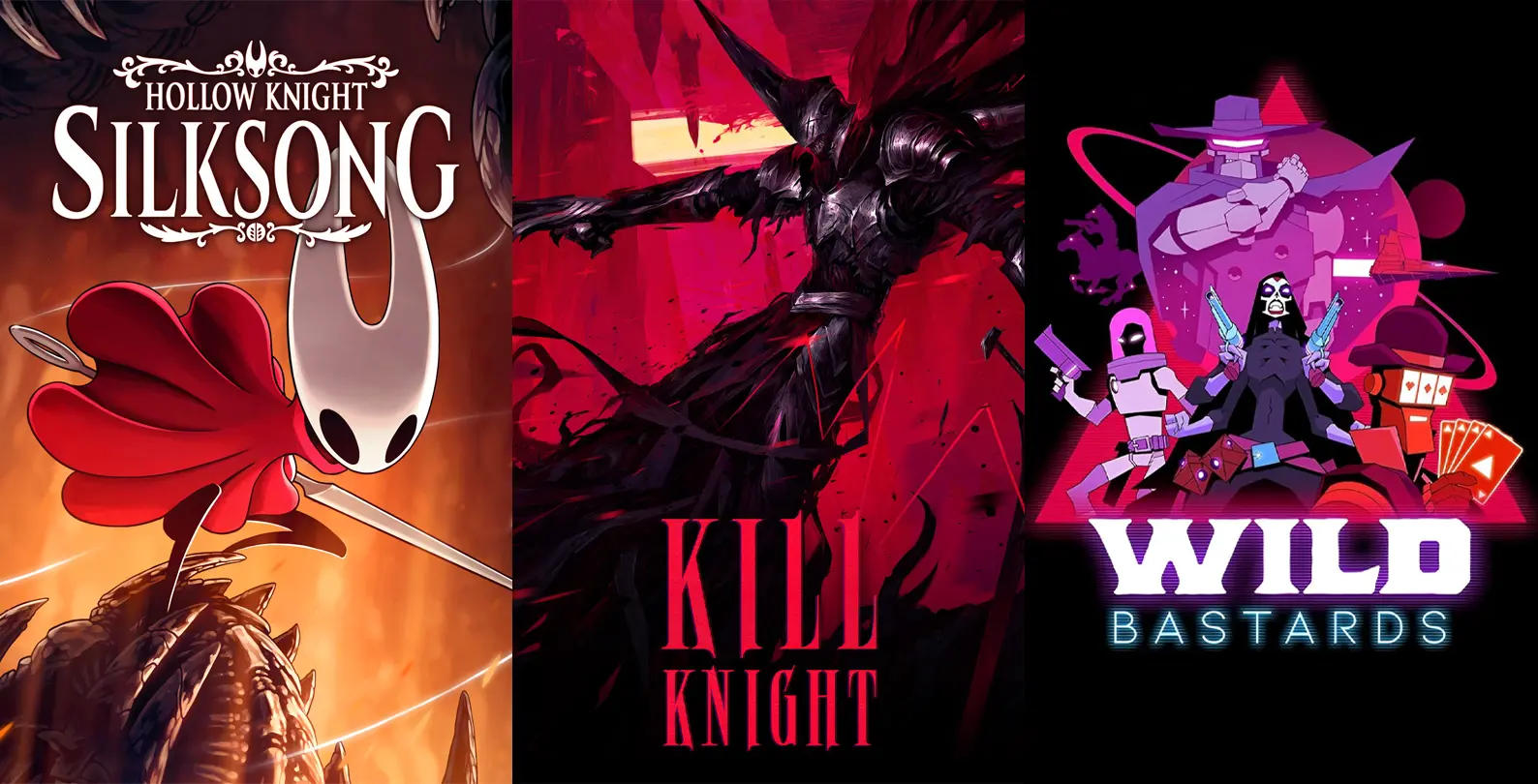
1. Hollow Knight: Silksong – Team Cherry (Adelaide)
Silksong is the highly anticipated sequel to Hollow Knight, deepening the hand-drawn Metroidvania formula with faster movement, precision combat, and a new protagonist, Hornet. It builds on the original’s reputation for tight controls, intricate level design, and atmospheric world-building, which have given the series a long-tail community.
The original Hollow Knight ran on Unity, and Silksong continues in that lineage with custom 2D tools, bespoke animation systems, and highly optimised level streaming typical of large-scale 2D Unity projects. The game follows a premium (one-time purchase) model, with longevity driven by exploration, difficulty, and community challenge runs rather than live ops. It exemplifies how Australian-developed video games can achieve global recognition through exceptional craft.
2. KILL KNIGHT – House of Suffering
KILL KNIGHT is a brutally fast twin-stick action game that pushes players into constant motion, managing bullets, melee range, and special attacks under relentless pressure. Its “just one more run” loop and high skill ceiling have made it a favourite in best-of lists for Australian video games.
The game is a top-down 3D or 2.5D shooter that can be efficiently built in Unity or Unreal, focusing on responsive input, camera tuning, and performant particle effects that maintain clarity at high intensity. It operates on a straightforward premium purchase model with replayability driven by score chasing and unlockable upgrades.
3. Wild Bastards – Blue Manchu
Wild Bastards is a tactical roguelite that merges first-person shooting with strategy: you move across a node-based map, manage a gang of outlaws, and drop into FPS battles on hostile planets. The combination of comic-book visuals and roguelike structure has helped it stand out among both tactical and shooter audiences.
The game uses FPS-friendly technology, likely Unreal Engine or another 3D-oriented engine that supports stylised shading, procedural map variations, and AI-driven enemy behaviour. Players purchase the game once and enjoy high replay value through procedural runs, unlocks, and challenge modes.
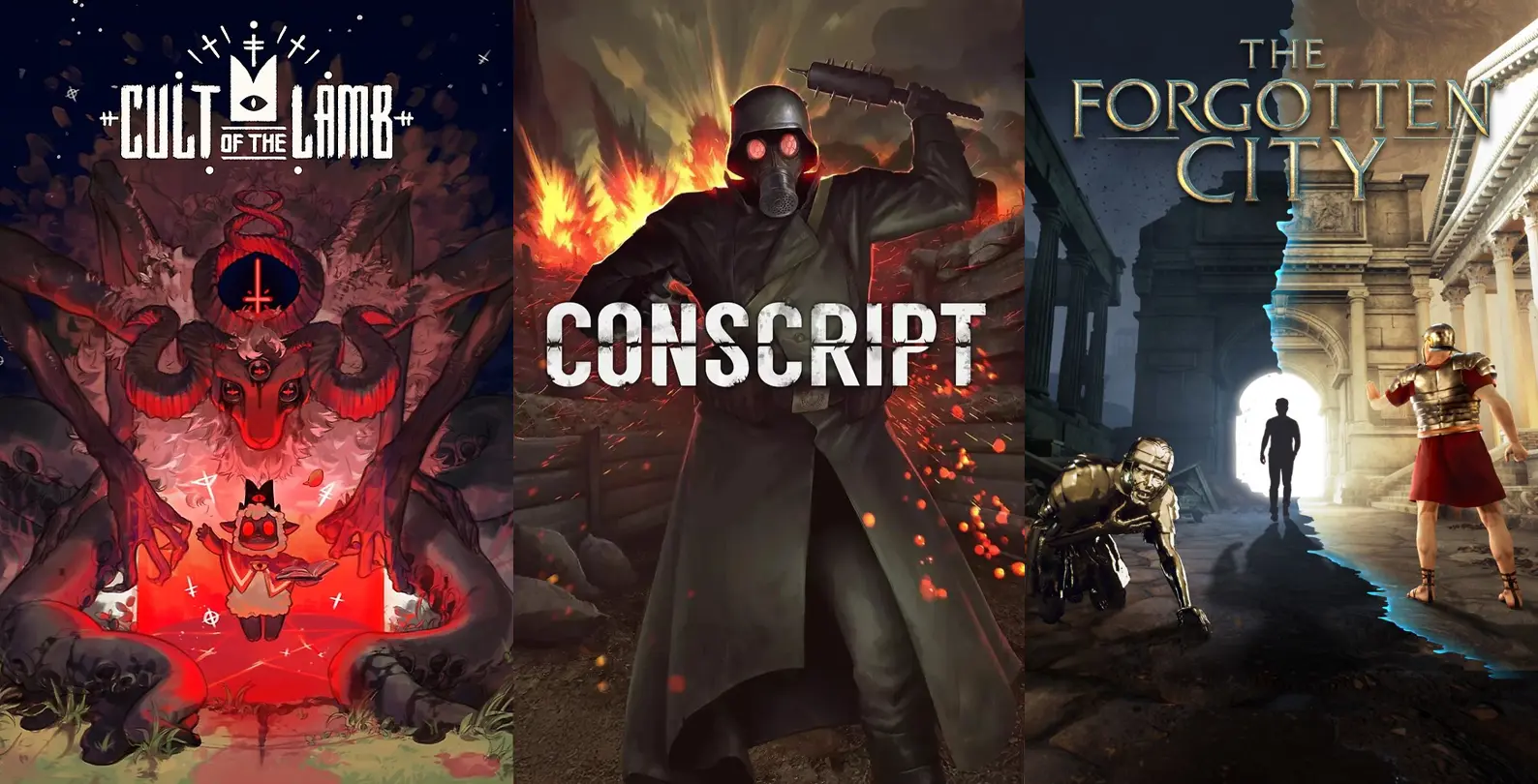
4. Cult of the Lamb – Massive Monster (Melbourne)
A stylish hybrid of roguelike combat and cult-community management — cute on the surface, strategically deep underneath. Players build and manage their own cult while venturing out on dungeon-crawling expeditions, creating a compelling loop between base-building and action.
Built in Unity with custom systems for both combat encounters and settlement management, the game follows a premium model with ongoing updates and platform expansions (a common “premium + long-tail LiveOps-lite” approach for successful indies). It represents the diversity of Australian-made video games in the global market.
5. CONSCRIPT – Catchweight Studio (Melbourne)
CONSCRIPT is a survival horror game inspired by classic fixed-camera titles, but set in the trenches of World War I. It leans heavily on atmosphere, resource scarcity, and tension rather than spectacle, drawing a niche yet passionate fanbase.
The project’s aesthetic and camera design suggest a 2D/2.5D pipeline, well within the capabilities of Unity or similar engines, with an emphasis on lighting, audio design, and scripted events rather than large-scale systems. The game follows a premium, single-player model, with replay driven by difficulty modes and unlockables rather than live content.
6. The Forgotten City – Modern Storyteller (Melbourne)
A time-loop mystery in an ancient Roman city where your decisions shape outcomes — built on writing, choice design, and careful pacing. What began as a celebrated Skyrim mod evolved into a standalone commercial success that showcases Australian narrative design talent.
The game began life as a Skyrim mod (Creation Engine) and later became a standalone title built in Unreal Engine 4. The transition demonstrates the technical versatility that Australia has cultivated in the video game industry. It operates on a premium business model and serves as strong proof that Australian teams can transition from “mod-scale” to “global premium narrative title.”
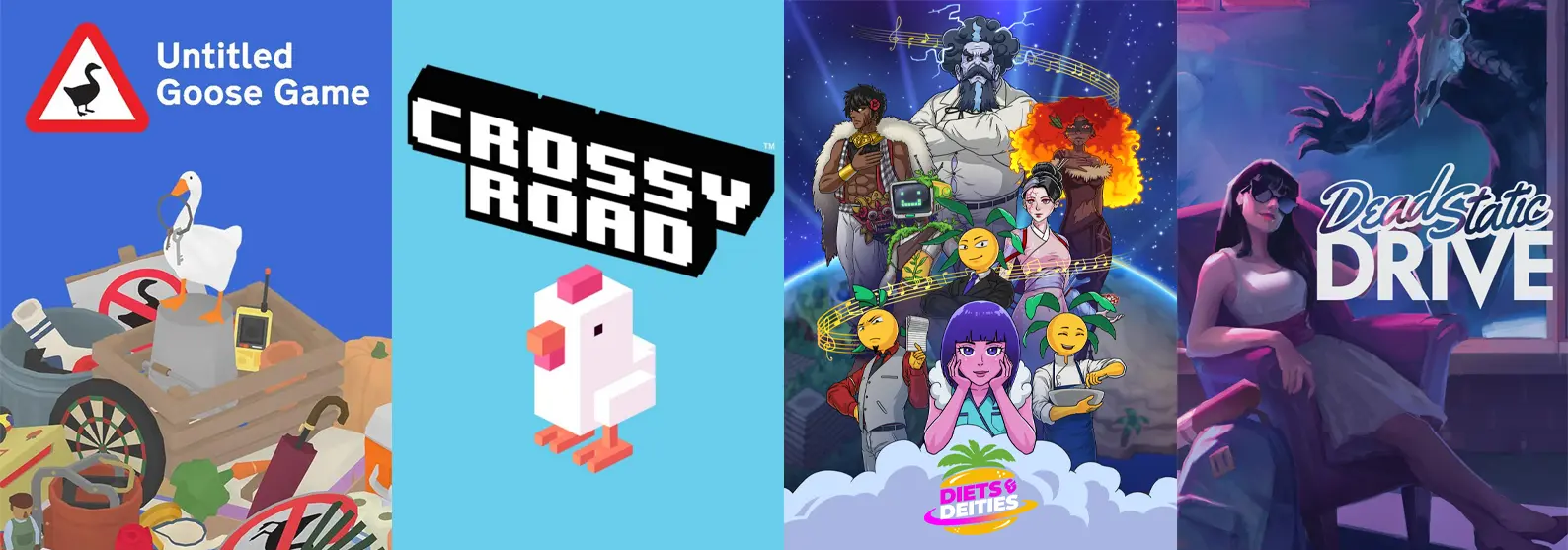
7. Untitled Goose Game – House House (Melbourne)
A stealth puzzle game where you play as a mischievous goose terrorizing a quaint English village. Its simple premise, charming art style, and hilarious emergent gameplay made it a viral sensation and cultural phenomenon.
Built in Unity with a focus on physics-based interactions, AI-driven NPCs that react to player pranks, and a minimalist aesthetic that emphasizes clarity and personality, the game follows a premium single-purchase model. Its success demonstrates how video games in Australia can achieve global cultural impact through creative simplicity and strong design fundamentals.
8. Crossy Road – Hipster Whale (Melbourne)
An endless runner that reimagines Frogger for the mobile generation, featuring voxel art, accessible one-touch controls, and a massive roster of unlockable characters. It became a mobile gaming phenomenon with hundreds of millions of downloads worldwide.
Built with Unity for cross-platform deployment and optimized for mobile performance while maintaining visual appeal through its distinctive blocky art style, the game uses a free-to-play model with respectful monetization through character unlocks, ads, and optional IAP. It proves that Australian studios can compete at the highest level in mobile markets.
9. Diets & Deities – Australian indie team
Diets & Deities is a rhythm-cooking game that combines music gameplay with cultural dishes and recipes, letting players unlock real-world meals as they progress. It sits at the intersection of casual, educational, and music genres, making it interesting for streaming and social sharing.
Rhythm games are often implemented in Unity, with bespoke timing, input windows, and audio sync tools, plus UI-heavy presentation. The monetization typically follows a premium or low-cost approach with optional DLC song/recipe packs, encouraging long-term engagement via new content drops.
10. Dead Static Drive – Reuben Games (Melbourne)
Often described as “Grand Theft Cthulhu“: a road-trip horror game where you drive through small towns, scavenging and surviving against eldritch threats. Its stylised visuals and tense encounters have drawn attention for years as the team refined the vision.
The mix of driving, on-foot exploration, and stylised 3D is suitable for Unreal or Unity, with procedural encounters and AI-driven threats layered over authored locations. The game operates on a premium model but supports emergent replay value through sandbox systems and different narrative outcomes.
Also Checkout: Video Game Development Cost Australia
Australia has produced some of the most creative and successful games in the world. If you’re planning to build your own game, our developers can help you bring it to life.
Things to Know If You Want to Develop Your Game in Australia
Below are the critical insights about incentives, talent, infrastructure, and market dynamics shaping game development in Australia:
1. Australia is Export-First by Default
Australian studios often build for global audiences from day one. The IGEA FY2024 survey reports 93% of sector revenue comes from outside Australia. That shapes everything: platform choices, localisation planning, publisher conversations, and marketing strategy. Unlike markets with large domestic player bases, Australian developers can’t rely on local success — they must think globally from conception. This export-oriented mindset has created a culture of polish and international appeal that defines video games based in Australia.
2. Incentives Are Now a Real Part of Production Planning
Policy support has become a meaningful lever — especially given the DGTO’s frequent citation as a growth catalyst, alongside state-level support. If you’re budgeting a commercial title, treat incentives like platform funding: plan them early, not “extra money later.” Around 25% of surveyed studios accessed the DGTO in the last year, with nearly 40% intending to access it in the current financial year, showing rising adoption. These incentives can significantly impact project economics and enable more ambitious productions.
3. Victoria and Queensland Are Major Hubs
The IGEA snapshot shows a strong concentration of studio headquarters in Victoria, with a significant presence in Queensland and NSW. Melbourne, in particular, has emerged as a creative hub for Australian game development. In practice: you can hire nationally, run hybrid teams, and still access local ecosystems (events, co-working, grants) in key hubs. The Australian industry has effectively embraced remote and hybrid work models.
4. IP Ownership is the Norm, Not the Exception
A standout signal in Australia is the number of studios that aim to own what they make: 85% reported developing their own IP. That’s good for long-term value — but it also means you need a real plan for publishing, marketing, community, and post-launch support. This contrasts with markets where work-for-hire dominates, and reflects both the entrepreneurial spirit and the support structures available to Australian developers.
5. Tooling Expectations Are Global-Standard
Looking at the games listed above, you’ll see the same production stacks used worldwide: Unity, Unreal Engine, Wwise, FMOD, Blender, Git, and standard industry pipelines. If you want to be competitive in Australia, assume you’re competing with the global market — because you are. Australian studios don’t benefit from lower technical standards; they succeed by meeting or exceeding international standards while leveraging local advantages such as government support and collaborative communities.
6. Industry Size and Revenue Trends
Australian game developers generated around 345.5 million AUD in FY2023 and 339.1 million AUD in FY2024, with revenue roughly tripling since FY2016 despite a recent minor dip. The ecosystem is considered mature but still growing, with many studios under five years old and a quarter over ten years old. This mix of established players and new entrants creates opportunities for both collaboration and competition.
7. Talent Pool Considerations
Around 2,465 people work in Australian game development, spanning programming, art, design, production, and QA. Most studios plan to hire, but the local talent market is competitive, especially in senior and highly technical roles. If you’re establishing operations in Australia, factor in recruitment timelines and consider hybrid approaches that combine local and remote talent.
While some content and themes face scrutiny under Australian classification laws — topics sometimes discussed in relation to video games banned in Australia — the vast majority of development proceeds without issue, and successful studios navigate these frameworks as part of standard regional compliance.
Conclusion
In 2026, Australian-developed games stand out globally for their strong design, smart production choices, and clear creative vision. From the precision of Hollow Knight: Silksong to the personality of Untitled Goose Game, Australian studios build internationally competitive titles with efficient, modern pipelines. The combination of government support through tax offsets, a talented, globally experienced workforce, and a culture of IP ownership has created a genuine development hub. If you’re planning to develop games in Australia or partner with local studios, the opportunity is real — think export-ready, choose proven tools, plan funding early, and treat marketing as core production.
If you’re planning to develop games in Australia or partner with local studios, the opportunity is real — think export-ready, choose proven tools, plan funding early, and treat marketing as core production. Studios like Juego Studios exemplify this global-standard approach, offering comprehensive game development services that align with Australia’s export-first mindset and commitment to quality across all platforms and genres.
Frequently Asked Questions
Australian studios build for international markets from day one, with 93% of revenue coming from exports. This forces teams to meet global standards in design, production quality, and technical execution from the start.
The Digital Games Tax Offset (DGTO) and state-level grants provide significant financial support. Around 25% of studios already access the DGTO, with adoption growing as developers integrate incentives into production planning.
Programming, technical art, and design roles are highly competitive. Studios increasingly need specialists in game art services, visual effects, procedural systems, and live-ops management to support ambitious projects and post-launch content.
Melbourne leads with the highest concentration of studios, followed by Brisbane and Sydney. However, remote work is normalized, allowing developers to access opportunities nationally while participating in local hub ecosystems and events.
Related Posts
Have a Game Idea but No Development Team? How to Get It Built
This guide walks you through every realistic way to get your game made, what each one really costs you in time and control, and how to pick the right one before you spend a dollar finding out the hard way.
Top 10 Game Development Companies in USA (2026 Update)
In this blog, we’ll discuss the top 10 game development companies in USA, along with how to evaluate them beyond surface-level claims, so you can identify partners who actually align with your vision, technical needs, and long-term growth goals.

Top Game Development Companies in 2026: 10 Global Leaders Compared
Most game projects don’t fail because the idea was weak. They fail because the development partner couldn’t scale, adapt, or deliver when pressure peaked.