


 Unity
Unity Unreal
 Godot
Godot
 Mobile
 PC
PC Console
 Full-Cycle
 Co-Development
 Outstaffing




-
 Game Development
 Dec 7th, 2025
- Share:
Table of Contents
AAA game development stands at the crossroads of creativity, technology, and strategy. These games are large-scale projects and global cultural events built through years of innovation, coordination, and artistry. Representing the highest echelon of game production, AAA titles push hardware limits, influence pop culture, and drive billions in global revenue.
At their core, AAA projects demand precision and collaboration rivaling the most complex industries. Every texture, animation, and mechanic is fine-tuned to perfection, merging art with engineering and vision with execution.
AAA game development requires more than budget — it requires production discipline, scalable pipelines, and a team that can execute under pressure. That's Juego Studios.
What Defines an AAA Game?
AAA or Triple-A game art refers to big-budget video games’ high-quality visual and artistic elements, created by large teams. Budget alone doesn’t define AAA status; ambition, scale, and quality do. Major characteristics include:
- Budgets often exceed $100 million
- Large multidisciplinary teams of 300+ specialists
- Cinematic storytelling with professional voice acting and orchestral soundtracks
- Advanced technologies like real-time ray tracing and smart AI
- Multi-platform releases optimized for PC and consoles
- “Games-as-a-platform” approach with live services and seasonal content, ensuring longevity
Why AAA Games Represent the Pinnacle of Game Development?
AAA games are where the industry tests its most ambitious ideas. Breakthroughs in graphics, AI, and physics show up here first before spreading to smaller studios and indie developers.
The massive funding behind these projects allows studios to:
- Experiment with new technologies like advanced motion capture and procedural generation
- Tell complex stories with the depth and emotional weight you’d expect from premium films and TV shows
- Build massive worlds that players connect with on both emotional and cultural levels
AAA games also push the tech industry forward. They drive GPU manufacturers to build more powerful hardware. They advance real-time rendering techniques. They pioneer new ways of telling stories in interactive spaces. When you play a AAA game, you’re experiencing technology that will eventually shape how all games are made.
Evolution of AAA Production: From Early 3D to Immersive Realities
From the 1990s, pioneers like id Software and Epic Games revolutionized 3D graphics with Quake and Final Fantasy VII. AAA games have evolved through decades of advances: HD graphics, ray tracing, VR/AR, and cloud rendering. Today’s AAA titles feature adaptive AI, photorealistic environments, and procedural content that create living worlds with which players actively engage.
The Strategic Foundation of AAA Game Development
AAA success isn’t built on chance but smart innovation, calculated risk, and long-term trust. The best studios treat creativity like strategy: bold enough to inspire, disciplined enough to endure.
What Truly Makes a Game “AAA” Beyond Budget
The essence of AAA lies in a combination of technical brilliance, artistic mastery, market strategy, and player engagement systems. AAA game development champions cutting-edge rendering and physics, large and highly organized teams, exhaustive quality assurance, cultural positioning, and robust live-service communities that keep games thriving well post-launch.
Balancing Art, Technology & Market Vision
AAA success demands balancing bold creative ideas with stable technological infrastructure and market insight. Studios cultivate a clear artistic vision supported by innovative technology tailored to enhance that creativity. Simultaneously, data-driven player analytics ensure game design resonates with audiences. Risk is managed prudently via staged innovation pipelines, and technical architectures scale effectively across platforms, preserving artistic intent while meeting commercial expectations.
The Role of Innovation, Risk & Long-Term Thinking
Leading studios invest in dedicated R&D to explore cutting-edge AI, VR, and cloud technologies. Balancing high-risk, boundary-pushing projects with stable revenue streams requires portfolio management. Timely technology adoption and multi-year franchise planning ensure sustained competitive advantage. Cultural innovation fosters fresh narrative, artistic, and gameplay approaches, essential to standing out in crowded markets.
Building Sustainable IPs and Player Trust
Lasting AAA franchises emerge from richly developed intellectual properties with deep lore and beloved characters, forged through transparent, ethical relationships with player communities. Fair monetization, continuous support, and seamless cross-platform progress nurture trust and loyalty. Legal protections and brand stewardship safeguard creative integrity while enabling strategic expansion across media.
The AAA Game Development Process Lifecycle
The lifecycle of a AAA game is a massive journey that transforms a single idea into a global entertainment phenomenon. Every phase requires careful planning, from the first spark of imagination to years of production and refinement. AAA game development blends art, engineering, and storytelling into a seamless experience that captivates millions worldwide.
Conceptualization & Pre-Production
Every great AAA game begins with a powerful idea that can emotionally connect with players and stand out in a competitive market. During pre-production, studios craft the game’s world, lore, characters, and tone, ensuring the creative vision aligns with what audiences want.
Through market research and creative workshops, teams define the game’s “why”: its purpose, value, and emotional core. This happens long before any code is written. The hard questions get asked here: What makes this game special? Why will players care?
Key pre-production activities:
- Market analysis to identify player preferences and market gaps
- World-building sessions for lore and narrative foundations
- Character development to create memorable personalities
- Visual direction discussions to define aesthetic identity
- Technical feasibility assessments to ensure the vision works
From Vision to Blueprint
Once the idea is solid, teams translate it into Game Design Documents (GDDs). These master blueprints detail mechanics, storylines, art direction, and player experience goals. GDDs keep everyone aligned on what they’re building and why.
Early prototypes and small-scale demos test the “fun factor” and feasibility. This stage is about risk reduction through iteration. Teams refine what works and discard what doesn’t before significant investment begins. It’s better to fail fast on paper than to discover problems when multiple people work full-time on it.
The Vertical Slice
A “vertical slice” is the studio’s proof of vision. It’s a small but polished, playable demo showcasing the intended quality, gameplay, and emotional experience. This isn’t a rough prototype. It’s a carefully crafted sample representing what the final game should feel like.
The vertical slice:
- Aligns the production team around shared quality standards
- Secures publisher confidence by proving the concept works
- Validates creative direction before committing massive budgets
- Identifies potential problems while there’s time to fix them
Production Phase
Production is where ideas take physical form. Hundreds of specialists work simultaneously: designers crafting gameplay systems, engineers building technical infrastructure, animators bringing characters to life, writers developing narrative beats, and sound artists creating audio landscapes.
Using agile workflows and specialized pipelines, teams coordinate assets, improve performance, and maintain consistency across a massive scope. Automation and proprietary tools handle rendering, lighting, and quality checks. Iterative builds (alpha, beta, preview versions) ensure constant feedback and refinement. Studios don’t build a game once; they make it dozens of times, each version better than the last.
Testing & Quality Assurance
In AAA gaming, quality is the promise. Dedicated QA teams rigorously test every feature, uncovering bugs, balancing gameplay, and ensuring flawless platform performance.
The QA process includes:
- Regression testing to catch issues from new updates
- Hardware certification to meet platform requirements
- Balance testing for fair, enjoyable gameplay
- Performance checks to maintain smooth frame rates
- Compatibility tests across different hardware
Continuous testing ensures that when players press “Start,” the experience feels smooth, immersive, and complete.
Launch & Post-Launch Lifecycle
When a AAA game launches, the work evolves. The final months will focus on polishing, certification, and tuning for a seamless debut. On launch day, live teams monitor performance around the clock, fix real-time issues, and deploy hotfixes to stabilize millions of concurrent sessions.
The real magic happens post-launch. Studios transform games into living ecosystems through live operations, seasonal content, and community-driven updates. New characters, maps, story chapters, and events keep experiences fresh. Limited-time events create excitement. Community feedback shapes future updates.
This long-tail strategy keeps players engaged for years, turning successful releases into enduring digital worlds. Games like Fortnite and Destiny prove that well-supported games generate revenue far longer than traditional release models ever allowed.
The AAA game development lifecycle is a marathon. Every phase builds on the last, from first concept to years of post-launch support. The studios that master this journey create experiences that define gaming generations.
Studios scaling to AAA need co-development partners who match their quality pipeline. We integrate directly into your production workflow without adding friction.
Technology & Tools Powering AAA Games
The technology stack is the heartbeat of modern AAA production, powering stunning visuals, intelligent systems, and seamless global connectivity.
Choosing the Right Engine: Unreal, Unity & Beyond
The game engine is the creative core of any AAA project.
- Unreal Engine leads the pack with real-time photorealistic rendering, cinematic sequencer tools, and streamlined pipelines that scale from prototypes to blockbusters. From Fortnite to Final Fantasy VII Remake, Unreal proves its dominance in both visual fidelity and workflow efficiency.
- Unity, though historically an indie favorite, continues to evolve with major cross-platform successes like Genshin Impact. Its modular design offers flexibility and control, ideal for studios that value customization.
Some top studios like Rockstar or Ubisoft go proprietary, developing in-house engines (RAGE, Anvil, REDengine) to fine-tune every frame and mechanic. This move offers complete creative freedom but demands enormous engineering resources.
Rendering, Physics & Simulation Systems
AAA experiences are built on realism, not by chance but through technological precision. Modern rendering pipelines use ray tracing, global illumination, and advanced shaders to recreate true-to-life lighting and reflections. Physics engines like Havok and PhysX breathe authenticity into every collision, explosion, and motion, simulating cloth, fluids, and destructible terrain.
Beyond visuals, AI-driven simulation systems handle everything from crowd behavior to dynamic weather, making worlds feel responsive and alive. Every flicker of light and gust of wind is carefully engineered to immerse players deeper into the experience.
Backend Infrastructure: Networking, Databases & Analytics
For today’s connected blockbusters, a powerful backend is the unsung hero. Cloud-based infrastructures like AWS, Azure, or Google Cloud manage matchmaking, leaderboards, cross-platform saves, and live events. Massive databases store player profiles and progression, while real-time analytics monitor engagement, performance, and balance.
This data-driven foundation lets studios react instantly to player behavior, improve live services, and ensure millions of concurrent users can play without disruption. That’s the modern AAA standard.
Toolchains for Artists, Engineers & Designers
Triple-A game development thrives on specialized tool ecosystems that unify creativity and productivity.
- Artists sculpt characters and environments using Maya, Blender, ZBrush, and Substance Painter.
- Engineers use source-control systems like Perforce and automated build tools for stability.
- Designers rely on visual scripting and level editors within engines to test mechanics on the fly, reducing bottlenecks and enabling faster iteration.
Automation handles repetitive tasks from rigging to lighting builds, allowing teams to focus on what matters: crafting emotion and experience.
Emerging Technologies: Procedural Generation, AI & Automation
The next frontier of AAA lies in intelligent systems that build worlds faster and smarter.
- Procedural generation now creates vast landscapes and cities algorithmically, cutting production time while boosting replayability.
- AI and machine learning drive adaptive NPC behavior, predictive difficulty balancing, and even story personalization.
- Automation powers continuous testing, cloud-based collaboration, and seamless deployment across global teams.
Games that evolve as players play them, a glimpse into the future of living, adaptive entertainment.
Design & Artistry in AAA Games
Behind every groundbreaking release lies a fusion of design mastery, artistic craftsmanship, and emotional storytelling that turns digital spaces into living worlds. These creative pillars define what makes AAA gaming more than entertainment; they make it art.
The Creative Vision Behind AAA Game Design
Crafting Immersive Player Experiences
At the heart of every great AAA title is the desire to make players feel something: awe, fear, wonder, triumph. This emotional immersion comes from responsive environments, dynamic AI, and layered systems that react intelligently to player behavior. From the subtle rustle of leaves to the tension in a boss encounter, every sensory element works together to make the world feel alive, not simulated.
Balancing Gameplay, Emotion & Visual Identity
AAA design thrives on balance, distinguishing between challenge and reward, spectacle and subtlety. Developers meticulously synchronize mechanics, soundscapes, and visuals to create gameplay loops that engage intellect and emotion. A cohesive visual identity ensures the game world doesn’t just play beautifully but feels uniquely recognizable. You can identify Horizon Zero Dawn or God of War from a single screenshot.
How Artistic Direction Shapes Brand Legacy
A game’s art direction is its visual soul. Every color palette, lighting choice, and animation style contributes to how players remember the experience. Thoughtful visual design can turn a new IP into an icon, like The Legend of Zelda’s cel-shaded warmth or Cyberpunk 2077‘s neon chaos. For studios, art direction isn’t decoration. It’s brand storytelling, crafting recognition that endures beyond the release cycle.
AAA Game Character Design
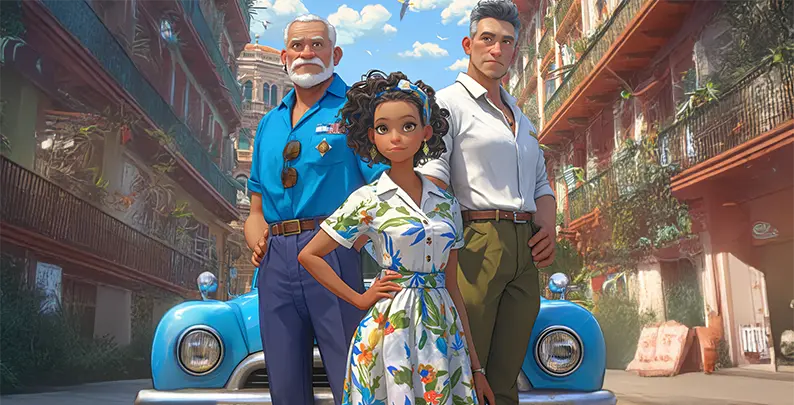
A few things define a AAA game, like its characters. They are the emotional anchors of the story, the faces we root for, cry with, and remember decades later.
What Defines a AAA Game Character: Depth, Emotion & Memorability
AAA game characters are crafted to evoke empathy and meaning. They blend substantial narrative backstories, visual symbolism, and performance-driven emotion to feel human, even when they’re not. When players think of Geralt, Lara Croft, or Ellie, they recall the gameplay and the emotional journey those characters took them on.
The AAA Game Character Design Pipeline: From Concept to Playable Model
| Stage | Focus Area | Tools & Techniques |
| Concept & Silhouette | Early sketches, personality shaping, thematic exploration | Photoshop, Procreate |
| Sculpting & Texturing | High-poly modeling, retopology, and realistic materials | ZBrush, Substance Painter, Marvelous Designer |
| Rigging & Animation | Skeleton setup, motion capture integration, procedural animation | Maya, MotionBuilder, custom tools |
| Final Integration | In-engine polish, shader tuning, performance optimization | Unreal Engine, Unity, proprietary engines |
This pipeline ensures that every movement, facial expression, and visual cue connects emotionally while meeting technical benchmarks for realism.
Balancing Realism & Stylization for Impact
AAA game art studios walk a fine line between lifelike realism and stylized expressiveness. Here’s how they differ:
| Approach | Advantages | Emotional Effect | Examples |
| Photorealism | Immersive, cinematic detail; appeals to mature audiences | Emotional authenticity and intensity | The Last of Us Part II, Red Dead Redemption 2 |
| Stylization | Distinctive, accessible, timeless aesthetic | Broader emotional appeal; creative freedom | Overwatch, Zelda: Breath of the Wild |
Modern AAA titles blend both, achieving a visually striking yet emotionally grounded identity.
Lessons from Iconic AAA Game Characters Design
Characters like Geralt of Rivia, Ellie, and Arthur Morgan prove that characters transcend their medium when storytelling, performance, and design align. Their gestures, tone, and arcs resonate because they’re rooted in authenticity, reflecting the player’s own struggles and victories.
Read this guide for learning more about outstanding AAA game character art.
Environmental & Visual Design
Building Worlds That Feel Alive
A great AAA game environment doesn’t just frame the story. It tells one. Every ambient sound, shifting shadow, or NPC routine adds to the illusion of life. Studios use AI-driven systems for wildlife behavior, weather, and physics to create ecosystems that breathe with the player’s presence.
Lighting, Composition & Atmosphere
Lighting is one of the most powerful storytelling tools in AAA design. It directs attention, evokes mood, and deepens emotion. Combined with strong composition and atmospheric effects, it creates cinematic depth, making players stop mid-game just to take a screenshot.

Asset Optimization & Modularity
AAA game environments are massive, yet they must perform flawlessly. Studios employ modular asset kits, instancing, and Level of Detail (LOD) systems to balance scope and performance. These pipelines allow artists to render breathtakingly detailed worlds that run smoothly across PC, console, and cloud platforms.
Narrative Design & Storytelling Integration
Writing for Immersion & Emotional Depth
Great storytelling in games is less about exposition and more about experience. AAA writers weave layered narratives that mirror the player’s emotional state, turning choices, dialogue, and discovery into tools for empathy. The best stories don’t just entertain. They leave echoes of meaning long after the controller is set down.
Dialogue, Cinematics & Interactive Storytelling
From cinematic cutscenes to branching dialogues, AAA storytelling now mirrors the complexity of film and theater. Fully voiced characters, facial motion capture, and spatial audio let players feel every heartbeat of the story, not just watch it unfold.
Dynamic Narratives & Player Agency
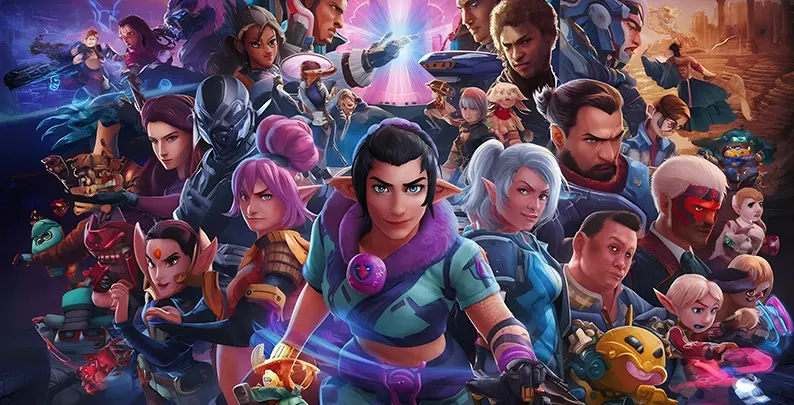
The modern AAA narrative is a living system, adapting to player choices and consequences. Dynamic storytelling, powered by AI, procedural logic, and player data, personalizes each experience, ensuring no two playthroughs feel identical. This deepens engagement and transforms passive players into active storytellers.
Design and artistry separate memorable games from forgettable ones. When visuals, characters, environments, and narrative work in harmony, they create experiences that players carry with them long after the credits roll.
From pre-production planning to final polish, we support AAA studios at every phase — with milestone accountability and IP protection built in.
Performance, Optimization & Quality Strategy
Behind every breathtaking visual and cinematic moment in a AAA game lies a silent achievement: flawless performance. Optimization isn’t just technical fine-tuning. It’s the art of ensuring that a sprawling, high-fidelity world feels seamless, responsive, and alive on every device it touches. For players, this means immersion without interruption. For studios, it means excellence that sustains both reputation and sales.
Why Optimization Defines AAA Quality
In the world of AAA gaming, performance is quality. A stable frame rate, quick loading times, and smooth responsiveness differentiate between cinematic immersion and frustration. Even the most visually spectacular game loses its magic if it stutters or crashes. Top studios treat optimization as a design pillar, not an afterthought.
Beyond delivering a premium experience, effective optimization also broadens accessibility, allowing games to shine across next-gen consoles and mid-tier systems. This maximizes audience reach and long-term profitability. More players who can run your game means more potential sales and a larger community.
Common Performance Bottlenecks in AAA Game Development
Performance issues often depend on how well the CPU, GPU, memory, and I/O systems are balanced. Each introduces its own constraints:
| Component | Bottleneck Cause | Impact on Gameplay |
| CPU | Overloaded with AI, physics, and world logic | Lag in responsiveness, slow updates |
| GPU | Heavy ray tracing, high poly count, shader complexity | Frame drops or reduced resolution |
| Memory (RAM) | Massive textures and world assets | Stutters, crashes, or long asset loads |
| I/O Systems | Slow disk reads or inefficient streaming | Delays in loading screens, texture popping |
Elite optimization teams track and tune these constantly. In AAA game development, even milliseconds matter.
Rendering & Physics Optimization Techniques
AAA video game developers combine engineering precision and creative problem-solving to improve rendering and physics without sacrificing beauty. Techniques like Level of Detail (LOD) and occlusion culling ensure that only visible assets are processed, reducing GPU load. Texture compression balances visual quality and memory footprint, while AI-driven upscaling (DLSS, FSR) delivers near-4K visuals at lower performance cost.
On the physics side, studios simplify collision meshes, batch simulations, and control update rates to maintain realism without overtaxing the processor. The result: breathtaking worlds that look and feel cinematic, yet run at 60–120 FPS across diverse hardware.
Cross-Platform Optimization: PC, Console & Cloud
Modern AAA game development is platform-agnostic by design. Studios build flexible architectures that adapt dynamically to PC, consoles, and cloud gaming platforms. This means scalable graphics settings, adaptive control mapping, and smart network code that adjusts to real-time latency.
Cloud gaming adds a new frontier, balancing streaming compression, bandwidth, and predictive input to simulate the feel of local gameplay. The ultimate goal? Delivering the same immersive experience whether a player is on a high-end rig or streaming from a tablet halfway across the world.
Performance QA, Profiling & Continuous Improvement
Optimization doesn’t end at launch. It’s a living process. Dedicated QA teams use profiling tools to measure frame timing, CPU/GPU usage, and load times across every platform configuration. Automated regression tests ensure that new patches don’t reintroduce old issues.
Post-launch, real-time telemetry from players provides invaluable feedback. Studios monitor how their worlds perform in the wild, pushing updates and refinements to maintain buttery-smooth gameplay long after release. This continuous improvement culture elevates AAA gaming studios from good developers to industry benchmarks.
Performance isn’t just about making games run faster. It’s about respecting your players’ time and investment. When optimization is built into every stage of development, the result is a game that feels as good as it looks, no matter where or how someone plays it.
The Cost of Building a AAA Game
Behind every AAA masterpiece lies a staggering financial commitment that fuses talent, technology, creativity, and marketing muscle into a single, high-risk, high-reward venture. These projects can rival Hollywood blockbusters in cost, and success depends on how effectively studios balance ambition with financial discipline.
Understanding the AAA Game Development Cost
The budget of a AAA title can soar well past $100 million, shaped by five core drivers:
- Talent & Teams: The heartbeat of any AAA project is its people. Hundreds of specialists-from designers and writers to AI engineers, animators, and QA testers-may contribute to production. Whether this expertise is built in-house or accessed through game development services, recruiting and retaining the right talent is expensive but essential for delivering quality that meets global expectations.
- Technology & Infrastructure: Cutting-edge tools come at a premium. Working with a specialist unreal engine game development company can offset the overhead of licensing Unreal Engine 5 directly — partner studios absorb licensing costs through their existing agreements, while maintaining motion-capture facilities, cloud hosting, and high-end workstations as part of their production infrastructure.
- Content Creation & Game Design: Massive worlds, cinematic storytelling, high-resolution assets, and interactive mechanics consume thousands of labor hours. The richer the world, the higher the bill.
- Quality Assurance: Months, sometimes years, of testing across platforms ensure that performance, stability, and polish reach AAA standards.
- Marketing & Promotion: A brilliant game is meaningless if no one knows it exists. Global campaigns, influencer partnerships, and launch events often consume 30–50% of the total budget, matching or exceeding development spend.
Typical Budget Distribution in AAA Projects
| Department | Approx. % of Total Budget | Key Expense Focus |
| Art & Content | 30–40% | World-building, character models, animation, and cinematics |
| Technology & Tools | 20–30% | Engine licensing, R&D, servers, hardware |
| Quality Assurance | 10–15% | Functional, performance, and compatibility testing |
| Marketing & Promotion | 25–35% | Advertising, events, influencers, PR |
| Other (Narrative, Audio, Design) | 10–20% | Story writing, sound design, and user experience |
This distribution reveals a key truth: AAA success is as much about visibility as it is about vision.
The Rising AAA Games: Cost of Realism and Player Expectation
Modern players expect lifelike characters, cinematic worlds, and near-instant responsiveness. Delivering that realism is expensive. Studios pour resources into AI-driven animation, performance capture, and photorealistic rendering, each adding millions to the budget.
Yet as realism approaches its limits, the industry faces diminishing returns. Higher costs for marginal visual improvements. Many studios now pivot toward innovation in storytelling, design depth, and player emotion, understanding that true immersion isn’t only measured in pixels and how deeply players connect with the experience.
Managing Scope, Scale & ROI in Massive Productions
Managing scope and ROI becomes a fine art with so much at stake. Over-ambition (too many features, too wide a world) can balloon timelines and sink budgets. Successful studios set clear creative boundaries, focusing on core gameplay pillars that deliver maximum impact per dollar spent.
Modern strategies include:
- Episodic or modular releases to spread cost and sustain engagement
- Live-service models that extend lifespan and revenue beyond launch
- Franchise ecosystems that turn a single title into a long-term IP with sequels, spin-offs, and merchandise
In this sense, every AAA game is more than a product. It’s an investment portfolio designed to yield creative influence and commercial longevity. The thriving studios balance imagination with intelligent resource management, proving that vision and viability must grow in Triple-A game development.
Conclusion & Future Outlook
AAA game development stands as the ultimate convergence of art, science, and strategy, a space where imagination meets innovation at an industrial scale. Every successful AAA title is more than a technical triumph. It’s a collaborative masterpiece built on years of research, artistry, and relentless pursuit of perfection. These games set the standards the rest of the industry strives to reach, driving the evolution of storytelling, technology, and player experience.
As the next generation unfolds, AI, cloud computing, and procedural systems will redefine how studios create and players engage. We’re moving toward worlds that adapt in real time, narratives that respond to individual choices in ways we’ve never seen, and production pipelines that can do in months what once took years.
Yet even as technology evolves, the heart of AAA development remains unchanged: the commitment to crafting experiences that move, challenge, and connect players worldwide. In the end, the true hallmark of AAA excellence isn’t just the budget or the graphics. It’s the ability to make millions feel something unforgettable.
The studios that understand this, that balance cutting-edge innovation with genuine emotional storytelling, will continue to define what gaming can be. They’re not just building games. They’re building the future of interactive entertainment, one ambitious project at a time.
Frequently Asked Questions
Most AAA titles take 3 to 6 years, depending on team size, engine complexity, and production scale, with pre-production often lasting over a year.
AAA games feature larger budgets, bigger teams, and higher production values, while AA and indie titles focus on creative innovation within smaller, cost-efficient scopes.
AI powers smarter NPC behavior, adaptive difficulty, procedural content, and automated testing, improving both player immersion and development efficiency.
Expertise in game engines (Unreal, Unity), programming, 3D modeling, animation, and collaborative design pipelines is highly sought after in AAA production teams.
Both are vital; AAA success lies in intertwining emotional storytelling with compelling gameplay to create a cohesive, immersive experience that players remember.
Expect deeper AI integration, cloud-based creation tools, and hybrid monetization models, allowing studios to build vast, adaptive worlds that evolve alongside their players.
Related Posts
Have a Game Idea but No Development Team? How to Get It Built
This guide walks you through every realistic way to get your game made, what each one really costs you in time and control, and how to pick the right one before you spend a dollar finding out the hard way.
Top 10 Game Development Companies in USA (2026 Update)
In this blog, we’ll discuss the top 10 game development companies in USA, along with how to evaluate them beyond surface-level claims, so you can identify partners who actually align with your vision, technical needs, and long-term growth goals.

Top Game Development Companies in 2026: 10 Global Leaders Compared
Most game projects don’t fail because the idea was weak. They fail because the development partner couldn’t scale, adapt, or deliver when pressure peaked.