


 Unity
Unity Unreal
 Godot
Godot
 Mobile
 PC
PC Console
 Full-Cycle
 Co-Development
 Outstaffing






-
 Game Design, Game Development, Gaming Industry
 Dec 10th, 2025
- Share:
Table of Contents
- 1. AI Becomes the Engine Behind Modern Game Development
- 2. Accessibility & Inclusivity Become Global Industry Standards
- 3. Cloud and Hardware Converge Into One Seamless Ecosystem
- 4. Smarter Monetization and Player-Owned Progression
- 5. Asia and MENA Redefine the Global Market
- 6. VR, AR, and Mixed Reality Become Everyday Entertainment
- 7. The Rise of Micro-Studios and Global Collaboration
- 8. Ethics, Player Safety, and Mental Well-being Take Priority
- Conclusion
The gaming landscape is evolving at a remarkable pace. Many of the shifts that defined 2025, such as AI-driven workflows, cloud-native play, inclusive design, and cross-platform ecosystems, are no longer just emerging concepts. They are the foundation of modern game creation.
In 2026, the global games market is projected to surpass $321 billion, powered by more than 3 billion players worldwide. As studios refine their pipelines and players expect more personalization, the next wave of video game industry trends focuses on maturity, scale, and player-first innovation.
This article breaks down the current trends in the gaming industry shaping 2026 and beyond, helping developers, publishers, and studios understand where opportunities are growing and where technology is quietly reshaping expectations.
1. AI Becomes the Engine Behind Modern Game Development

AI has evolved beyond being a bonus tool. It’s becoming the backbone of the trends in the gaming industry in 2026. Automation and generative systems streamline everything from worldbuilding to testing, cutting production times while improving overall quality.
What AI impacts most:
- Dynamic content generation: Worlds expand intelligently, adapting to player inputs.
- Smarter NPC behavior: Characters evolve over time, remember choices, and adjust tactics, creating richer storytelling.
- Rapid pipeline acceleration: Asset creation, QA automation, and environment layout are now AI-assisted, reducing manual workload for studios.
For teams exploring the application of AI in gaming, systems like procedural content generation and AI-assisted debugging are becoming standard parts of development workflows.
Example in practice:
Indie studios report shaving 30–50% off production cycles when blending AI-assisted prototyping with human-led design oversight.
AI’s role is decisive, but responsible use matters too. After years of debate, studios now label AI-generated content clearly and maintain oversight to ensure originality, fairness, and creative integrity.
2. Accessibility & Inclusivity Become Global Industry Standards

Another major shift in current trends in the gaming industry is the rise of accessibility as a launch requirement, not an optional feature.
Key advancements driving inclusivity:
- Adaptive controls that auto-adjust to player mobility
- Real-time captioning powered by AI speech detection
- Cognitive-friendly modes that tune difficulty without reducing challenge
- Color and contrast personalization for low-vision players
Major game development engines now include accessibility frameworks directly in project templates, ensuring studios incorporate inclusive UX from the earliest stages.
A growing audience
More than 500 million players worldwide benefit from an accessible design, and these features often improve the experience for all players, not just those with disabilities.
3. Cloud and Hardware Converge Into One Seamless Ecosystem
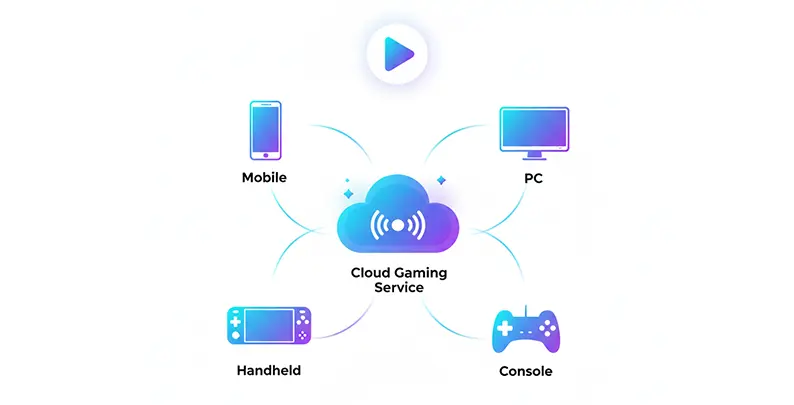
The boundary between platforms continues to disappear. If 2025 introduced the trend, then 2026 cements it as the norm.
Expectations from players:
- Instant switching between mobile, console, PC, and handheld
- Cross-save and cross-progression as standard
- Smooth performance whether playing locally or via cloud streaming
Next-gen handhelds and widespread 5G/6G adoption make cloud-native experiences more stable than ever. Nearly half of global playtime is expected to come from cloud-enabled devices.
What this means for developers:
Studios must now build with scalability in mind, often relying on versatile game development services that support multiplayer, cloud, and multi-device features from day one.
With cloud growth, the promise of “play anywhere” is expected.
4. Smarter Monetization and Player-Owned Progression
Monetization evolves from broad systems to player-personalized experiences. This is one of the most impactful trends in the gaming industry right now.
Key monetization shifts:
- AI-personalized battle passes offering challenges tailored to individual playstyles
- Hybrid revenue models combining free tiers, subscriptions, and optional add-ons
- Player-owned cosmetic items that transfer across games, supported by interoperable (but not blockchain-heavy) systems
Why this works:
Games that prioritize player enjoyment over grind fatigue see stronger long-term engagement and up to 30% higher retention.
This shift is about intelligent monetization.
5. Asia and MENA Redefine the Global Market

One of the future trends in the gaming industry is the rising dominance of Asia-Pacific and the MENA region.
Key highlights:
- APAC contributes more than half of global gaming revenue
- India surpasses 500 million players, racing toward 700M+ by 2029, driven by mobile and esports adoption
- MENA markets accelerate thanks to government-backed gaming initiatives
- China rebounds with large-scale AAA launches after regulatory recalibration
For global studios, success increasingly hinges on understanding local cultural nuances. Effective game localization becomes mandatory, not optional.
Localized narratives, regional art styles, and community-driven events are what turn good releases into global hits.
6. VR, AR, and Mixed Reality Become Everyday Entertainment
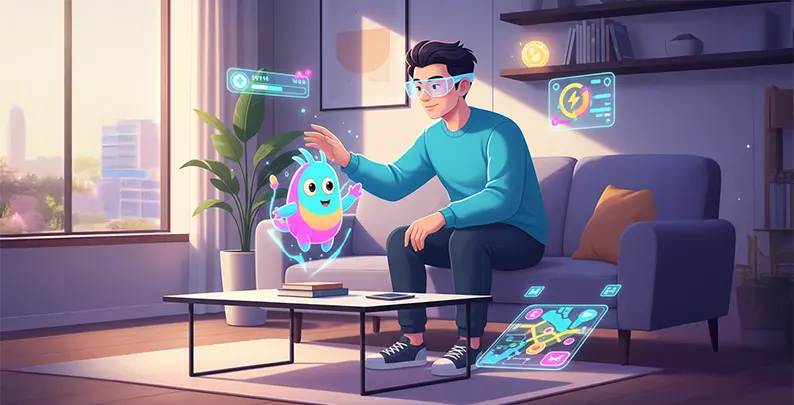
Immersive technology finally reaches mainstream affordability in 2026.
Where MR and VR are headed:
- Lightweight glasses bring AR into daily life
- Social VR platforms exceed 100 million daily active users
- Mixed-reality games turn homes into interactive stages
- Fitness-integrated gameplay rewards real-world movement
These immersive titles redefine how players interact with games, blending virtual experiences with the physical world in new and exciting ways.
7. The Rise of Micro-Studios and Global Collaboration
One of the most practical game industry trends is the shift in how studios structure their teams and partnerships.
What’s changing:
- Micro-studios with 5–20 members can build high-quality mid-core games
- Outsourcing hubs in India, Vietnam, LATAM, and Eastern Europe contribute specialized art, engineering, and LiveOps
- Early Access evolves into “co-development with the community.”
AI-assisted pipelines make it possible for smaller teams to deliver bigger ideas faster. Larger studios supplement production through mobile game development and cross-platform specialists.
This decentralized model lowers risk, boosts diversity, and accelerates experimentation across genres.
8. Ethics, Player Safety, and Mental Well-being Take Priority
As gaming scales globally, governments and platforms introduce new guidelines around fairness, transparency, and well-being.
Key policy shifts:
- AI-generated asset labeling becomes legally required
- Loot box restrictions expand across Europe and emerging markets
- Fair-play certifications increase visibility in app stores
- Wellbeing tools—like fatigue detection or break prompts—become standard for live-service titles
These guardrails protect players while helping studios build sustainable long-term communities.
Conclusion
The most significant video game industry trends for 2026 revolve around intelligent automation, accessible design, alignment with global audiences, and seamless multi-device play. As AI accelerates creation and cloud ecosystems remove platform barriers, developers gain unprecedented flexibility to build games that are more adaptive, inclusive, and engaging than ever.
Juego Studios supports this new era with expertise in game co-development, AI-enhanced pipelines, scalable art production, and cross-platform engineering, helping studios bring future-ready ideas to life with clarity, quality, and reliability.
Frequently Asked Questions
Emerging trends include AI-driven development, cloud gaming, cross-platform ecosystems, immersive MR experiences, and accessibility-first design—shaping how games are created, distributed, and played.
AI speeds up development, improves NPC behavior, automates testing, and personalizes gameplay. Studios use AI to boost creativity, reduce production time, and deliver dynamic player experiences.
Cloud gaming offers instant access, device flexibility, and smoother performance without high-end hardware. Players enjoy seamless transitions across mobile, PC, console, and handheld platforms.
Asia-Pacific leads global expansion, followed by rapidly growing MENA markets. India, China, and GCC countries contribute major player bases, strong mobile adoption, and rising esports ecosystems.
Related Posts

US-Based Unreal Partners: How the Top 5 Compare in 2026
Picking a US-based Unreal partner matters most for teams building high-fidelity, performance-driven games. Visual standards keep climbing, console and PC pipelines keep getting stricter, and LiveOps readiness is no longer optional. Plenty of teams talk up their Unreal experience. Few deliver at a production-grade level once a title has to ship and stay live.

How Game Porting Works: Process, Stages, and Cost Breakdown (2026 Guide)
How does game porting work? This is one of the most frequent questions game developers ask as they look to expand their reach and take advantage of the different platforms available today. The game porting process is an important part of how developers can leverage the different platforms for their game, allowing them to reach a […]

Cost of Game Development in Australia
This blog talks about what it costs to build a video game in Australia in 2026 — covering developer salaries, project-type budgets, phase-by-phase cost breakdowns, Australian tax incentives like the Digital Games Tax Offset (DGTO), hybrid outsourcing strategies, and common budget mistakes studios make.