


 Unity
Unity Unreal
 Godot
Godot
 Mobile
 PC
PC Console
 Full-Cycle
 Co-Development
 Outstaffing




-
 Game Development
 Sep 23rd, 2026
- Share:
Table of Contents
- TL;DR - Key Takeaways and Comparison
- The U.S. Game Development Market in 2026
- Top 10 Game Development Companies in USA
- Evaluation Criteria for US-Based Game Studios
- How US Game Studios Structure Engagements
- Signals of a Reliable US Development Partner
- What Strong US Studio Partnerships Look Like
- Working with Juego Studios
- Conclusion
If you’ve ever tried shortlisting game development companies in the US, you already know how overwhelming it gets. Every studio claims deep expertise, flawless delivery, and global success stories. But once conversations move past decks and demos, real concerns surface: unclear timelines, mismatched expectations, teams that struggle to scale, or partners who disappear once the game goes live.
We’ve seen this pattern play out repeatedly — especially for teams that need more than a studio that can build features. You’re looking for one that understands production realities, player retention, live ops pressure, and the cost of getting it wrong.
In this review, we cover the top 10 US-based studios, how they differ in real-world execution, and how to evaluate them beyond surface-level claims based on shipped titles, production depth, LiveOps capability, and long-term delivery reliability.
US publishers and studios trust Juego Studios for end-to-end game development — from concept to launch — with full IP ownership and KPI-backed delivery.
TL;DR - Key Takeaways and Comparison
The top game development companies in USA are defined by production discipline, scalability, and post-launch reliability, not portfolio volume. Studios that consistently ship, scale, and sustain live products separate themselves through structured delivery frameworks, backend stability, cross-platform expertise, and long-term operational support. Choosing the right partner depends on roadmap complexity, LiveOps expectations, and execution maturity under production pressure.
Key Takeaways
- Execution maturity matters more than brand recognition when evaluating game development companies in USA.
- Mobile-first studios and AAA platform-driven companies operate under very different production models, especially around LiveOps, monetization, and scalability.
- Juego Studios Inc. covers full-cycle production, co-development, and sustained post-launch support — full capability and portfolio breakdown on the game development services page.
- Delays and budget overruns typically result from weak production systems, not creative gaps.
- Reliable partners prioritize structured milestones, QA integration, backend stability, and post-launch continuity from the start.
- Engagement models such as co-development, dedicated teams, or hybrid scaling significantly impact delivery outcomes.
- Studios positioned for long-term collaboration outperform short-term vendors once scope expands or LiveOps begins.
Comparing Top Game Development Companies in USA
| Company | Founded | Location | Services Offered | Famous Games | Rating (Glassdoor) |
Best For | Engagement Model |
| Juego Studios Inc | 2013 | Plano, Texas | Full-cycle game development,
Co-development, Unity & Unreal services |
NBA 2K21,
School of Dragons, Raids of Glory, Ghostbusters Spirits Unleashed |
4.0/5 | Scalable production,
AAA support, Long-term partnerships |
Co-development,
Outstaffing, End-to-end delivery |
| Epic Games | 1991 | Cary, North Carolina | Game development,
Engine technology, Online services, Digital distribution |
Fortnite,
Fall Guys, Rocket League |
3.7/5 | Live platforms,
Engine licensing, Creator ecosystems |
First-party development |
| Electronic Arts | 1982 | Redwood City, California | Console,
Live Services, Publishing |
FC,
Madden NFL, The Sims, Apex Legends |
3.9 / 5 | AAA,
Live-Service |
Franchise-driven,
Large-scale productions |
| Activision Blizzard | 2008 | Santa Monica, California, USA | AAA Game Development,
Live Service Games, Mobile Game Development, Esports Infrastructure |
Call of Duty,
World of Warcraft, Diablo, Candy Crush |
3.6 / 5 | Large-scale franchises and live-service ecosystems | In-house development & long-term live ops |
| Zazz | 2009 | San Francisco, California, USA | Android Game App Development,
iOS Game App Development, Cross-Platform Game Development, HTML5 Game Development |
Not Disclosed | 3.7 / 5 | Mobile-first games with enterprise backend needs | Project-based teams and staff augmentation |
| Take-Two Interactive (Rockstar Games) | 1993 | New York, New York, USA | Open-world Game Development,
AAA Publishing, Interactive Entertainment, Digital Distribution |
Grand Theft Auto,
Red Dead Redemption, NBA 2K, Civilization, Borderlands |
3.8 / 5 | Large-scale open-world and franchise-driven titles | In-house studios & long-term franchise development |
| Valve Corporation | 1996 | Bellevue, Washington, USA | Game Development,
Digital Distribution, VR Hardware, Game Engine Technology |
Half-Life,
Counter-Strike, Portal, Dota 2, Team Fortress |
4.4 / 5 | Platform-driven PC games and live ecosystems | First-party development & platform ownership |
| Naughty Dog | 1984 | Santa Monica, California, USA | AAA Game Development,
Narrative Design, First-Party Console Development |
The Last of Us,
Uncharted, Crash Bandicoot, Jak and Daxter |
4.0 / 5 | Story-driven,
Cinematic single-player games |
First-party PlayStation studio |
| id Software | 1991 | Texas, USA | FPS Game Development,
Game Engine Technology, AAA Development |
DOOM,
Wolfenstein, Quake, RAGE |
4.3 / 5 | High-performance shooter games | First-party studio under Microsoft |
| Iron Galaxy Studios | 2008 | Illinois, USA | Game Porting,
Co-Development, Technical Consulting, Lead Development |
Killer Instinct,
Rumbleverse, Divekick |
4.0 / 5 | Technical co-development and platform scaling | Co-development & project-based |
Final verdict: Choose a partner that reduces execution risk and supports long-term growth, not just launch delivery.
The U.S. Game Development Market in 2026
The U.S. gaming market is expanding fast, with the global gaming industry projected to reach $205 billion in 2026, making it the largest entertainment sector worldwide. For studios operating in this space, this growth brings opportunity along with rising pressure to build scalable, revenue-driven games that can compete globally.
Mobile gaming now accounts for around 55% of total gaming revenue, while console gaming is growing the fastest. This is why every serious studio in the USA is aligning production with live ops, cross-platform thinking, and long-term player engagement rather than one-off releases. A few market forces shaping the U.S. game development economy right now:
- 3.6 billion players worldwide are driving constant demand for high-quality content
- Mobile-first strategies dominate, but cross-platform support is now expected
- Global reach matters, with emerging markets fueling new user growth
- Top game development companies in USA win by balancing creativity, scale, and commercial performance
Top 10 Game Development Companies in USA
Choosing among the top studios in the US is more about finding teams that understand production risks, scale expectations, monetization realities, and long-term live operations, than just talent. The companies listed below have proven they can ship, scale, and sustain games across platforms while navigating the commercial and technical complexities of modern game development.
1. Juego Studios Inc
Juego Studios Inc. is the US operating entity of Juego Studios, a production-focused game development partner with experience across mobile, PC, console, and immersive platforms. Compared with first-party studios on this list, its relevance comes from outsourced production, co-development support, and long-term collaboration for publishers and funded teams.
The studio is best suited for teams that need execution support across production stages, from early development and art pipelines to multiplayer systems, platform support, and post-launch updates. Its positioning is different from publisher-owned studios on this list because it works as an external partner rather than an internal franchise studio.
Key Highlights
- Experience across mobile, PC, console, and immersive platforms
- Supports full-cycle production, co-development, and dedicated team models
- Strong game art, Unity, Unreal, and multiplayer production capabilities
- Works with publishers, entertainment brands, and funded studios
- Useful for teams that need long-term production support, not just one-off delivery
Pros & Cons
| Pros | Cons |
| Strong execution on complex, asset-heavy projects | May not be ideal for very small indie prototypes |
| Mature production workflows suited for long-term development | Higher alignment toward mid-to-large-scale projects |
| Experience with global compliance and security standards | |
| Reliable collaboration on AAA and multiplayer pipelines |
If you’re evaluating Juego specifically, explore our capabilities as a video game development company.
2. Epic Games
Epic Games is one of the most influential game development companies in USA, known for building large-scale live games and foundational real-time technology. Founded in 1991 and headquartered in Cary, North Carolina, the company operates globally with a strong focus on first-party development and platform ownership. Epic’s portfolio includes globally scaled titles like Fortnite, while its Unreal Engine technology is widely adopted across gaming and adjacent industries. The company prioritizes long-term platform ecosystems over traditional service-based development.
Key Highlights
- Creator and operator of Fortnite’s large-scale live service ecosystem
- The developer of Unreal Engine used across games, film, automotive, and simulation
- Operates Epic Games Store and Epic Online Services
- Strong focus on creator tools and user-generated experiences
- Global reach with hundreds of millions of active accounts
Pros & Cons
| Pros | Cons |
| Owns a widely adopted real-time engine and tooling stack | Does not offer client or outsourced development services |
| Proven ability to operate massive live games at scale | Limited suitability for startups seeking development partners |
| Strong monetization and creator-economy infrastructure |
3. Electronic Arts (EA)
Electronic Arts is one of the most established names in interactive entertainment, operating at a scale few studios can match. Alongside its console and PC dominance, EA has built long-running franchises that span sports, simulation, action, and casual gaming. Headquartered in Redwood City, California, the company focuses heavily on connected experiences, live services, and global player communities powered by strong IP ownership.
Key Highlights
- Deep expertise across console, PC, and mobile platforms
- Industry-defining sports and simulation franchises with licensed partnerships
- Strong live-service infrastructure supporting long-term player engagement
- Proprietary engines and tooling optimized for large-scale production
- Global publishing and distribution capabilities
Pros and Cons
| Pros | Cons |
| Unmatched franchise strength and brand recognition | High production complexity can slow experimentation |
| Proven ability to sustain live games over many years | A large studio structure may limit flexibility for smaller projects |
| Strong mobile-to-console ecosystem integration |
4. Activision Blizzard

Activision Blizzard is a legacy powerhouse operating at a massive global scale, known for building long-running franchises that define entire genres. As a game development company in USA, it brings together Activision, Blizzard Entertainment, and King under one ecosystem, spanning console, PC, and mobile experiences. Headquartered in Santa Monica, California, the company focuses on community-driven gameplay, competitive ecosystems, and entertainment franchises built to last for decades.
Key Highlights
- Portfolio spans AAA, live-service, and casual mobile titles
- Deep expertise in multiplayer systems and global community management
- Strong esports infrastructure across multiple franchises
- Proven ability to scale games to tens of millions of active players
- Cross-platform reach through console, PC, and mobile ecosystems
Pros and Cons
| Pros | Cons |
| Industry-defining franchises with massive user bases | Less suitable for bespoke or experimental projects |
| Strong live-ops and community engagement systems | High operational complexity across divisions |
| Integrated mobile strength through King |
5. Zazz
Zazz is a game and app development partner known for turning complex ideas into production-ready digital products across mobile and emerging platforms. With strong enterprise engineering roots, the studio blends creative production with scalable backend systems to support live, monetized game ecosystems. Beyond gaming, Zazz operates as a full-stack software and IT services provider, giving game teams access to DevOps, cloud engineering, and security expertise that are often missing in pure-play studios.
Key Highlights
- Integrated publishing support, including analytics, UA tracking, and monetization tuning
- Experience building scalable backend systems for live game operations
- Enterprise-grade DevOps and cloud infrastructure for long-term stability
- Staff augmentation model for extending internal product teams
- Global delivery teams with timezone-aligned collaboration
Pros & Cons
| Pros | Cons |
| Combines game development with enterprise cloud and security capabilities | Creative IP ownership typically remains client-led |
| Strong support for monetization, analytics, and growth optimization | Not ideal for art-driven titles |
| Scales well for long-term live game and platform maintenance |
6. Take-Two Interactive (Rockstar Games)
Take-Two Interactive is among the top-tier studios in the USA, operating as a strategic holding company that oversees some of the most influential creative studios in gaming. Through Rockstar Games, 2K, and Zynga, Take-Two drives long-term franchise development focused on depth, scale, and cultural impact rather than rapid release cycles. Its New York headquarters anchors a portfolio built around premium storytelling, immersive worlds, and sustained player engagement over many years.
Key Highlights
- Operates three powerhouse publishing labels: Rockstar Games, 2K, and Zynga
- Known for industry-defining open-world and narrative-driven design
- Long development cycles focused on quality and longevity
- Strong emphasis on franchise ownership and IP control
- Proven ability to sustain global player communities for a decade or more
- Deep experience balancing premium releases with live content updates
Pros & Cons
| Pros | Cons |
| Creates culturally iconic franchises with long shelf life | Very long development timelines |
| Strong creative autonomy within Rockstar Games | Limited flexibility for short-term or experimental projects |
| Premium production values and storytelling depth |
7. Valve Corporation

Valve Corporation operates as a rare blend of studio and platform leader, a company that has fundamentally reshaped how games are built, sold, and experienced globally. Founded by Gabe Newell and Mike Harrington, Valve’s influence extends well beyond its own titles through Steam, the world’s dominant PC distribution ecosystem. Its flat organizational structure enables rapid experimentation, unconventional innovation, and long-term platform thinking rather than traditional studio hierarchies.
Key Highlights
- Creator of Steam, the largest PC game distribution platform
- Strong focus on systems-driven multiplayer and competitive design
- Pioneer in community-driven economies and mod ecosystems
- Early innovator in VR hardware and immersive interaction
- Deep expertise in game engines and low-level optimization
- Known for minimal bureaucracy and creator-led development
Pros & Cons
| Pros | Cons |
| Owns and controls the world’s largest PC gaming platform | Infrequent release cadence for new first-party titles |
| Strong community ecosystems and live economies | Flat structure can slow external collaboration |
| High technical depth in engines and infrastructure |
8. Naughty Dog

Naughty Dog stands among the top game development companies in USA, known for redefining narrative depth and emotional storytelling in interactive entertainment. As a first-party Sony studio, it focuses on meticulously crafted single-player experiences that combine cinematic presentation with technical excellence. Its Santa Monica base anchors a legacy of innovation that prioritizes character-driven narratives over volume-based releases.
Key Highlights
- Industry benchmark for narrative-driven AAA games
- Deep expertise in cinematic storytelling and motion capture
- Long development cycles focused on polish and emotional impact
- Tight creative alignment with PlayStation hardware capabilities
- Proven ability to reinvent franchises across generations
- Strong critical and cultural recognition worldwide
Pros & Cons
| Pros | Cons |
| Delivers industry-leading storytelling experiences | Limited to the PlayStation ecosystem |
| Exceptional production quality and polish | Low release frequency |
| Strong creative autonomy under Sony |
9. id Software
id Software is one of the most influential names among game development companies in USA, recognized for laying the technical and design foundations of modern first-person shooters. Founded in Texas, the studio pioneered real-time 3D engines and fast-paced gameplay systems that still shape contemporary game design. As part of Microsoft Gaming, id Software continues to operate with a strong engineering-first mindset focused on performance, responsiveness, and engine-level innovation.
Key Highlights
- Originator of the modern FPS genre
- Deep engine-level expertise with proprietary technologies
- Performance-first design philosophy across platforms
- Strong legacy franchises with long-term player loyalty
- Focused studio culture centered on technical excellence
- Proven ability to modernize classic IPs
Pros & Cons
| Pros | Cons |
| Industry-defining technical expertise | Less emphasis on narrative-heavy experiences |
| Highly optimized performance and engine design | Limited exposure to mobile and casual gaming |
| Strong backing under Microsoft Gaming |
10. Iron Galaxy Studios
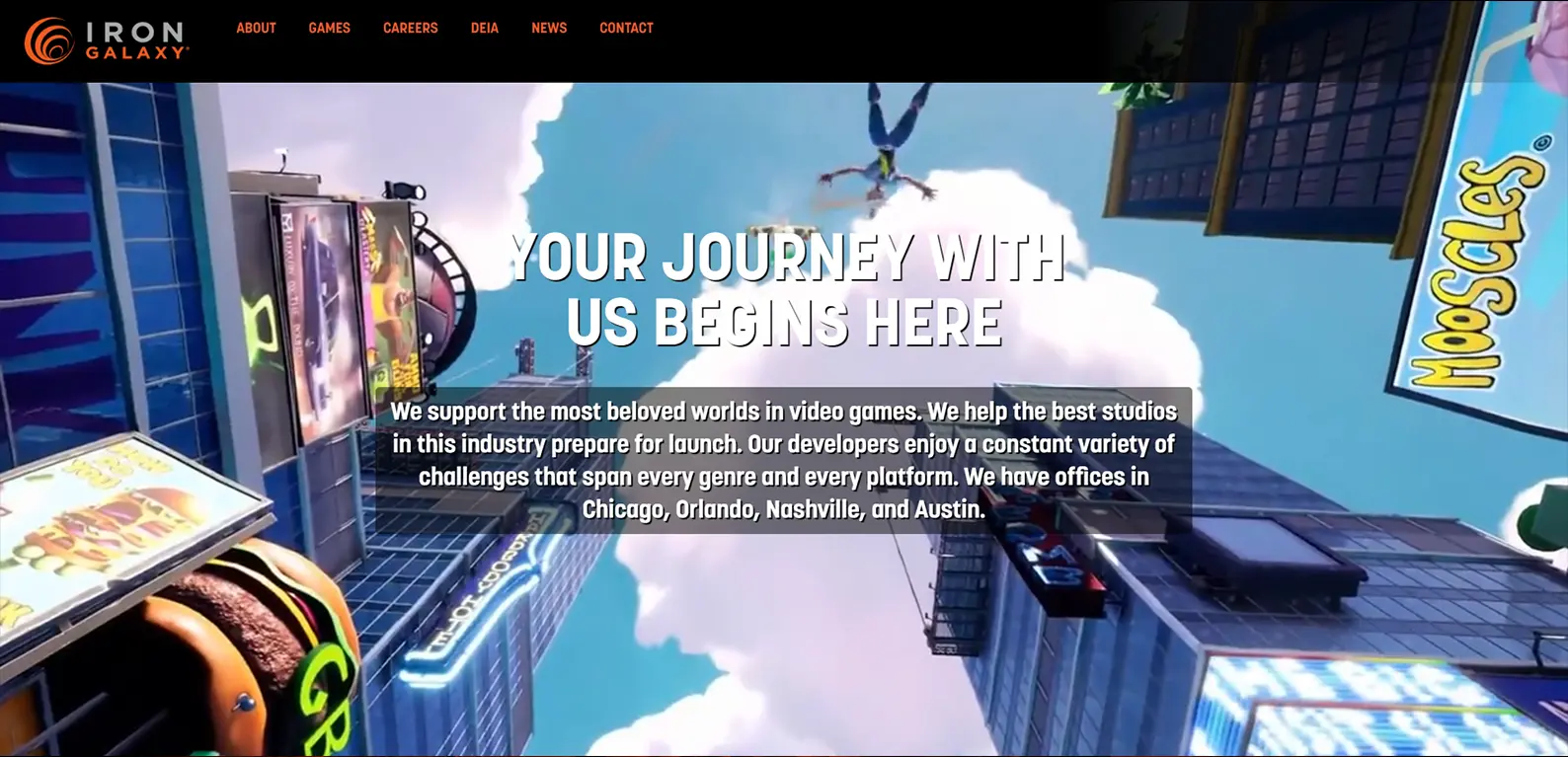
Iron Galaxy Studios has built its reputation as a technically driven co-development and porting studio, known for scaling complex projects across platforms and genres. From its Illinois base, the studio evolved from a support-focused team into a trusted co-development and lead development partner for major publishers, emphasizing adaptability, engineering depth, and production reliability.
Key Highlights
- Strong expertise in game porting and platform transitions
- Trusted co-development partner for AAA publishers
- Ability to lead full-cycle development when required
- Known for rescuing and stabilizing complex projects
- Experience across console, PC, and live-service games
- Independent studio with flexible engagement models
Pros & Cons
| Pros | Cons |
| High technical reliability for large-scale projects | Less focus on original IP creation |
| Flexible collaboration and co-development expertise | Limited visibility in narrative-led AAA games |
| Proven experience across multiple platforms |
Beyond brand recognition, choosing the right partner comes down to a few critical execution factors that often determine success or failure.
Evaluation Criteria for US-Based Game Studios
Choosing the right development partner is rarely about flashy demos. It is about finding a team that understands your business risks, timelines, and audience expectations while delivering reliable video game development services. With hundreds of US-based studios to choose from, clarity at the evaluation stage can save months of rework and prevent budget overruns later.
Here’s what actually matters when shortlisting a partner:
Technical depth that matches your platform goals
Whether you are building a mobile title, console experience, or immersive XR product, your partner should already have shipped games on those platforms and understand their performance constraints, store policies, and player behaviors.
Genre-relevant portfolio, not just big logos
A strong track record in your specific genre matters more than generic success. Look for studios that have solved similar design, scaling, or monetization challenges before.
Process clarity and communication discipline
The best studios operate with transparent milestones, regular builds, and structured feedback loops. This keeps scope creep under control and reduces late-stage surprises.
Post-launch readiness, not just launch delivery
Live games require tuning, updates, and technical support well after release. Teams that plan early deliver more stable, scalable products.
Cost realism and engagement flexibility
A reliable partner will be upfront about trade-offs between budget, scope, and timelines, instead of overpromising and renegotiating later.
Quality assurance baked into production
Testing should not be an afterthought. Multi-device QA, performance testing, and security validation are essential to ensuring a consistent player experience.
Scalability when priorities change
Your partner should be able to ramp teams up or down as production evolves, whether that means adding engineers, artists, or specialized consultants.
When evaluated through these lenses, the difference between average delivery and long-term success becomes very clear.
Looking for a game development partner that understands the US gaming market?
Our team works across time zones to support American studios with no handoff friction.
How US Game Studios Structure Engagements
Most projects do not fail because of talent gaps. They fail because the engagement model does not match the game’s scope, stage, or lifecycle. US studios typically structure work across four models: fixed-scope delivery for clearly defined projects, dedicated team or outstaffing for flexibility and continuity, co-development for shared ownership across phases, and LiveOps retainers for post-launch support. Many studios operating as a full-cycle game development company in USA benefit from proximity to publisher ecosystems, console manufacturers, and technology hubs — leading to faster iteration cycles, stronger compliance alignment, and smoother large-scale execution.
Signals of a Reliable US Development Partner
Most studios look capable on paper. The real differences surface once production pressure increases. Reliable studios behave differently long before problems appear.
Here are the signals that consistently separate dependable partners from high-risk ones.
- Shipped Products, Not Just Prototypes: Reliable studios can point to launched games, live products, or long-term collaborations. Risky teams rely heavily on demos, proofs of concept, or internal projects that never faced real players or scale.
- Production Discipline Over Promises: Clear milestones, build schedules, and ownership boundaries indicate maturity. Studios without structured delivery frameworks often struggle with scope drift, missed timelines, and late-stage surprises.
- Early Risk Identification: Dependable teams flag performance constraints, backend risks, or monetization limitations early. Risky partners delay difficult conversations until issues become expensive to fix.
- Post-Launch Readiness: Stable studios plan for analytics, updates, and support well before launch. Teams lacking LiveOps experience often disengage once the game ships, leaving critical gaps.
- Transparent Communication Loops: Reliable studios maintain clear escalation paths and reporting cadences. Poor communication often masks deeper operational issues that surface under pressure.
Reliability minimizes delivery risk. But the strongest outcomes come from partnerships that go beyond execution into true collaboration.
What Strong US Studio Partnerships Look Like
Strong partnerships aren’t defined by contracts or tooling. They’re defined by alignment under real-world constraints. The most successful collaborations treat development as a shared responsibility, not a transactional service.
Shared Ownership Across the Lifecycle
High-performing partnerships operate with joint accountability. Instead of task-based execution, teams align around outcomes, performance benchmarks, and player experience goals. This mindset shift is common among studios that support multi-year roadmaps.
- Decisions are validated collaboratively, not passed downstream
- Trade-offs are discussed early with technical and business context
- Both sides remain accountable through launch and beyond
Predictable Delivery Under Pressure
Reliable partners maintain delivery cadence even as scope evolves. They adapt without destabilizing timelines by planning buffers, validating assumptions early, and protecting core systems from last-minute changes.
- Regular playable builds reduce late-stage surprises
- Engineering and art pipelines stay synchronized
- Release readiness is treated as a process, not an event
Post-Launch Continuity and Scale
Successful studios don’t disappear after launch. They plan for updates, analytics, and scaling from day one, which is critical for any live or monetized game.
- Live metrics inform roadmap decisions
- Performance tuning continues after release
- Teams remain available as priorities shift
Technology Choices That Match Reality
Strong partners recommend tools and architectures that align with the game’s lifecycle, not trends. This matters especially when evaluating studios claiming emerging tech expertise without proven production exposure.
- Infrastructure choices prioritize stability
- New tech is adopted selectively, not blindly
- Long-term maintenance is factored into decisions
Flexible Scaling Without Disruption
The best partnerships scale teams up or down without breaking workflows. This flexibility is essential when working across platforms or transitioning between production phases.
- Resources adjust without knowledge loss
- Documentation supports continuity
- New contributors integrate smoothly
When partnerships function this way, the difference between delivery and long-term success becomes clear. This is where experienced studios separate themselves from the rest.
Juego Studios has shipped games for clients across North America.
Whether you need a full build or targeted co-development support, we deliver on your timeline.
Working with Juego Studios
We’ve covered our capabilities, portfolio, and engagement models in detail on our website, including the 200+ titles we’ve shipped across platforms. One thing worth noting here: we operate as both a full-cycle provider and a co-development partner, which means we can step in at different stages of production, not just at the start.
Conclusion
Choosing the right development partner ultimately comes down to trust, execution capability, and long-term alignment. The studios featured in this list represent the breadth of talent shaping interactive entertainment in the United States, each with distinct strengths across platforms, genres, and technologies.
Whether you are launching a new IP or scaling an existing product, working with a proven US-based development studio can significantly reduce risk, accelerate delivery, and improve player outcomes. With the right partner, your game moves from an idea to a sustainable product built to compete in a crowded global market.
Frequently Asked Questions
The ecosystem of US game development studios is diverse, spanning different platforms, technologies, and engagement models. Understanding these categories helps you place this market’s studios into the right bucket for your product.
- Mobile-first studios focused on iOS and Android gameplay, monetization, and live updates
- Blockchain-focused teams building NFT-enabled and decentralized gaming experiences
- Full-cycle providers handling concept-to-launch delivery across platforms
Many teams struggle not because of technology gaps, but due to misalignment during partner selection. Even when evaluating top game development companies in USA, these mistakes frequently surface.
- Choosing studios based only on brand recognition rather than relevant genre experience
- Underestimating the importance of post-launch support and LiveOps readiness
- Ignoring scalability needs when the game enters production or live growth phases.
- Focusing solely on cost without assessing long-term delivery stability
- Overlooking the communication structure and decision ownership during development
While remote collaboration is now standard, location continues to influence access to talent, platform partnerships, and production maturity. Many video game development companies in USA benefit from proximity to publisher ecosystems, console manufacturers, and technology hubs, which often leads to faster iteration cycles, stronger compliance alignment, and smoother large-scale execution.
US studio pricing typically scales with project scope, platform, and technical complexity rather than following one fixed model. Simple mobile games may start in the lower five-figure range under a fixed-scope model; mid-scale multiplayer or cross-platform titles often move into six figures with milestone-based billing; and AAA or highly customized projects — especially with advanced graphics, backend systems, or LiveOps support — commonly run on a dedicated-team or time-and-materials model that can exceed six figures substantially.
Development timelines typically range from a few months to over a year. A basic mobile game can take 3–6 months, while larger PC or console titles may require 12–24 months, depending on content depth, multiplayer features, and testing requirements. US-based studios often follow structured production pipelines, which help reduce delays during later stages.
US mobile specialists usually focus on mobile-first experiences — Android and iOS games, live updates, and monetization systems. Full-cycle studios, by contrast, typically work across PC, console, and mobile, and may prioritize narrative depth, graphics fidelity, or large-scale multiplayer systems alongside mobile work. Some studios cover both under one roof, but their core focus and default engagement model usually differ.
Yes, many mobile game development companies in USA provide LiveOps support as part of their services. This includes in-game events, performance tuning, analytics integration, content updates, and monetization optimization through ads, in-app purchases, and seasonal content strategies.
Most web3 game development companies in USA are capable of building traditional games as well. While their expertise often includes blockchain integration, NFTs, or decentralized economies, the core game development skills—such as gameplay programming, art production, and multiplayer systems—remain the same across blockchain and non-blockchain projects.
The choice depends on priorities such as budget, communication needs, compliance requirements, and production scale. Offshore teams may offer lower hourly rates, while US-based game development companies typically provide stronger alignment with time zones, legal frameworks, platform certifications, and long-term LiveOps planning. For complex or market-facing products, many teams prefer US-based partners for tighter collaboration and accountability. Some offshore studios address this directly by operating a dedicated U.S. entity for contracting and invoicing, combining offshore production economics with U.S.-based legal and procurement simplicity.
Related Posts
Have a Game Idea but No Development Team? How to Get It Built
This guide walks you through every realistic way to get your game made, what each one really costs you in time and control, and how to pick the right one before you spend a dollar finding out the hard way.
Top 10 Game Development Companies in USA (2026 Update)
In this blog, we’ll discuss the top 10 game development companies in USA, along with how to evaluate them beyond surface-level claims, so you can identify partners who actually align with your vision, technical needs, and long-term growth goals.

Top Game Development Companies in 2026: 10 Global Leaders Compared
Most game projects don’t fail because the idea was weak. They fail because the development partner couldn’t scale, adapt, or deliver when pressure peaked.