


 Unity
Unity Unreal
 Godot
Godot
 Mobile
 PC
PC Console
 Full-Cycle
 Co-Development
 Outstaffing




-
 Game Development
 Sep 23rd, 2026
- Share:
Table of Contents
Most game projects don’t fail because the idea was weak. They fail because the development partner couldn’t scale, adapt, or deliver when pressure peaked.
You’re likely comparing studios across regions, budgets, and delivery models, all promising similar outcomes. What’s harder is spotting which teams can actually handle production complexity, live operations, and long-term growth.
As player expectations rise and global economics tighten, game development has become less forgiving. The strongest studios on this list now stand apart for their depth of execution, process maturity, and real-world delivery experience.
In this blog, we break down ten global studios shaping game production in 2026. You’ll understand who they serve best, how they operate, and how to choose a partner that fits your goals.
TL;DR - Key Takeaways & Comparison at a Glance
The strongest studios in 2026 are the ones that demonstrate production ownership across full-cycle and co-development models, with proven ability to manage LiveOps, backend stability, multiplayer systems, and multi-platform pipelines. “Strongest” in this context reflects execution depth, milestone accountability, and post-launch scalability.
Key Takeaways
- Studio capability matters more than geography. In 2026, the biggest differentiator among the strongest studios is their ability to handle LiveOps, backend stability, and multi-platform pipelines, not just build initial gameplay.
- Full-cycle and co-development models reduce execution risk. Teams that own production milestones, QA, and post-launch support prevent costly resets when scope or timelines shift.
- Juego Studios operates as a co-development and full-cycle partner, making it a strong fit for complex, multi-platform productions that require shared execution ownership and long-term LiveOps scalability.
- AAA art alone is not enough. Many studios excel in visuals but lack the infrastructure to support scalable systems, multiplayer, and live economies, which now define long-term success.
- Post-launch readiness should be evaluated before development starts. Studios with proven update pipelines and analytics workflows outperform teams that treat LiveOps as an afterthought.
- Use the comparison table below to shortlist based on delivery model, not brand size. The right partner depends on your production complexity, not the studio’s headcount.
Comparison at a Glance – Top Studios (2026)
| Name | Location | Founded | Employees | Core Services/ Engagement | Popular Games | Ratings
(Glassdoor) |
Best For |
| Juego Studios | India, USA, UK, KSA | 2013 | 250+ | Full-cycle Game Development
Co-Development AAA Game Art & Animation Mobile & Console Games Unity & Unreal Development LiveOps & Resource Augmentation |
NBA 2K21
School of Dragons Ghostbusters Battle Gems |
4.0/5 | Long-term co-development, AAA art, complex systems, LiveOps |
| Epic Games | Cary, North Carolina, USA | 1991 | 1,001–5,000 | Game Development; Unreal Engine; Publishing; Epic Online Services; Epic Games Store | Fortnite; Unreal Series; Gears of War; Rocket League | 3.7/5 | Engine leadership and large-scale live-service ecosystem ownership |
| Electronic Arts (EA) | Redwood City, California, USA | 1982 | 10,001+ | AAA Development; Publishing; Live-Service Franchises; Mobile & Console Games | Battlefield; The Sims; EA Sports FC; Madden NFL; Apex Legends | 3.9/5 | Global AAA publishing and franchise-driven ecosystems |
| Stepico | Lviv, Ukraine | 2014 | 51–200 | Full-cycle Development; Dedicated Teams; Art Production; Live Game Operations; Blockchain Games | Guild Of Guardians; Discovery; MetaPopit; Loaded Lions: Mane City | N/A | Mid-sized full-cycle development with flexible engagement |
| Pingle Studio | Dnipro, Ukraine | 2007 | 400+ | Full-cycle Development
Porting & Optimization Multi-platform Support |
Five Nights at Freddy’s: Security Breach | 4.3/5 | Cross-platform launches and technical porting |
| Red Apple Technologies | New Delhi, India | 2010 | 201–500 | Game Development; Mobile & Online Games; Blockchain & NFT; Enterprise Solutions | Equestriad World Tour; Ragey Birds; Merge City; Fishing Deep Sea Simulator 3D | 4.4/5 (Google) | Cost-conscious multi-domain development |
| Cubix | West Palm Beach, USA | 2008 | 300+ | Game Development
Blockchain & NFT Games AR/VR Experiences |
Dragon Zoom
Cloud of Venus |
3.3/5 | Web3, blockchain, and gamified digital products |
| Payload Studios | London, England | 2013 | 11–50 | Game Development; Self-Publishing; Community Management | TerraTech; TerraTech Worlds; TerraTech Legion | 3.7/5 | Independent IP-driven and community-focused production |
| Moonmana | Santa Cruz de Tenerife, Spain | 2008 | 60–100 | Full-cycle Game Development
Art & Animation Publishing Support |
Legendary Dwarves
Ultimate Pirates |
4.5/5 | Boutique studios and IP-driven projects |
| Fgfactory | Kharkiv, Ukraine | 2010 | ~100 | Game Development
Gamification Solutions Blockchain Games |
Racer Club
NFT Islands |
4.7/5 | Cost-effective development and enterprise gamification |
Global Economic Landscape for Game Development in 2026
The global gaming economy is expanding faster than most digital sectors, reshaping how games are built, funded, and sustained. For studios competing at the highest level, scale and execution now matter as much as creativity.
The game development market is projected to reach USD 3.45 billion by 2030, growing at a 13.54% CAGR. At the same time, the metaverse gaming market is expected to reach USD 119.2 billion by 2028, while the AR and VR software market is projected to reach USD 77.5 billion over the same period. These shifts are pushing demand toward studios that can handle advanced technology, long-term LiveOps, and multi-platform delivery.
As budgets rise and timelines tighten, the strongest studios stand out by managing complexity, reducing production risk, and supporting games well beyond launch. This economic backdrop explains why partner selection has become a strategic decision rather than a creative one. Here’s how the top game 10 studios below compare when you look at real operational capability.
The 10 Studios Compared
Selecting the right studio in 2026 means finding teams that can deliver reliable, scalable online game development across platforms and markets. This list highlights ten global studios known for consistent execution, technical depth, and long-term delivery strength.
1. Juego Studios

Juego Studios is a video game development company widely regarded as one of the strongest studios for teams that need more than task-based support. Its full game development services are built around true co-development, sharing ownership across production stages rather than limiting itself to isolated delivery roles. This approach reduces execution risk for projects that demand consistency, scale, and long-term support.
What sets Juego apart is its production maturity. From AAA-grade art pipelines to system-heavy multiplayer and LiveOps-driven titles, the studio brings proven structure to complex builds. Its long-standing collaborations with global publishers like Disney, Sony, Warner Bros., and Tencent reflect trust earned through repeat delivery, not short-term engagement.
Key Highlights
- Full-cycle game development capability spanning concept, production, launch, and LiveOps
- Deep expertise in AAA game art, UI systems, characters, and large-scale environments
- Proven delivery across mobile, PC, console, XR, and emerging platforms
- Strong Unreal and Unity experience across multiplayer and simulation-heavy projects
- ISO 9001 certified with enterprise-grade security compliance
- Scalable teams supporting long-term roadmaps and live-service operations
- Recognized by Forbes India, CIO Outlook, Silicon India, and industry award bodies
- Trusted partner for licensed IPs and globally distributed production teams
Pros vs Cons
| Pros | Cons |
| Strong co-development model with shared production accountability | Not positioned for ultra-low-budget or hobby-scale projects |
| High production maturity across art, engineering, and LiveOps | Engagement model favors long-term collaboration over short sprints |
| Proven experience with global publishers and licensed IPs | |
| Scalable teams without delivery continuity risks |
2. Epic Games

Epic Games is one of the most influential companies in modern interactive entertainment, combining large-scale game development with proprietary engine technology and digital distribution infrastructure. Founded in 1991 and headquartered in Cary, North Carolina,
Epic operates as both a developer and a platform owner, shaping industry standards through Unreal Engine and ecosystem tools rather than functioning as a traditional outsourcing or co-development studio.
Key Highlights
- Creator and steward of Unreal Engine, adopted across AAA gaming and multiple non-gaming industries
- Operates Fortnite, one of the world’s largest live-service games
- Owns and manages Epic Games Store and Epic Online Services ecosystem
- Global footprint with 40+ offices supporting engine licensing and development
Pros vs Cons
| Pros | Cons |
| Controls core engine technology used across the industry | Primarily platform-driven rather than service-driven |
| Proven expertise in operating global-scale live-service games | Limited relevance for teams seeking outsourcing execution |
| End-to-end ecosystem spanning engine, services, and distribution | |
| Cross-industry adoption beyond gaming |
3. Electronic Arts (EA)

Electronic Arts is one of the world’s largest AAA publishers and developers, headquartered in Redwood City, California. Founded in 1982, EA operates multiple internal studios and manages globally recognized franchises.
Its production model is built around large-scale publishing, live-service ecosystems, and annualized franchise releases rather than third-party execution support.
Key Highlights
- Controls major global studios including BioWare, DICE, Respawn, and Criterion
- Operates a live-service-driven publishing strategy across sports and AAA titles
- Sustains long-running franchises with annual release cycles
- Global studio network supporting cross-platform launches
- Strong publishing infrastructure for console, PC, and mobile
Pros vs Cons
| Pros | Cons |
| Extensive AAA franchise portfolio | Operates through owned IP rather than client collaboration |
| Mature live-service monetization strategy | Engagement structure does not support third-party production |
| Global publishing reach | |
| Multi-studio development capacity |
4. Stepico

Stepico is a European full-cycle development studio offering end-to-end production and phase-specific engagement across mobile, PC, and console.
The company operates with a balanced structure that supports both complete project ownership and modular service collaboration. Its experience spans gameplay engineering, live operations, art production, and blockchain-enabled projects.
Key Highlights
- Supports dedicated team models for long-term collaboration
- Active in blockchain and NFT-enabled game production
- Provides infrastructure support, monitoring, and optimization
- Delivers across Windows, macOS, and Linux platforms
- Experience across more than 65 shipped titles
Pros vs Cons
| Pros | Cons |
| Flexible engagement structures across full-cycle and modular delivery | Smaller operational scale compared to enterprise-level AAA studios |
| Cross-engine capability in Unity and Unreal | Limited public association with a globally recognized licensed IP |
| Live operations capability integrated into the development cycle | |
| Balanced art and engineering service mix |
5. Pingle Studio
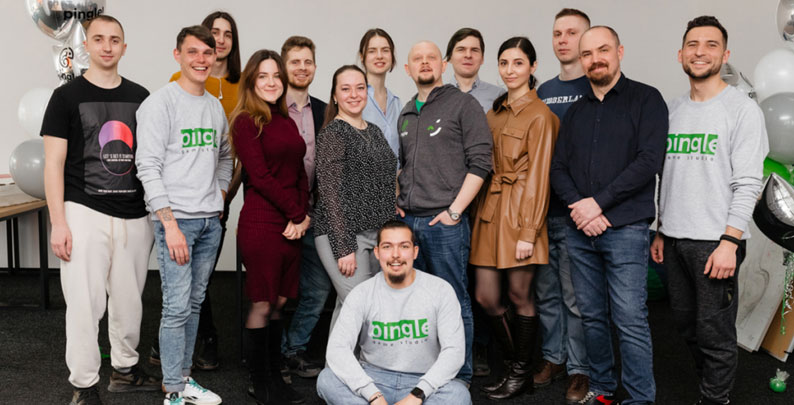
Pingle Studio is recognized for its technical reliability across platforms, particularly in projects that require careful performance tuning and platform-specific adaptation for online game development. The studio often works behind the scenes, helping publishers extend reach without compromising gameplay consistency.
Its strength lies in execution clarity. By integrating directly with client teams, Pingle supports complex launches across PC, console, and mobile ecosystems, making it a dependable partner when technical precision is non-negotiable.
Key Highlights
- Strong expertise in cross-platform porting and optimization
- Experience across current and legacy console generations
- Transparent collaboration model with direct client integration
- Focus on maintaining performance parity across platforms
- Capable of handling full-cycle development alongside porting
- Well-suited for technically demanding releases
Pros vs Cons
| Pros | Cons |
| High reliability in multi-platform delivery | Limited emphasis on original IP creation |
| Strong technical depth across hardware ecosystems | Less visible focus on large-scale LiveOps |
| Clean handoff between platforms without gameplay loss | |
| Efficient execution under tight timelines |
6. Red Apple Technologies

Red Apple Technologies operates as a diversified development organization delivering gaming, software, and enterprise solutions. Its structure supports mobile, online, and emerging-technology projects, including blockchain and AI.
The company positions itself as a multi-domain execution partner serving both gaming and non-gaming industries.
Key Highlights
- Delivered 500+ projects across industries
- Active in blockchain, NFT, AI, IoT, and metaverse-related solutions
- Multi-framework development capability, including Unity and React Native
- Supports both game and enterprise software initiatives
Pros vs Cons
| Pros | Cons |
| Broad technical stack across gaming and enterprise | May not fit studios seeking deep niche engine specialization |
| Strong experience in emerging technologies | A diversified service model may dilute gaming-exclusive focus |
| High project volume delivery history | |
| 360-degree service offering |
7. Cubix

Cubix has steadily earned its place among the top game development companies by combining strong technical execution with a clear focus on emerging business models like blockchain, Web3, and immersive experiences.
What sets Cubix apart is its ability to blend game development with enterprise-grade software thinking. This makes it a practical partner for studios and brands building games that also serve training, simulation, or engagement-driven business goals.
Key Highlights
- Strong specialization in blockchain, NFT, and Web3 game mechanics
- Experience across mobile, PC, console, and immersive platforms
- Proven delivery of gamified products for both gaming and enterprise use
- Agile delivery model with transparent project tracking
- Early prototyping used to reduce technical and commercial risk
- Well-suited for experimental and monetization-focused projects
Pros vs Cons
| Pros | Cons |
| Deep expertise in blockchain and emerging tech | Less focused on traditional AAA console-first titles |
| Blends gaming with enterprise and simulation use cases | Best fit for tech-driven concepts rather than narrative-heavy games |
| Flexible engagement models and scalable teams | |
| Strong support for prototyping and MVP validation |
8. Payload Studios
Payload Studios is an independent London-based developer focused on internally developed IP and community-driven production.
The studio emphasizes long-term engagement with its player base while building sandbox and construction-oriented gameplay experiences. Its structure reflects an indie-first philosophy centered around ownership and creative autonomy.
Key Highlights
- Creator of the TerraTech franchise
- Community-driven development approach
- Operates the Tentacle Zone incubator and co-working initiatives
- Experience across PC, console, and mobile platforms
- Supports early-stage developers through structured programs
Pros vs Cons
| Pros | Cons |
| Strong ownership of original IP | Not structured for external full-cycle production services |
| Community-led iteration model | Primarily focused on internally owned titles |
| Independent studio agility | |
| Award-winning studio recognition |
9. Moonmana
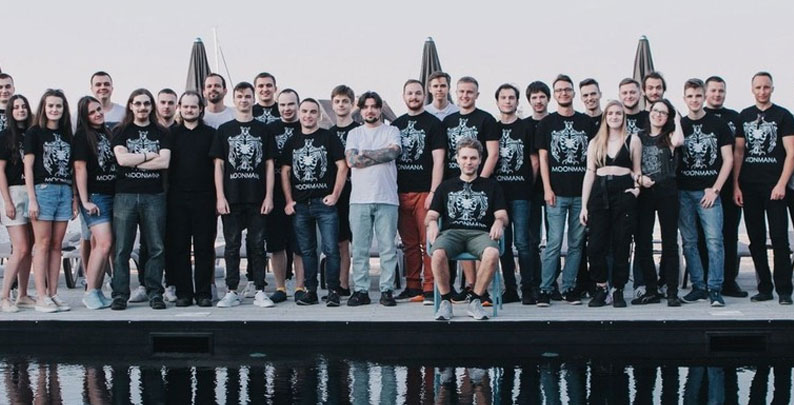
Moonmana is often recognized as one of the best game development companies for teams that value close collaboration, creative flexibility, and end-to-end ownership. As a boutique studio with real publishing experience,
The studio is often selected by teams that value flexibility, close communication, and the ability to adapt quickly as design or market conditions change mid-production.
Key Highlights
- Balanced experience across client work and own IPs
- Strong focus on full-cycle development and LiveOps
- Proven ability to ship and operate cross-platform titles
- Agile processes supported by senior creative involvement
- High client retention driven by long-term partnerships
- Suitable for complex mechanics and mid-sized productions
Pros vs Cons
| Pros | Cons |
| High-touch collaboration and direct access to the core team | Limited scale for very large AAA productions |
| Commercial insight from shipping own IPs | A smaller team can constrain parallel development |
| Flexible workflows and fast decision-making | |
| Strong post-launch support |
10. Fgfactory

Fgfactory is known for delivering practical, cost-conscious solutions without sacrificing production quality. The studio supports a wide range of clients, from game publishers to enterprises seeking gamified experiences.
Its versatility across games, applications, and interactive products makes it particularly attractive to teams seeking execution efficiency rather than extensive creative experimentation.
Key Highlights
- Strong focus on cost-efficient production models
- Experience across mobile, PC, web, and blockchain games
- Proven delivery of gamification for non-gaming industries
- Full-cycle support, including design, art, and release readiness
- Comfortable working with SMEs and mid-sized teams
- Broad genre exposure across commercial projects
Pros vs Cons
| Pros | Cons |
| Cost-effective delivery with predictable outcomes | Not ideal for high-risk experimental titles |
| Good fit for gamification and applied game use cases | Creative ambition varies by project |
| Flexible engagement for smaller teams | |
| Reliable long-term outsourcing partner |
Once you understand how studios differ in scale, specialization, and delivery models, the next step is understanding why this decision carries long-term business consequences, not just short-term development impact.
Why This Choice Matters
Selecting from the top game development companies goes far beyond technical execution. The gaming industry now runs on AI-driven systems, live economies, and multi-platform players, where the wrong partner can create long-term risk instead of momentum.
Here’s why the choice truly matters:
- Technical Integration Excellence: Games must perform consistently across mobile, PC, console, and emerging platforms. Experienced studios build scalable systems that prevent performance gaps and technical debt.
- Speed Without Sacrifice: Release windows are tighter, but quality expectations are higher. The best game developer companies accelerate delivery while maintaining gameplay depth and visual polish.
- Risk Management: Budgets leave little room for error. Proven workflows and early validation reduce delays, rework, and production drift.
- Scalable Expertise: Game scope evolves quickly. Strong partners adjust teams and capabilities without slowing progress.
- Post-Launch Readiness: Modern games depend on LiveOps, updates, and engagement strategies that sustain player retention after launch.
Choosing the right partner isn’t a procurement decision. It’s a strategic one that directly shapes how well your game launches, scales, and competes.
Conclusion
In 2026, selecting from the top game development companies is no longer just a creative decision. It is a production strategy choice that directly affects timelines, scalability, player retention, and long-term operating costs. Studios that combine technical depth, structured pipelines, and LiveOps readiness consistently outperform teams that focus only on initial builds. The strongest partnerships are built on delivery ownership, not just service availability. When choosing your development partner, prioritize production maturity, clear communication, and long-term support capabilities. That is what ultimately determines whether your game simply launches or continues to grow in a competitive market.
Frequently Asked Questions
We compared these studios on production ownership, LiveOps readiness, and technical integration — not just creative capability, since a strong portfolio doesn’t guarantee delivery reliability once a project is underway.
Day-to-day, the studios in this comparison differ less in what they claim to do — turn a playable idea into a launched, scalable product — and more in how they structure that work: some run full production ownership end-to-end, others plug into an existing team for a defined slice of the pipeline. This typically includes game design, engineering, art production, testing, platform optimization, and post-launch support.
Some studios handle full-cycle development, owning everything from concept to LiveOps. Others operate as co-development partners, integrating into your internal team to solve specific production challenges. Outsourcing-focused companies typically provide specialized services such as art, porting, or QA without owning the full roadmap.
The right fit depends on how much ownership, speed, and risk control you want across production.
Shortlisting the right studio starts with understanding how studios actually operate. In 2026, most teams specialize by production role, not just by engine or platform.
- Full-cycle studios: Own the entire pipeline from concept to launch and LiveOps. Best when you want one accountable partner instead of managing multiple vendors.
- Co-development partners: Work alongside internal teams and take ownership of defined systems or milestones. Ideal when you need scale without giving up creative control.
- Art and VFX specialists: Focus on characters, environments, UI, animation, and cinematics. Used when gameplay is stable but visual quality needs elevation.
- LiveOps-focused studios: Handle post-launch updates, balancing, events, and retention. Critical for games designed to grow after release.
- Emerging tech specialists: Build around Web3, XR, and experimental multiplayer systems. Useful for innovation, but scalability should be validated early.
Before shortlisting any company from this list, verify how they handle production ownership and alignment, not just technical capability—most project problems trace back to misaligned expectations on scope, communication cadence, and decision-making authority, rather than a shortage of technical skill. Teams that end up working with the strongest studios usually avoid these mistakes:
- Judging by portfolios alone: Strong visuals don’t guarantee production discipline. Ask how teams handle milestones, iterations, and late-stage changes.
- Budget misalignment: Hiring a studio built for enterprise-scale complexity or pushing a lean team into an AAA scope both lead to delays.
- Ignoring production scale: Some studios excel at prototypes but struggle with scaling parallel workflows, certification, or content volume.
- Treating LiveOps as an afterthought: Retention systems and update pipelines must be planned during development, not after launch.
- Underestimating communication fit: Clear ownership, predictable reporting, and escalation paths matter more than constant meetings.
Even with remote pipelines, online game development still carries real-world constraints. Where a studio operates affects speed, compliance, and long-term coordination, especially when working with top studios across regions.
- Time-zone alignment: Overlapping work hours reduce handoff delays during builds, reviews, and live issue resolution.
- Regulatory and platform compliance: Studios familiar with regional data laws, ratings boards, and platform certifications avoid costly resubmissions.
- Cultural and communication fit: Shared working norms and production language minimize friction during creative and technical decision-making.
- Cost versus control trade-offs: Lower costs don’t always mean efficiency. Proximity can improve oversight and iteration quality for complex systems.
Use this comparison to build a shortlist by looking past service lists to signals of delivery reliability—production ownership model, technical integration approach, and LiveOps readiness—then take that shortlist into deeper conversations with two or three companies rather than picking straight from the list.
- Ask how they handle change: Strong teams handle scope shifts without collapsing timelines.
- Look for production ownership: Clear accountability for systems, milestones, and approvals matters more than team size.
- Validate LiveOps readiness: Ask how updates, balancing, and player feedback loops are planned for the pre-launch period.
- Check communication structure: Consistent reporting, decision logs, and escalation paths reduce risk during peak production.
- Watch for red flags: Vague timelines, overpromising on scope, or unclear ownership often signal downstream issues.
Timelines in online game development vary widely based on scope, platform mix, and LiveOps complexity. A simple mobile title may take months, while multi-platform or service-driven games can span years.
- Pre-production matters: Studios that invest early in prototyping, pipelines, and technical validation avoid costly mid-project resets.
- Platform count drives duration: Supporting PC, console, and mobile simultaneously adds certification, optimization, and testing cycles.
- LiveOps planning affects launch dates: Games designed for post-launch updates require additional backend, analytics, and tooling before release.
Not all studios operate the same way, and the engagement model directly impacts ownership and risk.
- Full-cycle development: The studio handles everything from concept through launch and support, making it well-suited for teams without internal production capacity.
- Co-development partnerships: Studios integrate with your internal team, owning specific systems, art pipelines, or features while sharing responsibility.
- Outsourcing models: Task-based execution works for well-defined needs but requires strong internal management to avoid fragmentation.
Engine familiarity often determines production velocity and technical stability.
- Unity and Unreal depth matters: Experienced studios understand engine limitations, optimization paths, and version upgrade risks.
- Custom tooling experience: Strong teams build internal tools to accelerate content creation and QA.
- Cross-engine adaptability: Studios that’ve shipped across engines reduce dependency risks as projects evolve.
Related Posts
Have a Game Idea but No Development Team? How to Get It Built
This guide walks you through every realistic way to get your game made, what each one really costs you in time and control, and how to pick the right one before you spend a dollar finding out the hard way.
Top 10 Game Development Companies in USA (2026 Update)
In this blog, we’ll discuss the top 10 game development companies in USA, along with how to evaluate them beyond surface-level claims, so you can identify partners who actually align with your vision, technical needs, and long-term growth goals.
Top Game Development Companies in 2026: 10 Global Leaders Compared
Most game projects don’t fail because the idea was weak. They fail because the development partner couldn’t scale, adapt, or deliver when pressure peaked.