


 Unity
Unity Unreal
 Godot
Godot
 Mobile
 PC
PC Console
 Full-Cycle
 Co-Development
 Outstaffing



-
 Gaming Industry
 Dec 19th, 2022
- Share:
Table of Contents
Types of Gamers and The Bartle Player Taxonomy
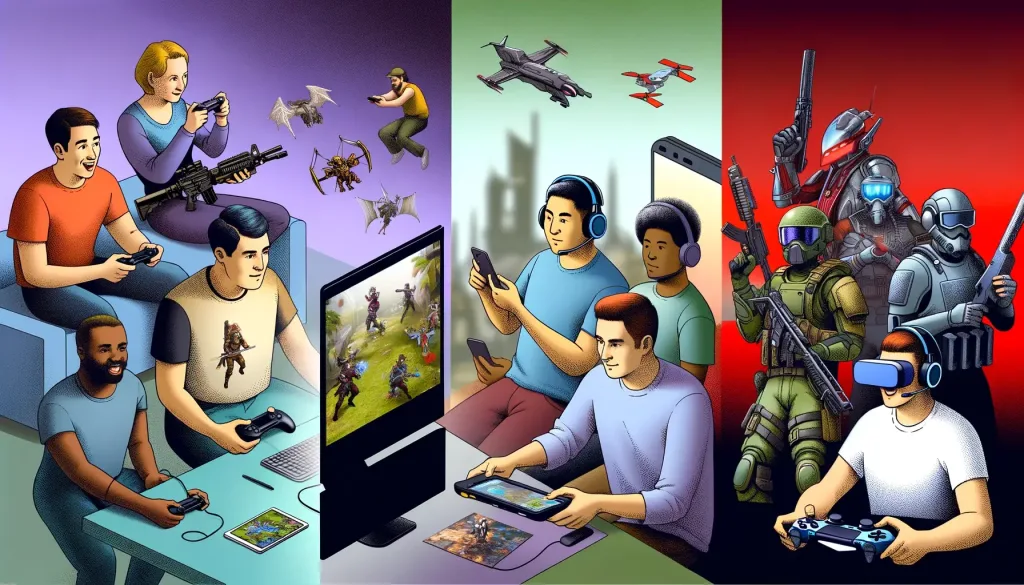
Do you ever wonder why you enjoy some games and not others? The answer lies in the different types of gamers that exist. According to Bartles, there are various gamer levels: Achievers, Explorers, Socializers, and Killers. This blog post will discuss each type of gamer and give examples of games that appeal to them. So, if you want to understand why you prefer certain games, keep reading!
Understanding player types is useful only when it shapes real design choices. If you’re unsure which player motivations your game should prioritize, it’s worth talking early
Different Types of Gamers
The Online Gamer
Online gamers are people who primarily play online games, either alone or with friends. Online gamers often research game services to create custom game experiences. They typically prefer team-based competition and collaboration, as it allows them to form relationships with other players. These preferences are often shaped by distinct gamer archetypes, which influence how players engage with different gaming elements and social dynamics.
With the rise of online games, these gamers have become more popular. Game developers create their unique gaming experience so that gamers are able to join a community and play with others. Among the different types of video game players, online gamers tend to be very competitive, always trying to get better at their favourite game while often outplaying other opponents. iOS & Android game developers are exploring many creative ideas & helping the gamers to get engaging & competitive gameplay.
The Console Gamer
Console gamers are those who prefer traditional types of gaming systems such as Xbox, PlayStation, or Nintendo systems. These gamers usually have a set group of friends they play with regularly and may even join tournaments or leagues dedicated to the console they own. Unlike online gaming players, who often engage with large communities and global multiplayer experiences, console gaming can be more solitary and is often enjoyed even while disconnected from the internet.
The Casual Gamer
Casual gamers don’t take gaming too seriously but still enjoy playing it for fun. These gamers usually opt for simpler games requiring less time commitment than their hardcore counterparts. You can find a casual gamer playing on console systems like the Nintendo Switch and PC-based games. Casual gamers enjoy games with lighthearted themes, such as those in the famous Mario and Pokemon franchises.
The Hardcore Gamer
Hardcore gamers take their gaming seriously and are very passionate about it. They often focus on complex, deep storylines that require a lot of time investment. You can find these types of gamers playing highly demanding video games like Grand Theft Auto or Dark Souls, which require excellent reflexes and strategic thinking. As well as being interested in intense narrative experiences, hardcore gamers also spend time competing online against other players for glory and bragging rights.
The Armchair General
The Armchair General types of gamers focus on strategy games, such as the beloved Civilization series. They identify with the role of a commander and take personal pride in achieving victory.
The Observer
The Observer is someone who loves to watch gameplay, streams and specific types of shows that are related to the gaming world. They may not be actively playing video games, but they enjoy watching others have fun! Some Observers even offer their opinion on how a game should be developed or improved upon by game developers.
The Storyteller
This game is about discovering the different stories presented in each video game. They’re keen on following an adventure from start to finish and exploring every intricate detail within it. In addition, these players love to talk about their experience with others who have also experienced the same game. They need development services that can create captivating stories and unique experiences.
About Bartle Player Taxonomy
Bartle Player Taxonomy is a way to categorize types of gamers according to their preferences and playing styles. Based on Bartle’s player types, it divides gamers into four main categories: Achievers, Explorers, Socialisers, and Killers. These categories are used in development services as a tool for understanding different types of gamers and developing games that cater to their respective preferences.
Evolving Gamer Archetypes: Beyond Bartle’s Taxonomy
Richard Bartle’s taxonomy, Achievers, Explorers, Socializers, and Killers, laid the foundation for understanding player motivations in early multiplayer environments. However, as games have grown more complex and players more diverse, newer models have emerged to reflect the evolving gaming landscape more accurately.
The Quantic Foundry Gamer Types Model
One of the most well-regarded modern frameworks is the Quantic Foundry model, based on psychological motivations and real user data. It expands player types into nine unique profiles:
- Slayers – Driven by combat and destruction
- Skirmishers – Enjoy quick, fast-paced gameplay
- Bards – Love storytelling and narrative-rich worlds
- Architects – Passionate about world-building and creativity
- Guildmasters – Thrive in social organization and leadership
- Daredevils – Seek thrills and high-risk gameplay
- Strategists – Prefer tactical challenges and mastery
- Ninjas – Value stealth and precision
- Collectors – Motivated by unlocking and completing game content
These profiles go beyond traditional PvP or exploration labels and provide multi-dimensional insights into how players approach games.
Why It Matters
Understanding this spectrum helps game developers:
- Design features that match real motivational drivers
- Balance gameplay elements to satisfy more than one audience segment
- Identify underserved archetypes and carve unique niches
Types of Bartle Player
Achievers
Achievers are the types of gamers that strive to gain rewards, reach higher levels and increase their in-game score. They set goals for themselves and take great satisfaction when they complete them. Achievers are typically more competitive and enjoy playing with other players where they can prove their skills.
These types of gamers will often look for development services that offer features such as leaderboards, badges, awards and achievements. As these gamers progress throughout the game, they become invested in their character’s progress and don’t want to lose any progress made if restarting a game or switching platforms.
Killers
Killers are gamers who enjoy the competition and thrill of playing against other players in a game. They prefer games that require skill and strategy, such as first-person shooters or real-time strategy games. Killers often strive to be the best among their peers and can be highly competitive in gaming.
For them, winning is very important, and they derive satisfaction from achieving victory over opponents. Game development services should focus on creating engaging gameplay experiences with strong PvP elements for this player.
Socializers
Socializers are gamers who enjoy playing video games to engage in social activities. These players are interested in building relationships and interacting with others while playing games, such as forming clans or guilds, making friends, or joining virtual communities. Socializers tend to be more focused on the social aspects of gaming than the actual mechanics of the game.
Therefore, game developers looking to provide services to this type of player should focus on providing features that encourage interaction between players, like chat systems and clan support tools.
Explorers
Explorers are types of gamers that love uncovering new places, items and activities in digital games. They are the types of players who will spend hours exploring game maps, searching for hidden treasures or unlocking exclusive rewards. Explorers are players who often make the most use of development services such as custom character creation or virtual reality worlds.
Game designers constantly seek to create content that appeals to this type of player by adding extra layers to their game’s environment or creating a solid narrative around exploration.
Leveraging Gamer Profiles in Game Design Strategy
Knowing the types of players in your audience is just the beginning. Applying these insights to your game design strategy is what turns a good game into a highly engaging and successful one.
1. Designing for Core Motivations
Each gamer type seeks different experiences. Here’s how you can align features with player psychology:
- Achievers: Include level progression, leaderboards, badges, and exclusive unlockables.
- Explorers: Offer open worlds, hidden areas, easter eggs, and environmental storytelling.
- Socializers: Enable chat systems, guilds/clans, co-op modes, and social hubs.
- Killers/Slayers: Emphasize PvP mechanics, ranked systems, and competitive matchmaking.
- Architects/Builders: Provide sandbox tools, custom levels, and modding support.
- Bards/Storytellers: Focus on deep narratives, branching choices, and emotional character arcs.
2. In-Game Analytics for Continuous Refinement
Using data from real players allows studios to:
- Adapt content in real-time (e.g., dynamic difficulty adjustment)
- Personalize game rewards or challenges
- Spot friction points in player journeys for optimization
3. Retention Through Identity
Players stick around when the game reflects their identity or offers them a role they resonate with. Catering to this improves long-term retention and community building.
Player psychology should guide your design-not guesswork. If you want clarity on how player types shape your game’s systems, a focused discussion can help.
About Juego Studios
Juego Studios is a game development studio specializing in creating fun and engaging games for all gamers. They focus on crafting user experiences tailored to each customer’s needs with their comprehensive suite of game development. Juego Studios has a team with expertise in building various games, including 2D, 3D, and virtual reality (VR) titles. Therefore, if you’re looking for an iOS game development solution, Juego Studios has you covered.
Conclusion
When it comes to the types of gamers and how they engage with games, the reality is that there are many types. While Bartles Taxonomy of Player Types provides a helpful way to categorize players into four main types, this only scratches the surface. For instance, social players often gravitate toward 4 player games, where cooperation or friendly competition enhances the experience.
To better understand the motivations behind different types of gamers, game developers need to develop an understanding of their players and use game development services like analytics and focus groups to create experiences tailored for each type. With this knowledge and data, game creators can craft engaging experiences that appeal to various players.
Frequently Asked Questions
The Bartle Player Taxonomy categorizes gamers into four main types based on their motivations:
- Achievers – Focused on gaining points, levels, equipment, and achievements. They thrive on measurable success within the game.
- Explorers – Driven by curiosity, they enjoy uncovering hidden areas, mastering game mechanics, and understanding lore.
- Socializers – Engage primarily for interaction, forming friendships and building communities within the game world.
- Killers – Competitive players who enjoy asserting dominance, often by challenging or defeating other players.
Understanding these types helps developers create balanced gameplay experiences that appeal to diverse player motivations, ultimately enhancing game design and player retention.
Yes, players can exhibit traits from more than one category in the Bartle Player Taxonomy, often displaying a primary type and secondary influences from other types. This blend reflects the complex nature of player motivations and behaviors. For example, a player might primarily enjoy achieving in-game goals and collecting rewards like an Achiever, but also enjoy exploring hidden secrets or game lore like an Explorer.
These overlapping traits can vary depending on the game’s design and the player’s mood, preferences, or goals at the time. Game developers often design experiences that appeal to multiple types to engage a broader player base.
Understanding the Bartle Player Taxonomy allows game developers to tailor experiences to different player types, enhancing engagement by catering to the diverse motivations and preferences of Achievers, Explorers, Socializers, and Killers. This targeted approach can lead to more satisfying and immersive gaming experiences by ensuring that each type of player finds elements within the game that resonate with their playstyle.
For instance, including competitive elements for Killers, social spaces for Socializers, or hidden content for Explorers boosts retention. Incorporating this model into design also enables balanced gameplay, fostering broader appeal and improving both player satisfaction and long-term player engagement.
The Bartle Player Taxonomy may evolve with VR and AR by introducing new player types or refining existing categories to reflect immersive experiences, enhanced social interaction, and innovative gameplay mechanics enabled by these technologies. For instance, VR’s embodiment and physical interaction could lead to a new category of players driven by sensory immersion and movement-based exploration.
AR’s real-world integration might encourage location-based or context-aware play styles. Existing types like Socializers could see expanded behaviors through realistic avatars and shared virtual spaces, while Explorers may engage more deeply with spatial environments. As technology advances, player motivations will likely diversify, prompting taxonomy adaptation.
Achievers focus on earning points, unlocking achievements, and progressing through game levels. They enjoy completing tasks and reaching milestones. Explorers, on the other hand, thrive on discovering hidden content, storylines, and immersive lore, often taking their time to experience every detail. Socializers value interaction with other players and gravitate toward multiplayer games where communication and teamwork are essential.
Killers are highly competitive and enjoy dominating opponents, often excelling in PvP environments. Each type’s preferences influence the kind of games they choose and how they engage with them, shaping both individual gameplay and the broader dynamics within gaming communities and ecosystems.
Understanding gamer archetypes, like Achievers, Explorers, Socializers, and Killers, greatly influences game balance and difficulty. Developers can tailor mechanics, progression, and challenges to match player motivations. For instance, Achievers prefer structured goals and rewards, while Explorers enjoy freedom and discovery. By analyzing these preferences, designers can fine-tune game elements to ensure each archetype finds the experience engaging. Balancing gameplay with these insights avoids frustration or boredom, ensuring difficulty curves suit different playstyles. It also encourages longer engagement, as players feel the game resonates with their personal approach. This strategic alignment ultimately enhances satisfaction and retention across diverse player bases.
Juego Studios creates games that cater to both exploration and socialization, depending on the project’s objectives and target audience. For exploration-focused games, they design immersive worlds with rich narratives, hidden secrets, and dynamic environments that encourage curiosity and discovery. When targeting socialization, Juego incorporates multiplayer features, in-game chat systems, and collaborative gameplay mechanics that promote community engagement and real-time interaction. Their versatile team adapts to different player motivations, whether it’s achieving, exploring, socializing, or competing, ensuring every game is tailored to deliver an engaging experience. This balanced approach allows Juego Studios to build titles that resonate across diverse gamer types and preferences.
Archetypes are universal, recognizable character models or personality types used in storytelling and game design to create relatable and engaging experiences. They help developers and designers build consistent characters and narratives that resonate with players by tapping into familiar traits and motivations. Understanding archetypes is important for you because it guides character development, enhances storytelling, and improves player connection and immersion. By using archetypes, you can craft clearer, more compelling characters and design experiences that appeal to a wider audience, making your game or story more memorable and impactful.
Related Posts
How Game Porting Works: Process, Stages, and Cost Breakdown (2026 Guide)
How does game porting work? This is one of the most frequent questions game developers ask as they look to expand their reach and take advantage of the different platforms available today. The game porting process is an important part of how developers can leverage the different platforms for their game, allowing them to reach a […]

Cost of Game Development in Australia: Budget Planning for Indie and Studio Projects
This blog talks about what it costs to build a video game in Australia in 2026 — covering developer salaries, project-type budgets, phase-by-phase cost breakdowns, Australian tax incentives like the Digital Games Tax Offset (DGTO), hybrid outsourcing strategies, and common budget mistakes studios make.

Gaming Industry in Ireland: Market Size, Studios & Future Outlook
This blog talks about the gaming industry in Ireland — exploring its €600M+ market size, major studios and gaming companies in Ireland, the government’s Digital Games Tax Credit, structural challenges like developer pay and housing costs, and the outlook for the Irish game industry through 2027 and beyond.