


 Unity
Unity Unreal
 Godot
Godot
 Mobile
 PC
PC Console
 Full-Cycle
 Co-Development
 Outstaffing



-
 Art & Design
 Apr 21st, 2026
- Share:
Table of Contents
- TL;DR
- Why Video Game Character Design Impacts Production Outcomes
- When Studios Should Consider Video Game Outsourcing for Character Art
- 2D vs 3D Character Outsourcing: Strategic Differences
- How to Evaluate a Game Art Outsource Partner
- Estimate Cost and Cost Drivers in Game Art and Development Outsourcing
- Red Flags in Video Game Character Design Outsourcing
- Structuring Character Design Outsourcing Contracts
- Why Choose Juego Studios for Game Character Design Outsourcing
- Conclusion
Character decisions define game outcomes. Video game character design shapes gameplay readability, narrative immersion, monetization appeal, and long-term brand recognition. Studios treat character creation as production infrastructure because every model, silhouette, and animation cycle influences player engagement and technical performance. In 2026, outsourcing character art represents a strategic production decision aligned with scalability, specialization, and execution discipline.
Market momentum reinforces that shift. The Game Development Outsourcing Services market is projected to reach USD 22.78 billion by 2032, growing at a CAGR of 14.3% from 2026 to 2032. Studios increasingly integrate external art pipelines into structured production roadmaps, enabling internal teams to focus on core systems, gameplay mechanics, and IP expansion. This growth signals sustained demand for partners who understand both creative execution and technical integration.
For producers, art directors, studio founders, and publishing teams, selecting the right partner for designing video game characters requires more than reviewing aesthetics. It requires evaluating pipeline maturity, technical readiness, documentation discipline, scalability models, and communication structure. This guide provides a clear framework to help you assess outsourcing partners, structure character production effectively, and align artistic vision with scalable development goals.
TL;DR
Studios choose the right character design outsourcing partner by evaluating portfolio relevance, technical maturity, scalability capacity, revision governance, and engine-ready asset delivery. A production-ready partner aligns creative direction with structured workflows and long-term ecosystem planning.
Key Takeaways
- Treat character design outsourcing as a production infrastructure decision, not a visual-only task.
- Evaluate technical standards, including topology quality, rigging readiness, and engine compatibility.
- Structure contracts with milestone segmentation and defined deliverables to ensure predictable outcomes.
- Factor cost drivers such as asset complexity, LOD requirements, and customization systems early in budgeting.
- Assess scalability capacity for sequels, LiveOps content, and multi-platform expansion.
- Apply structured red-flag screening to identify pipeline maturity and documentation discipline.
- Partnering with Juego Studios provides production-ready workflows, cross-platform asset optimization, and scalable art execution aligned with long-term game growth.
Why Video Game Character Design Impacts Production Outcomes
Character decisions influence far more than visual appeal. Video game character design determines gameplay clarity, animation efficiency, monetization flexibility, and long-term franchise recognition. Every silhouette, proportion, costume layer, and movement system connects directly to player interaction and production scalability.
Studios approach character development as structured production architecture because character assets sit at the center of multiple systems:
- Gameplay mechanics rely on clear silhouette readability and animation responsiveness.
- Narrative immersion depends on visual storytelling embedded in posture, costume detail, and expression design.
- Monetization models such as skins, variants, and cosmetic upgrades require modular character frameworks.
- Performance optimization depends on clean topology, efficient UV layouts, and well-structured rigging systems.
- Brand expansion into sequels or transmedia relies on recognizable and scalable character identities.
When teams invest early precision into designing video game characters, they create reusable production foundations. A character built with rigging foresight supports smoother animation cycles. A modular costume design supports seasonal content updates. A well-defined art bible ensures visual consistency across expansions.
Studios that treat character design as a pipeline strategy strengthen production velocity across departments. Art, animation, gameplay engineering, marketing, and monetization teams operate in alignment when character frameworks remain technically disciplined and creatively cohesive. The result is smoother integration, predictable iteration cycles, and scalable asset reuse across platforms.
When Studios Should Consider Video Game Outsourcing for Character Art
Studios evaluate outsourcing when strategic goals align with production scaling, specialization, and timeline acceleration. Outsourcing character art strengthens execution capacity while preserving internal focus on gameplay systems and creative direction.
- Scaling Beyond Internal Art Bandwidth: When production schedules expand, or content roadmaps accelerate, external character teams increase asset throughput while maintaining art consistency.
- Entering New Visual Styles or Genres: Studios launching stylized 2D titles, realistic 3D worlds, or culturally specific IP benefit from specialists experienced in those visual domains.
- Preparing for Cross-Platform Expansion: Character assets often require performance optimization across multiple hardware targets. Structured outsourcing partners bring optimization expertise aligned with engine requirements.
- Supporting LiveOps and Ongoing Character Releases: Live-service titles introduce new heroes, skins, and cosmetic variants regularly. External pipelines sustain release cadence without disrupting core production teams.
- Integrating Broader Game Art and Development Outsourcing Strategies: Studios pursuing full production support often integrate character design into larger art pipelines that include environments, animation, and UI systems.
Strategic outsourcing strengthens production flexibility, accelerates asset delivery, and supports structured scaling without overextending internal teams.
2D vs 3D Character Outsourcing: Strategic Differences
Character outsourcing strategies vary depending on whether the production pipeline centers around 2D illustration systems or fully modeled 3D assets. Studios evaluating a game art outsource partner assess technical depth, rendering requirements, animation frameworks, and platform integration readiness before committing to a production model.
2D Character Production Pipelines
2D pipelines focus on concept art, sprite sheets, layered assets, and frame-based animation systems. Stylized aesthetics, strong silhouette clarity, and expressive pose design drive player recognition and UI integration. Production timelines emphasize illustration quality, texture refinement, and compatibility with layered animation.
3D Character Production Pipelines
3D workflows prioritize modeling precision, topology optimization, UV mapping, rigging, and shader compatibility. Studios evaluate polygon density, deformation quality, LOD structuring, and animation readiness to ensure smooth integration into engine environments and multiplayer ecosystems.
Hybrid and Stylized 3D Approaches
Modern productions often combine stylized rendering with full 3D pipelines, blending artistic expressiveness with technical scalability. These pipelines require alignment between concept art, modeling teams, and engine optimization specialists.
2D vs 3D Character Outsourcing Comparison
| Criteria | 2D Character Outsourcing | 3D Character Outsourcing |
| Core Focus | Illustration quality and visual storytelling | Modeling precision and structural integrity |
| Animation Approach | Sprite-based or layered animation | Rigged skeletal animation systems |
| Performance Considerations | Texture optimization and resolution scaling | Polygon count, LOD systems, and shader performance |
| Production Complexity | Concept depth and stylistic consistency | Technical modeling, rigging, and engine integration |
| Monetization Adaptability | Costume variations and sprite swaps | Skins, modular gear systems, real-time customization |
| Engine Integration | Asset layering and UI alignment | Rig compatibility and real-time rendering performance |
| Scalability Model | Expansion through art variation | Expansion through asset modularity and system reuse |
Understanding these structural differences enables studios to choose outsourcing partners aligned with their gameplay systems, monetization goals, and long-term production architecture.
How to Evaluate a Game Art Outsource Partner
Selecting the right character art partner requires structured due diligence. Studios treat outsourcing as a production decision tied to asset scalability, technical precision, and pipeline compatibility. In high-growth environments, video game outsourcing succeeds when evaluation criteria extend beyond visual appeal and focus on operational maturity.
A strong evaluation framework includes the following pillars:
- Portfolio Relevance and Production Context: Review work within the context of shipped titles, genre alignment, and asset complexity. Assess whether the partner demonstrates experience across stylized, realistic, multiplayer, or mobile pipelines relevant to your roadmap.
- Technical Depth and Engine Compatibility: Examine topology structure, UV mapping discipline, rigging standards, LOD implementation, and shader compatibility. Confirm the partner understands integration requirements for Unity or Unreal environments and provides engine-ready deliverables.
- Pipeline Documentation and Workflow Discipline: Evaluate how the team manages file naming conventions, asset organization, version control, milestone tracking, and revision cycles. Structured documentation reflects production readiness and scalability.
- Rigging and Animation Readiness: Ensure character models support clean deformation, animation retargeting, and gameplay responsiveness. Review sample rig setups, weight painting quality, and animation test loops.
- Art Bible Alignment and Style Consistency: Confirm the partner can work within established art direction frameworks. Assess how they maintain silhouette clarity, costume variation logic, and visual cohesion across multiple characters.
- Revision Governance and Feedback Loops: Understand how iterations are structured. High-performing partners define milestone approvals, structured feedback rounds, and predictable delivery checkpoints.
- Communication Cadence and Transparency: Evaluate reporting frequency, sprint alignment, review sessions, and escalation protocols. Clear communication frameworks accelerate production stability.
- Scalability Capacity: Assess whether the team can expand bandwidth for sequels, seasonal content, or LiveOps character releases. Sustainable scaling reflects organizational maturity.
Studios that apply structured evaluation criteria reduce risk, accelerate onboarding, and establish long-term production continuity with their character art partners.
Estimate Cost and Cost Drivers in Game Art and Development Outsourcing
Game art investment varies based on complexity, technical requirements, and production scope. Clear cost estimation enables studios to align creative ambition with budget strategy while maintaining scalability.
Estimated Cost Range
| Asset Type | Estimated Cost Range (USD) |
| 2D Character Concept (Basic) | $800 – $2,500 |
| 2D Detailed Character with Variants | $2,500 – $6,000 |
| 3D Stylized Character (Game-Ready) | $4,000 – $10,000 |
| 3D Realistic Character (High Detail) | $8,000 – $25,000+ |
| Full Character Pipeline (Concept + Model + Rig + Textures) | $12,000 – $35,000+ |
| Additional Skins / Cosmetic Variations | $1,500 – $7,000 per variation |
These ranges reflect market averages and scale based on quality expectations and integration complexity.
Key Cost Drivers
- Complexity and Art Style: Highly detailed realism, intricate costume layers, and advanced shader requirements increase modeling and texturing effort.
- Level of Detail (LOD) Requirements: Cross-platform deployment often requires multiple LOD versions, which can affect production time and the scope of optimization.
- Rigging and Animation Scope: Advanced deformation systems, facial rigs, and cinematic animation frameworks add specialized technical work.
- Number of Iteration Cycles: Clear creative direction reduces the need for revisions. Structured pre-production significantly stabilizes costs.
- Asset Variants and Customization Systems: Live-service models require modular costume systems and scalable customization layers.
- Pipeline Integration and Engine Optimization: Deliverables optimized for real-time performance influence modeling density and shader complexity.
Studios planning scalable pipelines consider these variables early, especially when designing video game characters for multi-platform launches or long-term LiveOps ecosystems.
Red Flags in Video Game Character Design Outsourcing
Studios benefit from recognizing early signals that reflect limited production maturity. Clear awareness supports informed decision-making during partner selection.
- Portfolio Without Production Context: Aesthetic samples without engine integration examples or shipped titles offer limited insight into pipeline readiness.
- Inconsistent Technical Standards: Uneven topology, unclear rigging structure, or missing LOD documentation signal potential integration challenges.
- Undefined Revision Structure: Vague iteration processes slow delivery and create alignment friction.
- Limited Scalability Evidence: Teams unable to demonstrate expanded bandwidth for content updates may struggle during LiveOps cycles.
- Lack of Documentation Discipline: File naming inconsistencies, disorganized asset structures, and unclear handoff processes complicate integration.
- Absence of IP and Confidentiality Protocols: Secure data handling and clarity of ownership remain essential in structured game art and development outsourcing environments.
Evaluating these factors early protects production timelines and ensures alignment with long-term creative strategy.
Structuring Character Design Outsourcing Contracts
Well-structured contracts transform creative collaboration into predictable production outcomes. Studios define scope, deliverables, timelines, and ownership frameworks before asset creation begins. Clear contractual architecture strengthens accountability and protects creative assets.
A disciplined contract framework includes:
- Defined asset lists with milestone segmentation
- Concept approval checkpoints before 3D production begins
- Technical deliverable specifications (file formats, polygon limits, texture sizes, rig standards)
- Performance benchmarks aligned with engine requirements
- Revision caps tied to milestone approvals
- Ownership transfer terms and usage rights
- Confidentiality and IP protection clauses
- Payment structure aligned with production phases
Contracts also specify communication cadence, reporting frequency, and escalation pathways. Structured governance ensures clarity across production stages and supports seamless integration into internal pipelines.
In mature video game outsourcing environments, contractual precision accelerates onboarding, reduces ambiguity, and supports scalable collaboration. Studios that combine strategic partner evaluation with disciplined contractual frameworks lay a strong foundation for long-term success in character production.
Why Choose Juego Studios for Game Character Design Outsourcing
Selecting a character art partner shapes production velocity, visual consistency, and long-term scalability. Studios seeking structured execution and technical discipline require a partner who understands both creative vision and engine-ready asset delivery.
Juego Studios operates at the intersection of artistic excellence and production maturity, aligning game art and character design with scalable game ecosystems.
- Production-Ready Character Pipelines: Juego Studios approaches character creation through structured workflows that integrate concept art, modeling, texturing, rigging, and engine optimization. Each phase follows defined approval checkpoints, ensuring asset clarity before moving into advanced production stages.
- Cross-Disciplinary Art Expertise: The team supports stylized 2D, realistic 3D, and hybrid art styles, as well as animation-ready characters. This breadth allows studios to maintain visual cohesion across diverse genres and platform strategies.
- Engine-Aligned Asset Delivery: Character models are prepared with topology precision, LOD structuring, shader compatibility, and performance optimization aligned with real-time engine requirements. This ensures seamless integration into Unity or Unreal pipelines.
- Structured Revision Governance: Juego Studios implements milestone-based review cycles with clearly defined iteration scopes. This governance model maintains creative alignment while preserving production timelines.
- Scalable Team Architecture: Studios benefit from flexible engagement models that scale with project needs, from initial concept phases to LiveOps-driven character expansions.
- Documentation and Version Control Discipline: Clear file naming conventions, asset tracking systems, and delivery documentation support smooth integration into internal pipelines and long-term asset management.
- End-to-End Game Art and Development Outsourcing Alignment: Juego Studios integrates character design into broader production ecosystems, supporting environment art, animation, and full-scale art pipelines to maintain style consistency and technical cohesion.
Studios partnering with Juego Studios gain a production-focused collaborator committed to scalability, structured execution, and long-term creative growth.
Conclusion
Character art defines gameplay clarity, narrative strength, monetization potential, and brand longevity. Strategic outsourcing empowers studios to scale production while preserving creative direction and technical precision. By applying structured evaluation frameworks and partnering with experienced teams like Juego Studios, studios position their character pipelines for sustainable growth and cross-platform success.
If you are planning to expand your character production roadmap, connect with Juego Studios to explore how a structured outsourcing partnership can accelerate your next milestone.
Frequently Asked Questions
Studios should evaluate portfolio relevance, technical asset quality, pipeline documentation standards, revision governance models, and scalability readiness. Engine compatibility and integration workflows require special attention to ensure seamless deployment. Structured communication cadence and milestone clarity further support predictable production outcomes.
Outsourcing enables studios to scale production bandwidth, access specialized art expertise, and accelerate asset delivery while internal teams focus on core gameplay systems. Structured partnerships improve production flexibility and support LiveOps expansion. Scalable outsourcing frameworks also enhance cost predictability across development cycles.
Studios review the quality of topology, rigging precision, texture consistency, and stylistic alignment with target genres. Evaluating shipped titles provides insight into production readiness. Consistency across multiple assets signals process maturity and structured art direction.
Costs vary based on complexity, realism level, animation scope, and optimization requirements. Stylized 2D concepts often require lower investment, while fully rigged, high-fidelity 3D characters with multiple LODs command higher budgets. Clear pre-production planning improves cost accuracy.
Timelines depend on scope and iteration cycles. A structured pipeline with defined milestones streamlines delivery. Concept approval, modeling, texturing, rigging, and integration phases each follow predictable timelines when managed with disciplined governance.
Studios establish comprehensive art bibles, reference boards, and feedback loops. Regular review checkpoints ensure stylistic alignment. Collaborative communication between internal art directors and external teams strengthens visual cohesion.
Studios expand outsourcing when production bandwidth requires scaling, LiveOps content demands increase, or cross-platform launches introduce new technical requirements. Structured evaluation ensures partners align with long-term roadmap goals.
Clear contractual agreements define ownership rights, usage permissions, and confidentiality standards. Structured IP clauses protect creative assets and support long-term franchise growth.
Related Posts
How to Evaluate a Game Art Outsourcing Partner in 2026
Discover the top game art outsourcing companies, offering a wide variety of services that make your project stand out. Game art types like 2D, 3D as well as Low Poly, Cartoon, and Hand-Painting- our experts can create them all using tools like Maya, Blender, and others, resulting in tailor-made vivid visuals for the project.
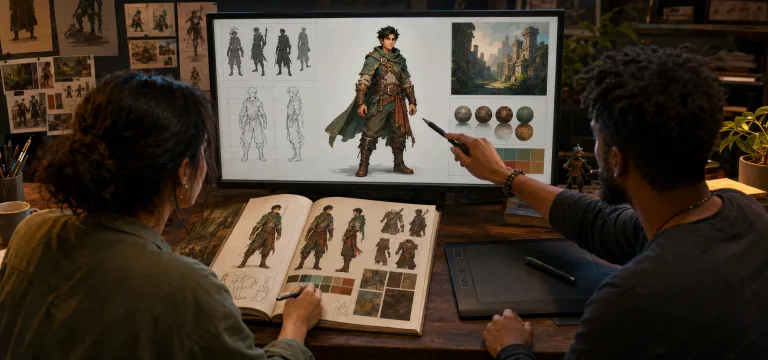
Art Direction in Games: How to Lock a Visual Style Before Production
Locking your game’s art direction is a pre-production decision, not something you discover while assets ship. The short answer: pick the direction on a small set of hero assets before scaling to full production, write it down as a working reference rather than a mood board, and put one named owner in charge of holding it as the asset count grows. Skip any of those three, and the style call you make in week one turns into a rework bill you’re still paying months later, once outsourced artists and a growing team are all touching the same asset set.
3D Game Art Outsourcing in 2026: Costs, Execution Models, & Partner Evaluation Explained
Visual standards in games have escalated sharply. High-poly characters, cinematic environments, real-time lighting pipelines, and engine-optimized assets are now baseline expectations, not premium features. Internal teams, no matter how strong, cannot expand infinitely without affecting cost structure, delivery speed, or creative consistency.
That reality explains why 3D game art outsourcing has shifted from tactical support to strategic production design. The global 3D game art outsourcing market is expected to reach $2.7 billion by 2028, signaling sustained demand from publishers, studios, and IP owners who need scalable art capacity without destabilizing core teams.
When used correctly, outsourcing does not dilute vision. It protects it. It allows internal leadership to retain art direction while external specialists handle production volume, style replication, and pipeline execution. This guide breaks down how 3D game art outsourcing works in 2026, including costs, engagement models, processes, and the studios that execute at scale.