
 Game Development
  Game Art
 Resource Augmentation
 VR/XR Simulation


-
 Unity Game Development
 Nov 17th, 2025
- Share:
Table of Contents
- Unity Engine Pricing Overview (2026)
- Understanding the True Cost of Unity Game Development
- Detailed Cost Breakdown by Game Type and Complexity
- Location-Wise Unity Game Development Cost
- Major Factors Influencing Unity Game Development Cost
- Hiring Models and Team Structures
- Costs Beyond Development
- How to Optimize and Reduce Unity Game Development Costs
- The Future of Unity Game Development
- Conclusion
Unity game development cost remains a key consideration for studios planning new projects as Unity continues to be one of the most reliable and flexible engines in 2026.
Cross-platform capability, stable performance, and extensive asset ecosystem make game development using Unity suitable for both indie teams and large studios. The engine’s scalability allows developers to handle everything from quick prototypes to complex 3D productions within a unified workflow.
However, the question “how much does it cost to develop a Unity game” depends on several variables, including project complexity, art and animation requirements, team size, and production duration. A small 2D game may cost only a few thousand dollars, while large-scale 3D or AR/VR titles can require significantly higher investment.
Let’s explore how these factors affect overall pricing and how regional variations shape Unity 3D game development cost in 2026.
Unity Engine Pricing Overview (2026)
Understanding how Unity licenses and add-ons are structured is essential before estimating total development budgets. The Unity game engine cost itself forms only a small part of overall production, but it directly affects studio planning and scalability.
Free-to-Use Tier and Revenue Limits
Unity offers a free Personal plan for developers and studios earning under $200,000 annually. This tier provides full access to the engine’s core features and is ideal for indie teams testing ideas or releasing small-scale games.
After the 2025 update, Unity permanently removed its proposed Runtime Fee, making it easier for new developers to publish without worrying about per-install charges.
Unity Pro and Enterprise Plans
For professional and large-scale production, Unity Pro remains the standard option at $2,200 per seat annually. Enterprise plans cater to studios managing multiple projects or requiring advanced support, analytics, and security.
While the cost of Unity game engine licensing is relatively stable, these plans include features that can influence workflow speed and long-term project ROI. Choosing the right plan helps teams balance capability with budget.
Add-On Modules and Specialized Tools
In 2025, Unity shifted several services to modular pricing. Paid add-ons now include AI tools, multiplayer frameworks, analytics dashboards, and cloud collaboration systems.
These additional components can raise overall Unity 3D game development cost, especially for studios building connected or data-driven experiences. Planning for plugin and integration fees early helps prevent cost overruns and ensures smoother deployment.
Understanding the True Cost of Unity Game Development
The Unity game development cost goes far beyond engine licensing. While Unity’s pricing tiers set the foundation, the bulk of a project’s budget is shaped by production-related expenses.
The largest cost contributors are manpower, project duration, and the volume and quality of assets required. Developers, designers, artists, animators, and QA teams all work in parallel, and their combined hours determine the majority of total spending. Complex features, custom systems, and high-quality 3D art further increase workload and timelines.
When estimating budgets for game development using Unity, studios typically evaluate scope, genre, art direction, target platforms, and expected production length. This allows top Unity game development companies to provide accurate cost projections based on real development hours, resource allocation, and technical requirements.
A clear understanding of these variables helps teams plan realistically before moving into full production. You can check the factors affecting Unity game development cost later on in the article.
Detailed Cost Breakdown by Game Type and Complexity
Project scope remains the strongest determinant of Unity game development cost, and different genres fall into predictable budget ranges. The figures below offer a practical overview of what teams can expect when planning game development using Unity across varying levels of complexity.
Hyper-Casual and Simple 2D Games
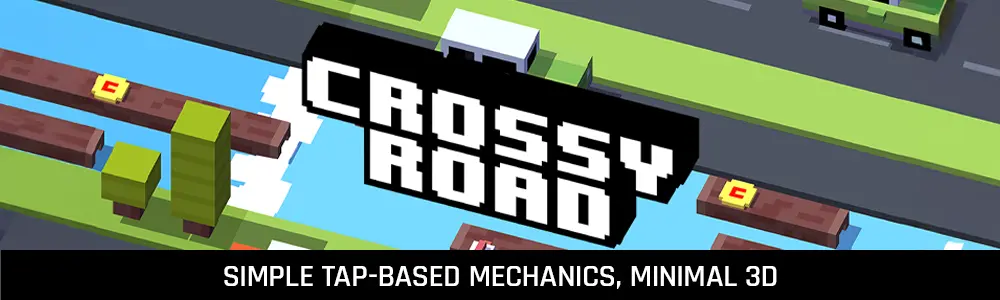
$5,000 – $25,000
Games in this category are built by small teams and follow short development cycles. They use simple mechanics, minimal art, and limited feature sets, making them the most cost-efficient projects in Unity 3D game development.
Medium-Complexity Games (3D or Mid-Level Projects)
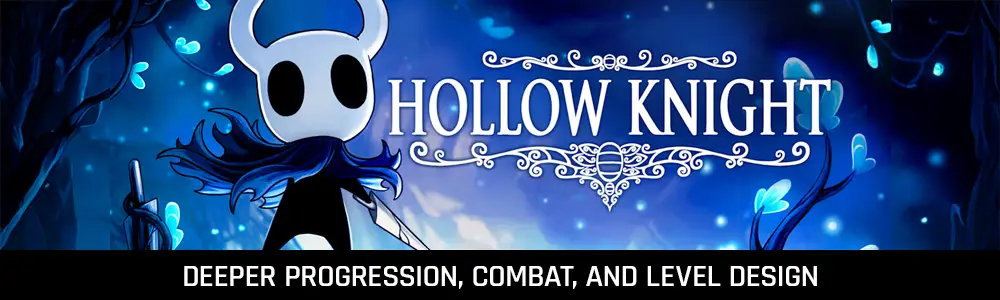
$30,000 – $100,000
Medium-scale Unity 3D game development typically involves custom gameplay systems, moderate 3D assets, and possibly simple multiplayer features. The wider scope and increased production time raise overall Unity 3D game development cost compared to 2D titles.
Advanced 3D or AR/VR Games
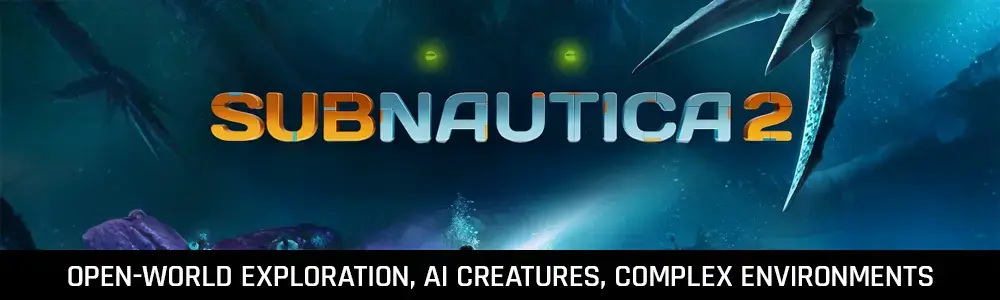
$120,000+
This category includes high-fidelity 3D games, AR applications, and VR experiences. Costs increase due to detailed 3D art, advanced shaders, performance optimization, and integration with AR/VR toolkits.
Large-Scale Projects (RPGs, MMOs, Simulation Titles)
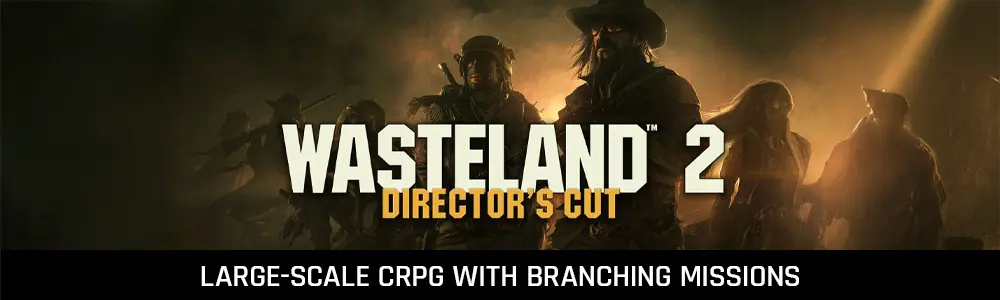
$150,000 – $500,000+
Large-scale productions involve extensive world-building, backend development, custom tools, live services, and bigger teams. These long-term projects represent the upper end of Unity game development cost.
Here’s a summary of cost by complexity:
| Game Type | Estimated Cost (USD) | Typical Scope & Features | Team & Timeline |
| Hyper-Casual & Simple 2D Games | $5,000 – $25,000 | Basic mechanics, simple 2D art, minimal systems | Small team, 4–8 weeks |
| Medium-Complexity 3D/Mid-Level | $30,000 – $100,000 | Moderate 3D assets, custom gameplay, simple multiplayer | Medium team, 2–4 months |
| Advanced 3D or AR/VR Games | $120,000+ | High-quality 3D art, AR/VR toolkits, advanced shaders | Specialized teams, 4–8 months |
| Large-Scale (RPG, MMO, Simulation) | $150,000 – $500,000+ | Large worlds, backend systems, live ops, custom workflows | Large teams, 9–18 months or more |
Location-Wise Unity Game Development Cost
Regional pricing plays a major role in determining overall Unity game development cost, as hourly rates and team structures vary significantly across countries. Understanding these differences helps studios plan budgets more accurately and choose the most suitable development partners.
India
Unity development in India typically ranges between ~$2,400–$24,000, depending on project size and experience level. The region has a large pool of skilled Unity developers, with teams experienced in a wide range of project types, from mobile games to complex 3D and AR/VR experiences. Many studios in India follow established production pipelines and industry best practices, making them well-suited for handling both mid-scale and technically demanding Unity projects.
USA
In the United States, Unity developers generally charge $37–$49 per hour, reflecting higher labor and operational costs. Teams in this region often deliver faster due to larger development resources, but total budgets rise accordingly. This region is often preferred for complex, high-end Unity 3D game development cost projects.
Europe (UK and Eastern Europe)
Developer rates across Europe typically fall between $18–$40 per hour. Western Europe leans toward higher pricing, while Eastern Europe provides more cost-effective options. This region offers a balanced mix of quality, technical skill, and competitive pricing.
Here’s a summarized version:
| Region | Average Hourly Rate (USD) | Small Projects (2D) | Mid-Level Projects (3D) | Large Projects (Advanced 3D/AR/VR/MMO) |
| India | $15 – $40/hr | $2,400 – $24,000 | $9,600 – $36,000 | $24,000 – $120,000+ |
| USA | $37 – $150/hr | $20,000 – $40,000 | $50,000 – $150,000 | $200,000 – $500,000+ |
| UK & Western Europe | $30 – $80/hr | $15,000 – $35,000 | $40,000 – $120,000 | $150,000 – $450,000+ |
| Eastern Europe | $18 – $70/hr | $10,000 – $25,000 | $30,000 – $90,000 | $120,000 – $350,000+ |
Major Factors Influencing Unity Game Development Cost
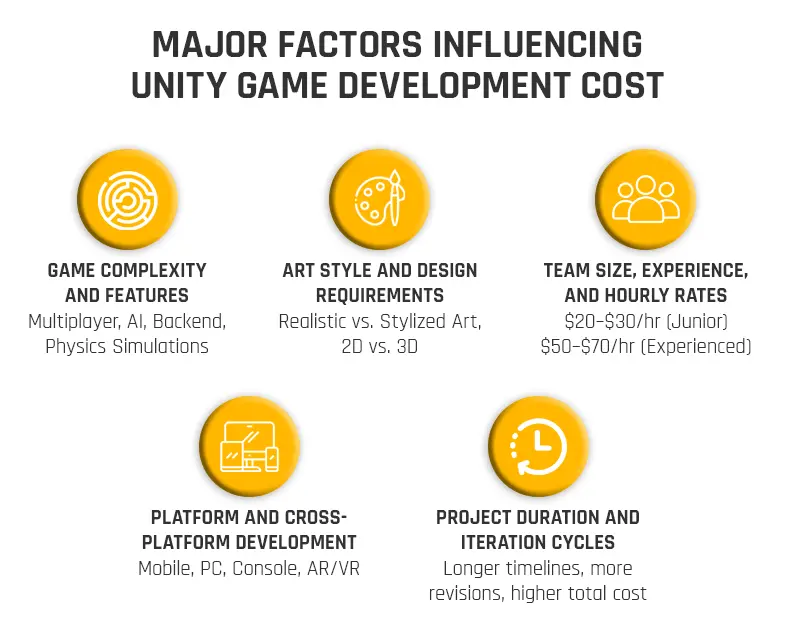
Several variables directly influence Unity game development cost, and understanding them early helps teams estimate budgets more realistically. These factors determine the scope of work, the number of specialists required, and the total development time involved in game development using Unity.
Game Complexity and Features
Game complexity remains the strongest cost driver. Features such as multiplayer support, AI systems, backend integration, physics simulations, and custom gameplay mechanics significantly extend development time. The broader and deeper the feature set, the higher the production effort.
Art Style and Design Requirements
Art direction plays a major role in shaping overall cost. Realistic 3D visuals require detailed models, textures, and animation pipelines, while stylized art is generally less resource-intensive. Similarly, 3D games are more demanding than 2D titles, impacting total Unity 3D game development workload and cost.
Team Size, Experience, and Hourly Rates
Development teams vary widely in size and skill level. Junior developers typically charge $20–$30 per hour, while experienced specialists may range from $50–$70 per hour or more. Highly skilled artists, technical designers, and backend engineers also increase budget requirements due to specialized roles.
Platform and Cross-Platform Deployment
Target platforms influence both scope and cost. Building for a single platform such as mobile is more straightforward, while deploying across PC, console, and AR/VR requires additional optimization, testing, and platform-specific adjustments.
Project Duration and Iteration Cycles
Longer development timelines naturally increase total cost. Frequent iterations, feature updates, or expanding scope during production can lead to exponential cost escalation. Clear planning and early prototyping help keep development time under control.
Hiring Models and Team Structures
Choosing the right team structure is an important part of planning efficient and cost-effective Unity game development. Each hiring model offers different levels of control, flexibility, and long-term cost impact.
In-House Development
Building an in-house team provides full creative control and closer coordination, but it comes with higher long-term expenses. Salaries, infrastructure, training, and retention efforts make this model more suitable for large or ongoing productions.
Outsourcing or Dedicated Team Model
Outsourcing offers lower costs and the ability to scale quickly. This model gives studios access to experienced developers without long-term commitments, making it ideal for global teams looking to manage budgets efficiently. Studios that partner with an experienced Unity game development company often avoid many issues, thanks to established hiring, vetting, and workflow standards.
Hybrid Approach
A hybrid structure combines internal leadership with external specialists. This allows studios to maintain creative direction while reducing overhead, especially during peak production phases or when specialized skills are required.
Hire Unity Game Developers
Hiring Unity game developers is crucial for maintaining quality and efficiency. Hourly rates vary by experience, with junior roles starting at lower ranges and senior or technical specialists costing more. Studios should also watch for common hiring challenges like unclear requirements or mismatched skill sets.
Common Pitfalls to Avoid When Hiring
When bringing talent on board, it’s important to avoid common pitfalls such as vague role definitions, relying solely on portfolios without technical evaluation, overlooking communication skills, or selecting Unity game developers who lack experience with similar project scales.
Costs Beyond Development
Even after the initial build is complete, several ongoing expenses continue to influence overall Unity game development cost. These post-launch commitments are essential for maintaining game quality, retaining players, and generating long-term revenue.
Post-Launch Maintenance
Every game requires ongoing support after release. This includes bug fixes, gameplay patches, performance improvements, and periodic Unity version upgrades. Maintenance ensures that the game remains stable, secure, and compatible with new devices and OS updates, which is especially important for long-running Unity projects.
Marketing, Distribution, and Community Management
Launching a game also involves promotional and distribution costs. App store listings, paid promotions, user acquisition campaigns, and influencer partnerships are common expenses. Community management, including handling player feedback, moderating discussions, and maintaining engagement, also adds to the long-term effort required from a studio or Unity game development company.
Monetization and Live Operations
Revenue strategies such as ads, in-app purchases, and live events require ongoing management. Live operations include content updates, seasonal events, server upkeep, and analytics tracking. These systems play a major role in determining a game’s long-term ROI and can significantly add to post-launch workload and costs.
How to Optimize and Reduce Unity Game Development Costs
Reducing Unity game development cost often comes down to smart planning and efficient use of available tools. Teams can significantly lower expenses by streamlining workflows and avoiding unnecessary custom development wherever possible.
Using the Unity Asset Store is one of the simplest ways to cut art and coding costs. Ready-made assets, UI kits, animation packs, and prototyping tools can replace weeks of in-house production. Reusing assets and building modular frameworks also speeds up development, especially for teams handling multiple projects or iterative updates.
Prebuilt templates for UI, gameplay systems, and common mechanics can further shorten production time in game development using Unity. These templates reduce the need for ground-up coding, lower the chance of technical errors, and help teams maintain consistent design standards.
For larger or more complex projects, partnering with an experienced Unity game development studio can improve efficiency. Such teams often bring established pipelines, optimized workflows, and specialists trained for fast turnaround. Studios looking to scale or add expertise quickly may also choose to hire Unity developers on a dedicated or flexible basis.
Optimizing tools, resources, and team structure ensures that overall Unity 3D game development cost stays within budget without compromising quality.
The Future of Unity Game Development
Upcoming changes will influence the cost of game development using Unity. AI tools in Unity are expected to reduce manual work and shorten timelines, but some features may add new licensing or module fees.
As Unity 3D game development expands into simulation, training, automotive, and enterprise use cases, projects may require more specialized skills and integrations, which can increase overall budgets.
Procedural asset creation and visual scripting can lower production effort for some tasks, though larger projects may still need technical specialists to maintain quality.
These shifts indicate that Unity game development costs will depend on how teams balance time savings from new tools with the need for specialized expertise.
Conclusion
Understanding Unity game development cost in 2026 requires looking beyond engine pricing and focusing on the factors that truly shape a project – complexity, art direction, team structure, platform needs, and long-term operations. Unity’s flexibility allows studios to build everything from simple 2D games to large-scale AR/VR and simulation projects, but budget planning remains essential for staying on track.
By using efficient workflows, leveraging ready-made assets, and choosing the right development approach, teams can manage costs without compromising quality. Whether you’re building a prototype, a mid-scale 3D game, or a long-term live product, Unity provides the tools and scalability to support projects of any size.
For studios seeking guidance, partnering with an experienced Unity game development company ensures smoother production, faster delivery, and better cost control from start to finish.
FAQ
Unity offers a free Personal plan for developers earning under the annual revenue limit. Paid plans like Unity Pro and Enterprise include advanced tools, support, and collaboration features priced on a yearly subscription.
Unity is free to use under the Personal tier as long as the revenue or funding threshold is not exceeded. Beyond that, studios must upgrade to a paid plan to access professional features.
Yes. Unity Personal remains free in 2026 for eligible users. The engine continues to offer full core functionality without upfront cost for individual creators and small teams.
Studios specializing in Unity game development provide end-to-end production services, including design, programming, art, animation, testing, optimization, and multi-platform deployment. Many also support ongoing updates and live operations for long-term projects.
Related Posts

Unity 3D Game Development: Why Leading Studios Choose Unity for Scalable Production in 2026
Engine selection in 2026 defines production velocity, platform reach, hiring structure, and long-term scalability. Unity 3D game development powers mobile ecosystems, cross-platform launches, hybrid 2D/3D pipelines, and LiveOps-driven roadmaps for studios operating at scale. Leading teams choose Unity because it aligns technical flexibility with production efficiency.

A Deep-Dive Into Unity Gaming Services: What Studios Must Know
Shipping a game used to mean finishing levels, polishing visuals, and pushing a build live. Today, Unity Gaming Services (UGS) sits at the center of how modern titles actually operate after launch. With Unity powering over 3 billion monthly mobile game downloads and supporting more than 1.3 million monthly active creators, the conversation has clearly shifted from building a game to running a service. What keeps players returning is no longer just rendering quality, but the systems working behind the scenes.
Unity Mobile Game Development in 2026: Studio-Framework, Costs, and Best Practices
Mobile gaming is no longer a casual experiment for studios. In 2026, competition is fierce, user expectations are unforgiving, and production mistakes are expensive. It’s no surprise that Unity mobile game development sits at the center of this shift, especially when 71% of the top 1,000 mobile games were made with Unity. That dominance is not accidental. It reflects production reliability, scalability, and ecosystem maturity.